Canarias.app travel guide · La Palma
Santa Cruz de La Palma: historic quarter, wooden balconies and Atlantic harbour
Santa Cruz de La Palma is a small, walkable harbour capital with a historic quarter, wooden balconies, squares, churches and an Atlantic seafront. The centre is best explored on foot, between Calle Real, Plaza de España, Avenida Marítima and the port area. It is a slow-paced visit: looking up at façades, stepping into courtyards, turning towards the sea and reading the island's trading history in its streets. From the city, you can plan excursions to Roque de los Muchachos or to the natural pools in the north, such as Charco Azul.
A historic capital by the sea
Santa Cruz de La Palma keeps a very pleasant scale: harbour, old town and seafront promenade all sit within easy reach of each other. The city grew around Atlantic trade, and that past is still visible in its noble houses, balconies, squares and narrow streets. There is no need to hurry here; the visit works best at walking pace.
Calle O'Daly, Plaza de España and El Salvador
Calle O'Daly, also known as Calle Real, is the classic spine of the centre. From there, it is an easy walk to Plaza de España, one of the island's most representative urban spaces, with the church of El Salvador as its main landmark. This is the area where it pays to look up: balconies, woodwork, doorways and colonial details tell much of the city's story.
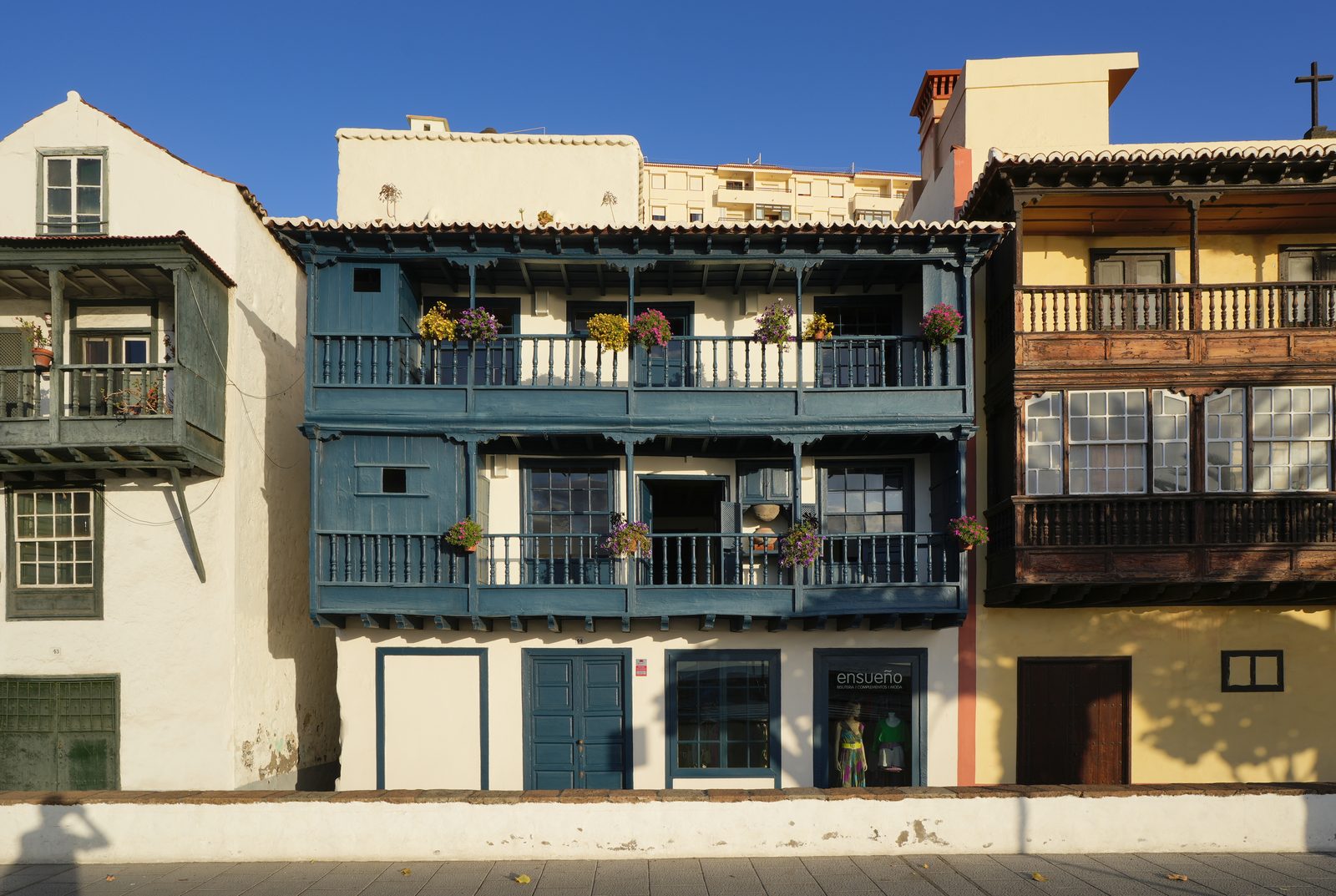
Balconies on Avenida Marítima
The Canarian balconies along Avenida Marítima are the most recognisable image of Santa Cruz de La Palma. Facing the Atlantic, they bring together domestic architecture, carved timber and the character of a port frontage. It is a brief stop, but an essential one if you want a clear visual reading of the capital.
Naval Museum, castle and tradition
The Barco de la Virgen, home to the Naval Museum, reflects the city's long relationship with the sea and with its major festivities. The Castillo de Santa Catalina adds the defensive layer of a capital that looked out to the Atlantic with both ambition and caution. The Bajada de la Virgen de las Nieves, held every five years, completes that festive and religious identity so closely tied to the city.
How to fit it into a trip around La Palma
Santa Cruz works very well as a first or final stop: it is convenient, has services and helps you understand the island's history before heading up into the mountains. From here, you can plan a day at Roque de los Muchachos or a route through the north with a stop at Charco Azul.
FAQ
Questions about Santa Cruz de La Palma
Can you see Santa Cruz de La Palma on foot?
Yes. The historic quarter, Avenida Marítima, Plaza de España and many of the main points of interest are easily covered on foot.
What is the city best known for?
Its wooden balconies facing the sea, Calle Real, Plaza de España, the church of El Salvador and the harbour atmosphere of the historic centre.
Is visiting the historic quarter free?
Walking through the historic quarter and seeing its main urban spaces is free. If you want to enter specific museums or sites, check the latest conditions through their official channels.
What is the Bajada de la Virgen?
It is one of the great traditions of Santa Cruz de La Palma and the island, linked to the Virgen de las Nieves. It is held every five years and plays a special role in the cultural life of the capital.
Is Santa Cruz worth staying in?
It can be a convenient base if you prioritise the city, harbour, restaurants and good access to the east coast. For mountain routes or the west of the island, it is worth calculating journey times carefully.
Make the most of your visit
Tickets, tours and activities
There are excursions, guided tours and activities in La Palma to round off your visit to Santa Cruz de La Palma.
See tours and activitiesKeep exploring
More to see in La Palma
Tours and activities in La Palma
Loading tours…