Canarias.app travel guide · La Gomera
La Gomera Travel Guide: The Island of Columbus and the Whistling Language
La Gomera is the Canary Island that the package-holiday boom passed by. Almost everyone arrives by ferry from Los Cristianos (45 to 50 minutes), because the island's airport handles inter-island flights only. Round, steep and improbably green, it has the Garajonay National Park at its heart, a World Heritage laurel forest, with deep ravines plunging down to coves of black sand. This is the birthplace of the Silbo Gomero whistling language and of almogrote, and it was from San Sebastian that Columbus set sail for the Americas in 1492.
The Unmissable Sights
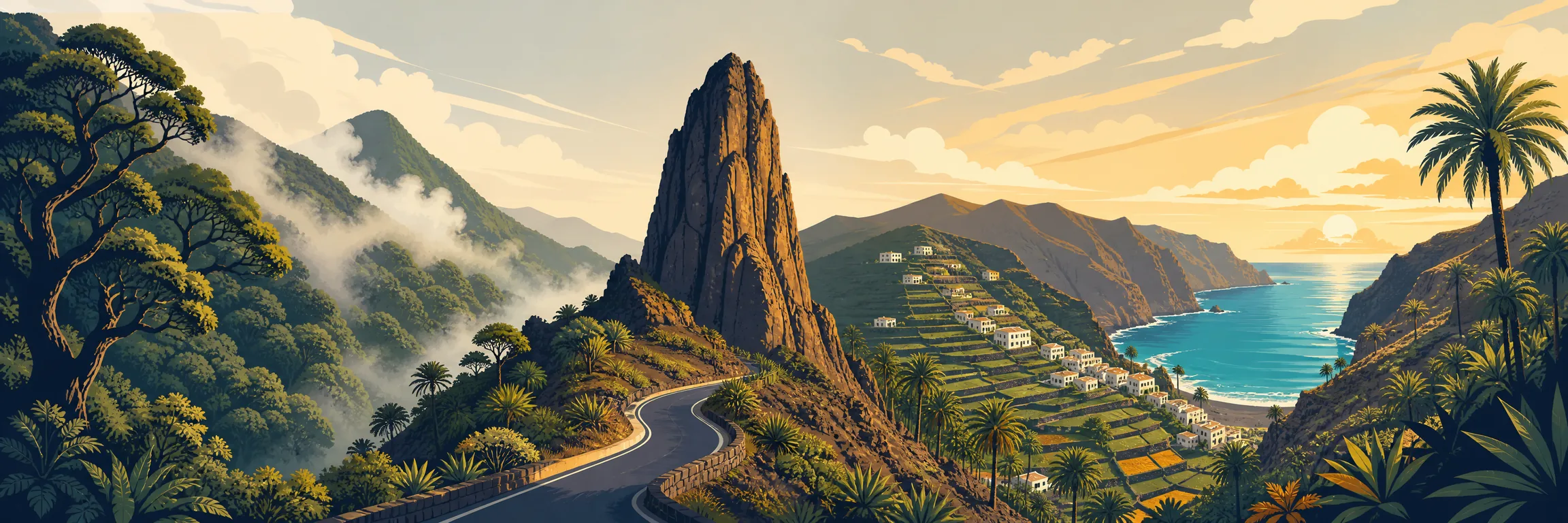
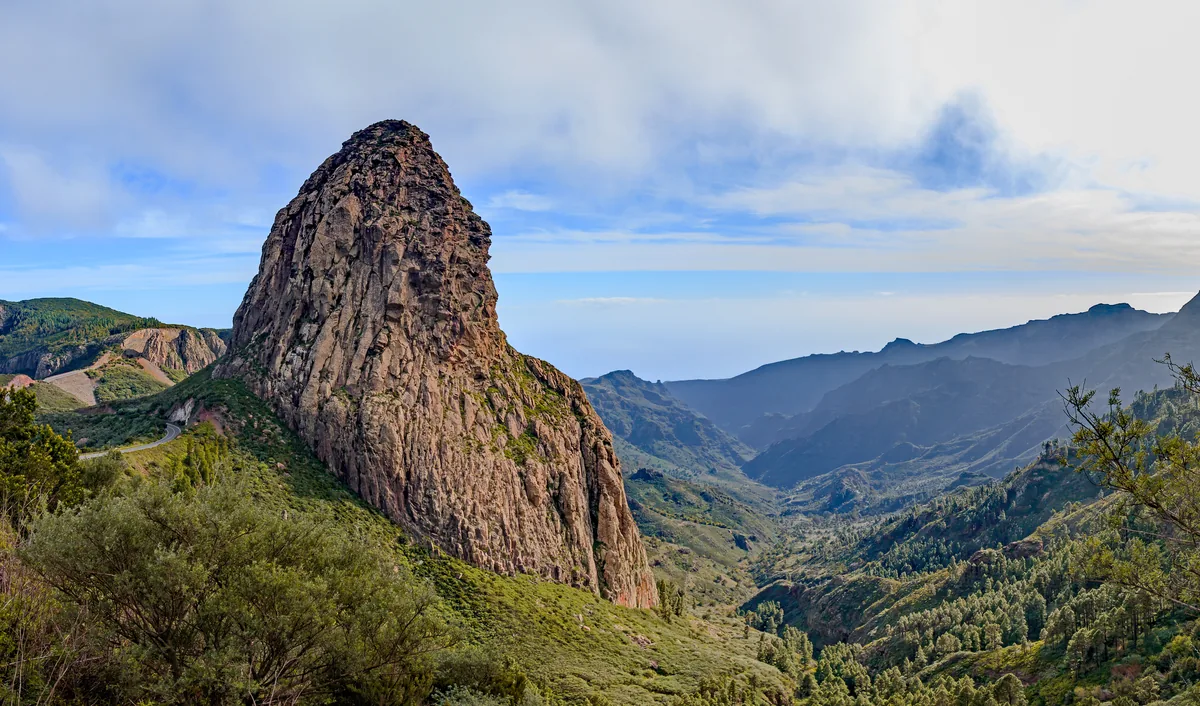
The island revolves around Garajonay National Park, a misty laurel forest that UNESCO declared a World Heritage Site in 1986. You'll find 18 marked trails here, the Alto de Garajonay summit at 1,487 metres, and the Juego de Bolas visitor centre in Agulo. The Roque de Agando, a 1,247-metre phonolitic spire, is the island's most photographed landmark, framed perfectly from the roadside viewpoint. Los Organos can only be seen from the water: a cliff of basalt columns that really do resemble the pipes of an organ. Over in San Sebastian, the Torre del Conde (1447 to 1450) is the only fortress from the Conquest still standing, while the Pozo de la Aguada well preserves its link to Columbus.
Beaches and Natural Pools
La Gomera trades in black volcanic sand rather than white beaches, and many of its shores form where ravines meet the sea. The main coastal hub is Valle Gran Rey in the south-west, made up of the hamlets of La Calera, La Playa, La Puntilla and Vueltas. Here the Charco del Conde is a sheltered natural pool that's ideal for families, while the Playa del Ingles catches rather more swell. Playa de Santiago in the south, beside the airport, is the sunniest and driest spot, complete with a sailing club. The capital keeps the Playa de San Sebastian and the Playa de la Cueva, and up north around Hermigua and Vallehermoso the sea turns wilder, with natural pools such as those at the Castillo del Mar.
Getting Around
Hiring a car is the sensible choice. The distances look short on the map, but the ravine-carved terrain means journeys take a while along winding roads that climb and drop from the central uplands. For public transport there's GuaguaGomera, with eight routes radiating from the bus station in San Sebastian and linking the capital to Valle Gran Rey, Vallehermoso, Alajero and the airport, with travel passes and reduced fares available. There's also an internal ferry service between San Sebastian and Valle Gran Rey, which is scenic and handy for crossing the island without tackling the gradients. For the national park and the north, though, a car remains the most comfortable option.
When to Go and the Climate
La Gomera enjoys an eternal spring, with annual averages of 20 to 22 degrees and mild weather all year round. It behaves almost like two climatic islands: the coast and the south are arid and sunny, with San Sebastian seeing barely 147mm of rain a year, while the summit and the north are far wetter, fed by the trade winds and the sea of clouds that sustains the laurel forest. Spring (March to May) and autumn (September to November) strike the best balance, with pleasant temperatures and little rain. In winter, the south around Playa de Santiago and Valle Gran Rey is the warmest, brightest corner for escaping the mainland chill.
Where to Stay
Valle Gran Rey is the tourist heartland, relaxed and faintly bohemian ever since the 1960s, with apartments, glorious sunsets and a base from Vueltas for boat trips to Los Organos and whale and dolphin watching. San Sebastian is the capital and the ferry's gateway, home to a historic Parador and all the Columbus-era heritage within easy reach. Playa de Santiago in the south is the sunniest and quietest choice, with golf and the island's largest resort. For walking and rural authenticity, the green north around Hermigua, Agulo and Vallehermoso offers country houses beside the park, with little in the way of nightlife.
Food and Practical Tips
The star ingredient is almogrote, a spreadable paste of cured Gomera cheese, hot paprika, garlic and oil, slathered onto bread or potatoes. Miel de palma, or guarapo, a syrup tapped from the sap of the Canary palm, sweetens puddings such as frangollo and quesillo. You'll also find gofio, escaldon, goat's cheese and wines under the DO La Gomera label. Above all there's the Silbo Gomero: a whistled language that carries across the ravines for up to five kilometres, recognised by UNESCO as Intangible Cultural Heritage and taught in schools. You can hear it demonstrated at restaurants in the north of the island.
FAQ
Questions about La Gomera Travel Guide
How do you get to La Gomera?
Almost everyone arrives by ferry from Los Cristianos, in the south of Tenerife, sailing to San Sebastian. The crossing takes between 45 and 50 minutes and is run by Fred. Olsen Express and Naviera Armas, with several departures a day. La Gomera airport (GMZ), near Playa de Santiago, handles only inter-island Binter flights to Tenerife Norte and Gran Canaria, with no international or mainland connections, so the boat is the main way in.
What is Garajonay National Park?
It's the green heart of the island: a laurel forest, or misty cloud forest, dating from the Tertiary period. It was made a national park in 1981 and a UNESCO World Heritage Site in 1986. It covers roughly 3,984 hectares, more than 10 per cent of the island, and is sustained by the sea of clouds carried in on the trade winds. There are 18 trails, the Alto de Garajonay summit at 1,487 metres, and the Juego de Bolas visitor centre in Agulo as a starting point.
What is the Silbo Gomero?
It's a whistled language that converts Spanish into whistles and can carry up to five kilometres across the ravines. It developed because the island's steep terrain made it hard to communicate from one valley to the next. UNESCO recognised it as Intangible Cultural Heritage of Humanity in 2009, and it has been a compulsory school subject in La Gomera since 1999, which has secured its survival. You can hear it demonstrated at restaurants in the north of the island.
When is the best time to visit La Gomera?
The island has a mild climate all year round, with averages of 20 to 22 degrees. The most balanced seasons are spring, from March to May, and autumn, from September to November, with pleasant temperatures and little rain. Summer is dry and warm, and winter is mild with the occasional shower. If you travel in the colder months, the south around Playa de Santiago and Valle Gran Rey is the warmest and sunniest corner of the island.
What are the beaches on La Gomera like?
They are black volcanic sand rather than white sand, and many form where the ravines reach the sea. The main coastal area is Valle Gran Rey in the south-west, home to the Charco del Conde, a sheltered natural pool that's ideal for families. Playa de Santiago, in the south beside the airport, is the sunniest. Up north around Hermigua and Vallehermoso the sea is wilder, with natural pools such as those at the Castillo del Mar.
Make the most of your visit
Tickets, tours and activities
There are excursions, guided tours and activities in La Gomera to round off your visit to La Gomera.
See tours and activitiesKeep exploring
More to see in La Gomera
Tours and activities in La Gomera
Loading tours…