A practical Canarias.app guide
14 places to see in Gran Canaria
Summit, dunes, an Atlantic capital, highland villages and coast: the island shifts dramatically within a few kilometres.
See tours & activities in Gran CanariaWhat to see in Gran Canaria: Roque Nublo, the Maspalomas Dunes, Vegueta and Las Canteras sum up its blend of high summit, protected south, historic capital and city beach. The island works best when you pair a day in the interior with an afternoon in the south and real time to walk Las Palmas.
How to explore it
What to see in Gran Canaria, area by area
Gran Canaria is far less rewarding if you try to tick off sights without looking at the map. The summit needs room to breathe, the south makes most sense in low light, Las Palmas is worth walking, and the north isn't somewhere to squeeze into a spare hour.
-
1
Summit
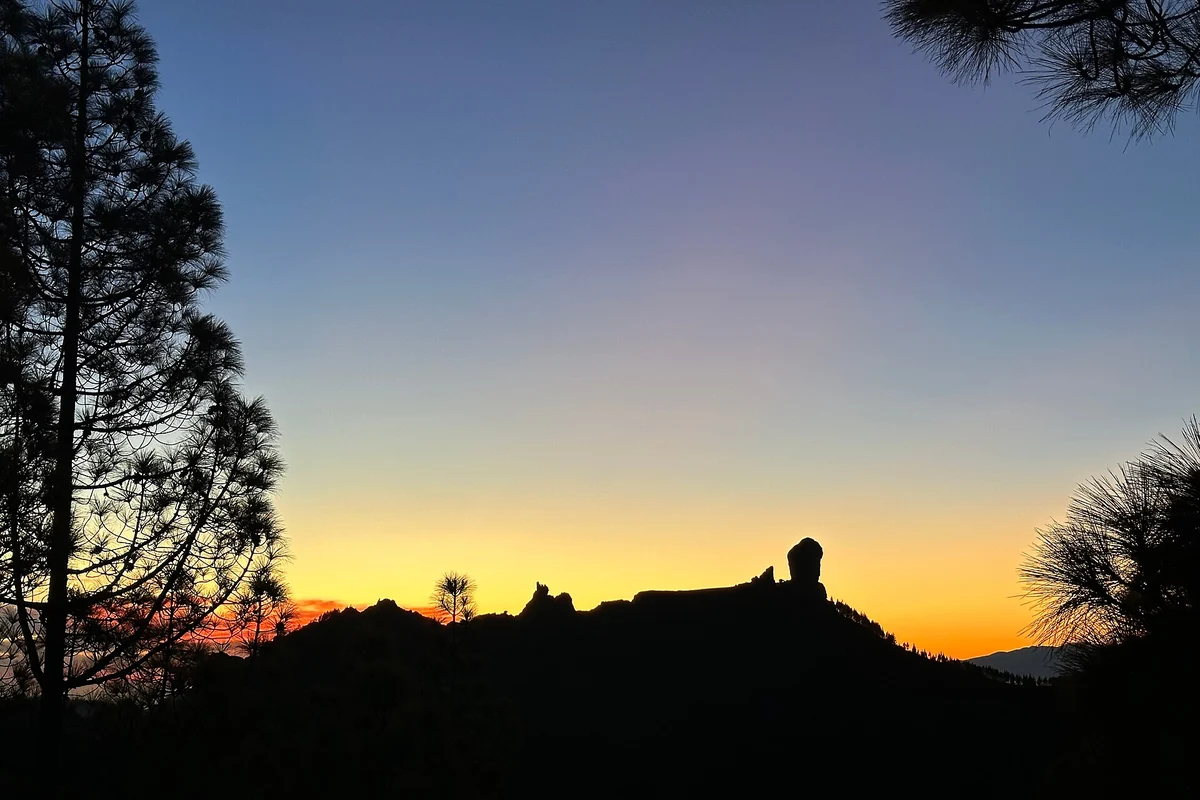
Roque Nublo, the symbol of the summit

Foto: Rvr · CC BY-SA 4.0 · Wikimedia Commons Roque Nublo holds the most recognisable image of Gran Canaria's interior: pine forest, volcanic rock, mountain air and a panorama that on clear days can stretch as far as Teide. It's more than a photo; it's a good way to grasp that the island isn't simply split into beach and city, but layered into ravines, villages and mountains. The visit gains a great deal if you go early, before the car park and the trail fill up.
Tip: Check the access rules for the trail and whether you need to book before setting off. Wear closed footwear and a light layer, and don't rush the descent if mist rolls in or the light starts to fade.
-
2
Summit
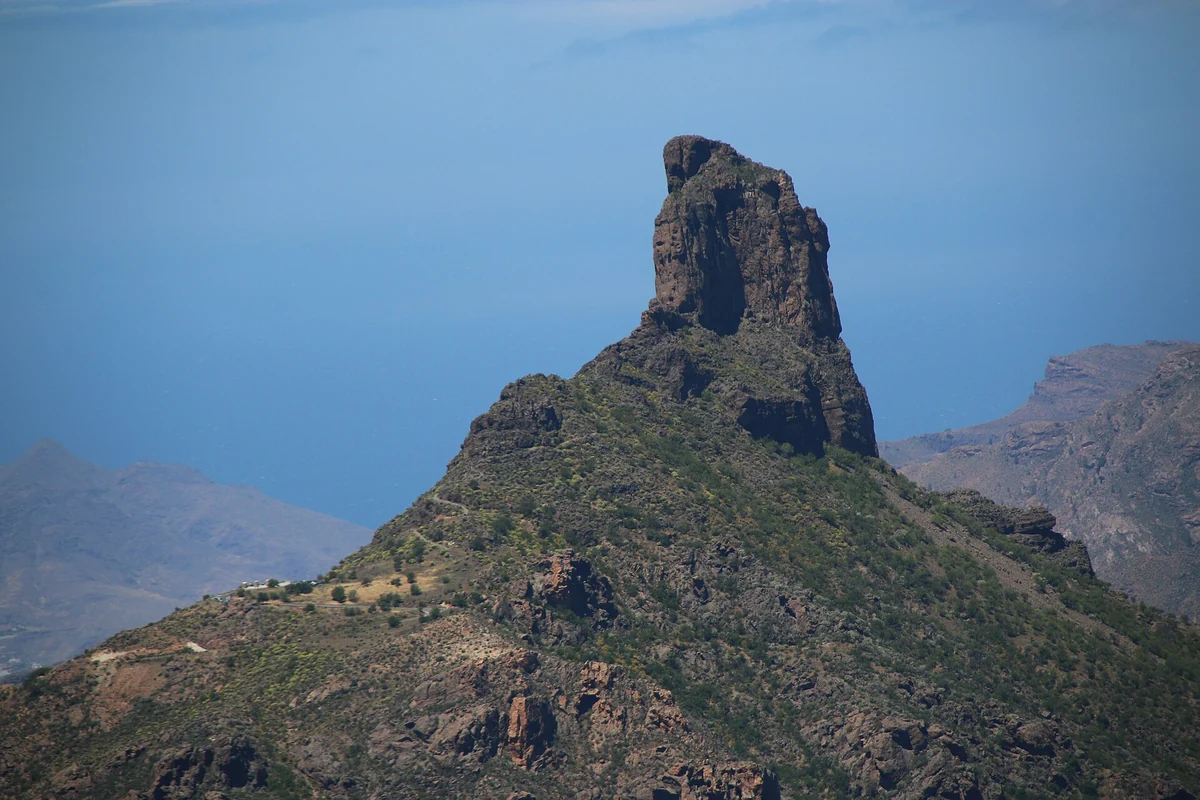
Tejeda, Roque Bentayga and the summit caldera
Foto: El Coleccionista de Instantes · CC BY-SA 2.0 · Wikimedia Commons Tejeda is a natural base for taking in the summit at a gentler pace: white houses, almond trees, views towards Roque Nublo and a village scale that invites you to slow down. Just nearby, Roque Bentayga adds the archaeological and sacred dimension of the landscape, with an interpretation centre and viewpoints over a territory that can't be understood as mountain alone. On a well-planned route, Tejeda isn't a passing stop: it's where the trip starts to make sense of the interior.
Tip: Don't string Roque Nublo, Bentayga, Tejeda, Artenara and Pico de las Nieves together as if they were five city stops. The road sets the pace: leave room for bends, mist, viewpoints and lunch.
-
3
Summit
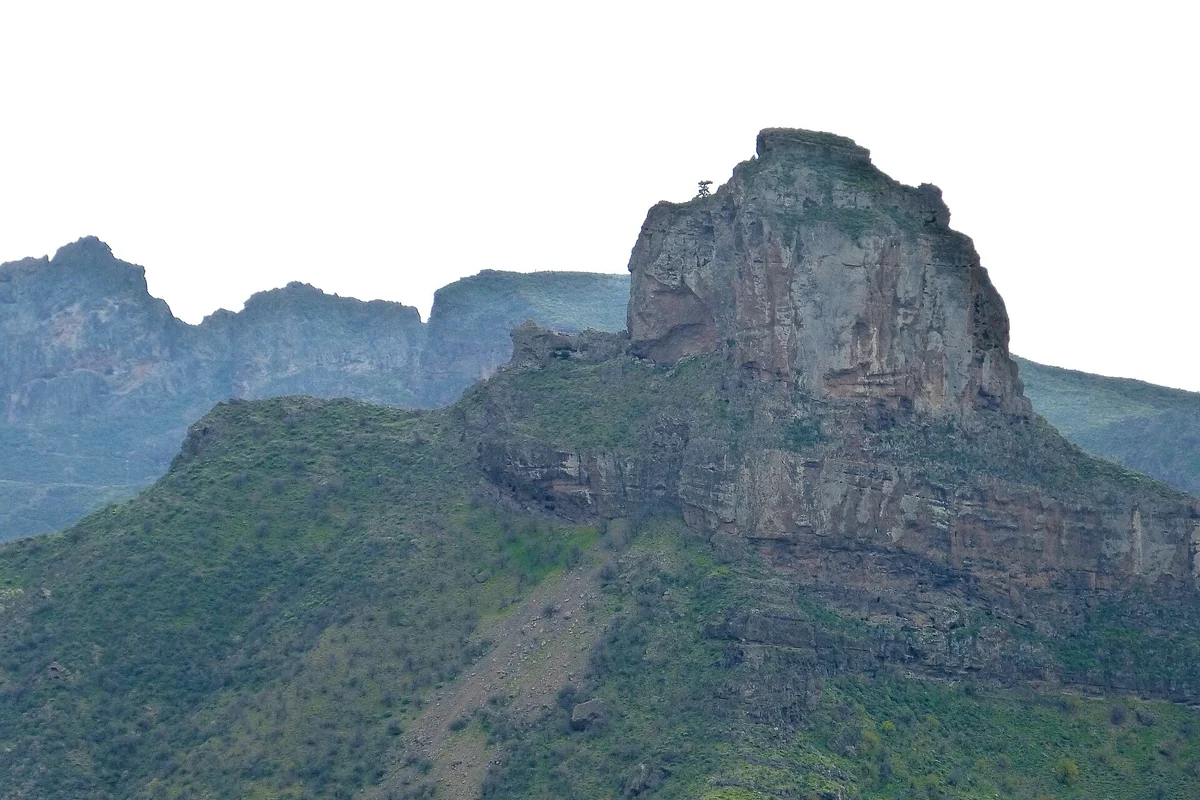
Artenara and the Mirador de Unamuno
Foto: Wolfgang Sauber · CC BY-SA 4.0 · Wikimedia Commons Artenara looks at the summit from a different angle: higher, quieter and with a direct link to the cave houses, the pine forests and the vast empty spaces of the west. The Mirador de Unamuno helps explain why this area is so striking: there's no single postcard, but a succession of crags and ravines that shift with the light. It fits especially well if you want a less obvious route than the direct climb to Nublo.
Tip: Arrive with a full tank and a charged phone. Up in the summit it's unwise to leave fuel, signal or the drive home after dark to chance on roads you don't know.
-
4
Summit
Pico de las Nieves and high viewpoints
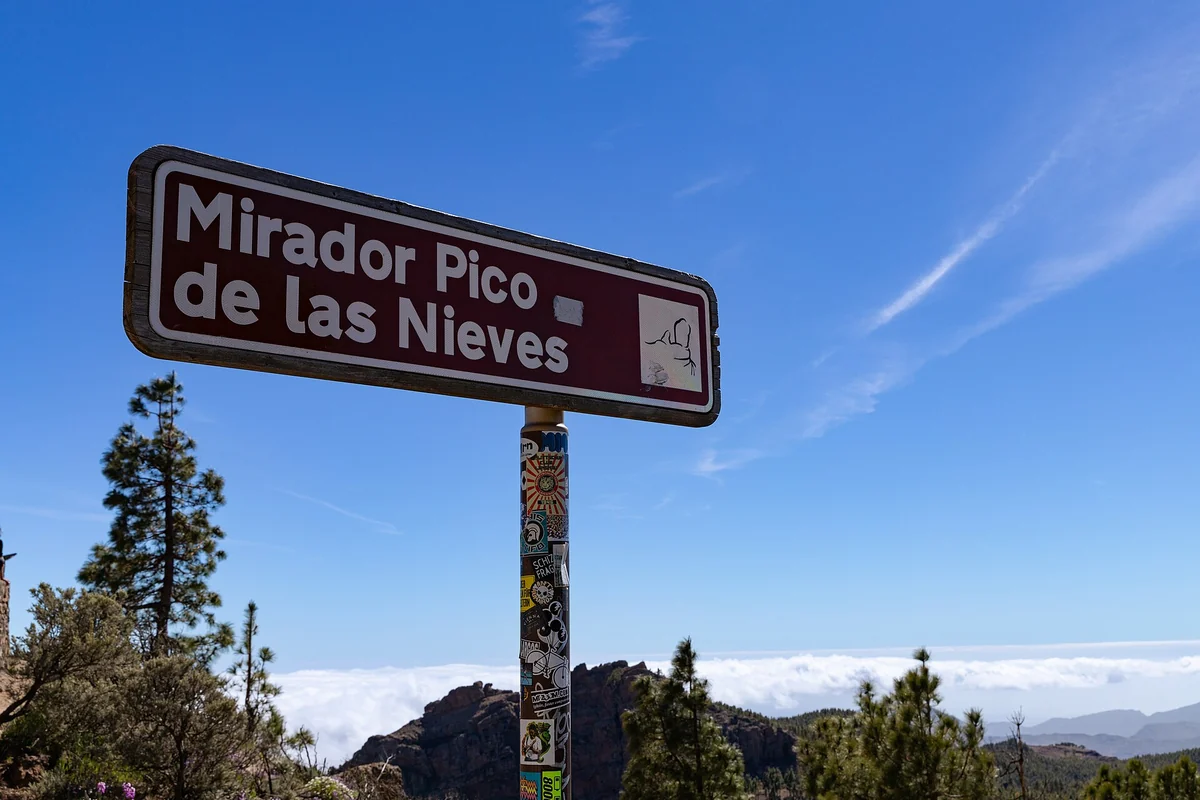
Foto: dronepicr · CC BY 2.0 · Wikimedia Commons Pico de las Nieves works as a viewpoint over the whole: from here you take in the island's rugged relief, with the Tirajana caldera, the pine forests and the line of summits marking out a Gran Canaria quite unlike the one along the southern motorway. You don't need to turn it into a long excursion for it to be worthwhile; it's enough to pick the moment well and accept that the weather changes fast at altitude.
Tip: Check the forecast and cloud cover before heading up. If the day is closed in, you're better off giving more time to Tejeda, Artenara or Bandama than chasing a view that won't appear.
- Rent a car to explore Gran Canaria
-
5
South
Maspalomas Dunes Special Nature Reserve
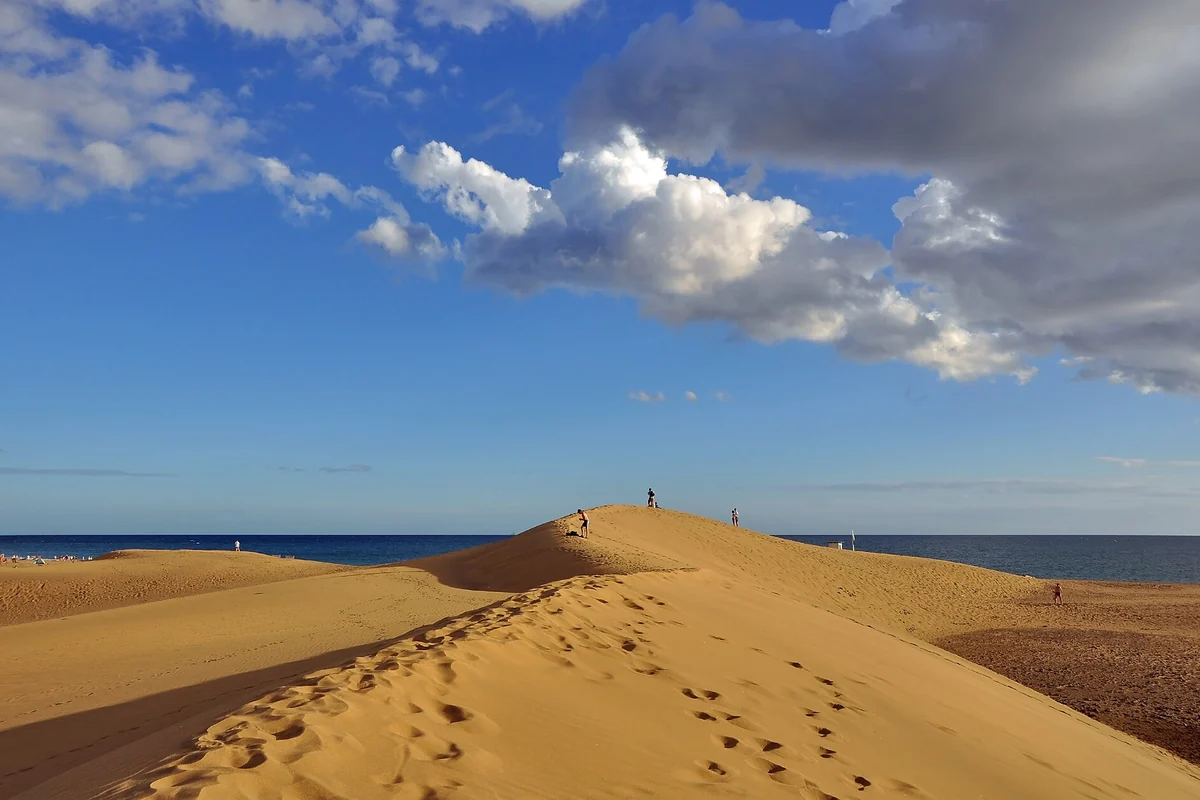
Foto: Marc Ryckaert · CC BY 3.0 · Wikimedia Commons The Maspalomas Dunes are the great natural landscape of the south: a dune field, a lagoon, a palm grove and a clear transition between the resort area and a protected space. The visit changes with the hour; in low sun the dunes take on shape and the walk becomes far more rewarding. It's an essential stop, but also one of the island's most fragile under the weight of tourism.
Tip: Always keep to the marked paths and the designated areas. Don't cut across closed zones to save time or treat the dune as a backdrop: this is a special nature reserve.
-
6
South
Maspalomas beach, the lighthouse and the Meloneras promenade
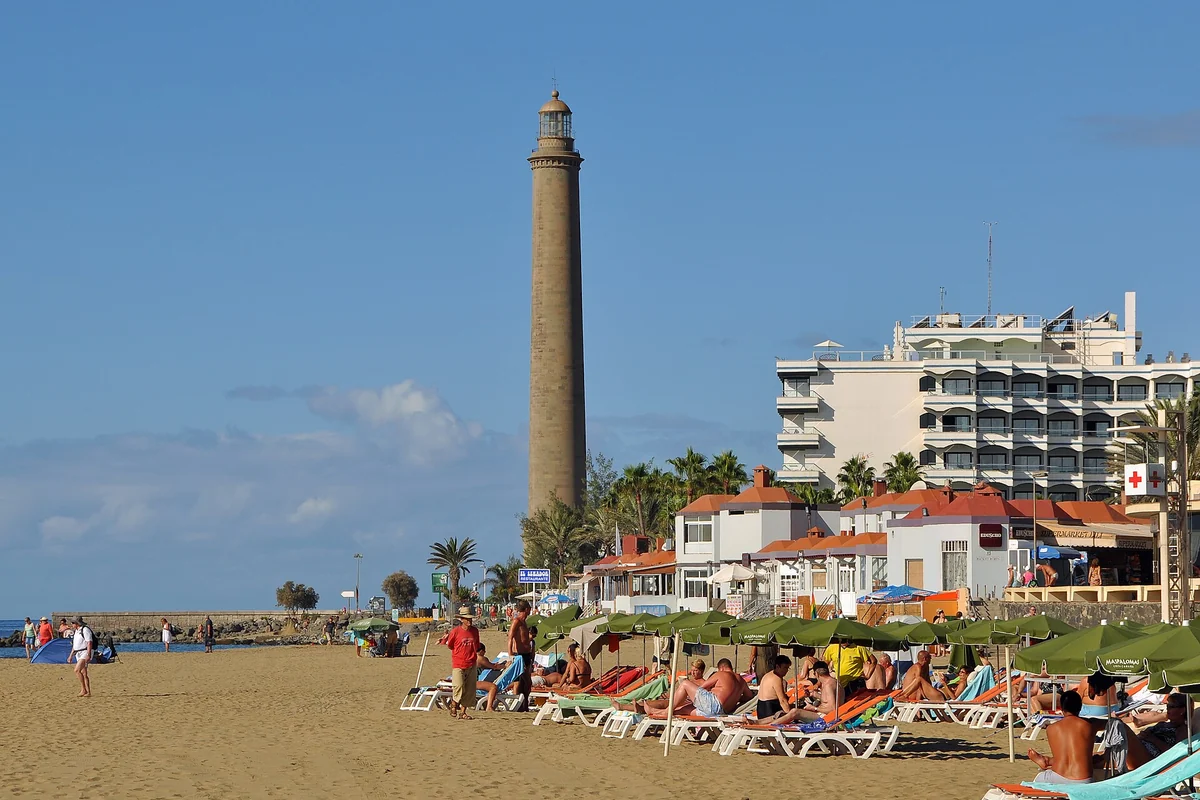
Foto: Marc Ryckaert · CC BY 3.0 · Wikimedia Commons Maspalomas beach and the lighthouse round off the reading of the dunes from the sea. Here the island becomes a promenade, golden sand, sunsets and services, with Meloneras on one side and the run towards Playa del Inglés on the other. It's the easy spot to end a day in the south without more driving: a swim, a stroll by the lighthouse and dinner without complicating the logistics.
Tip: If you're driving, go early or accept paid parking in high season. To see the dunes and lighthouse in good light, late afternoon tends to be kinder than midday.
-
7
South-west
Puerto de Mogán and the south-west coast
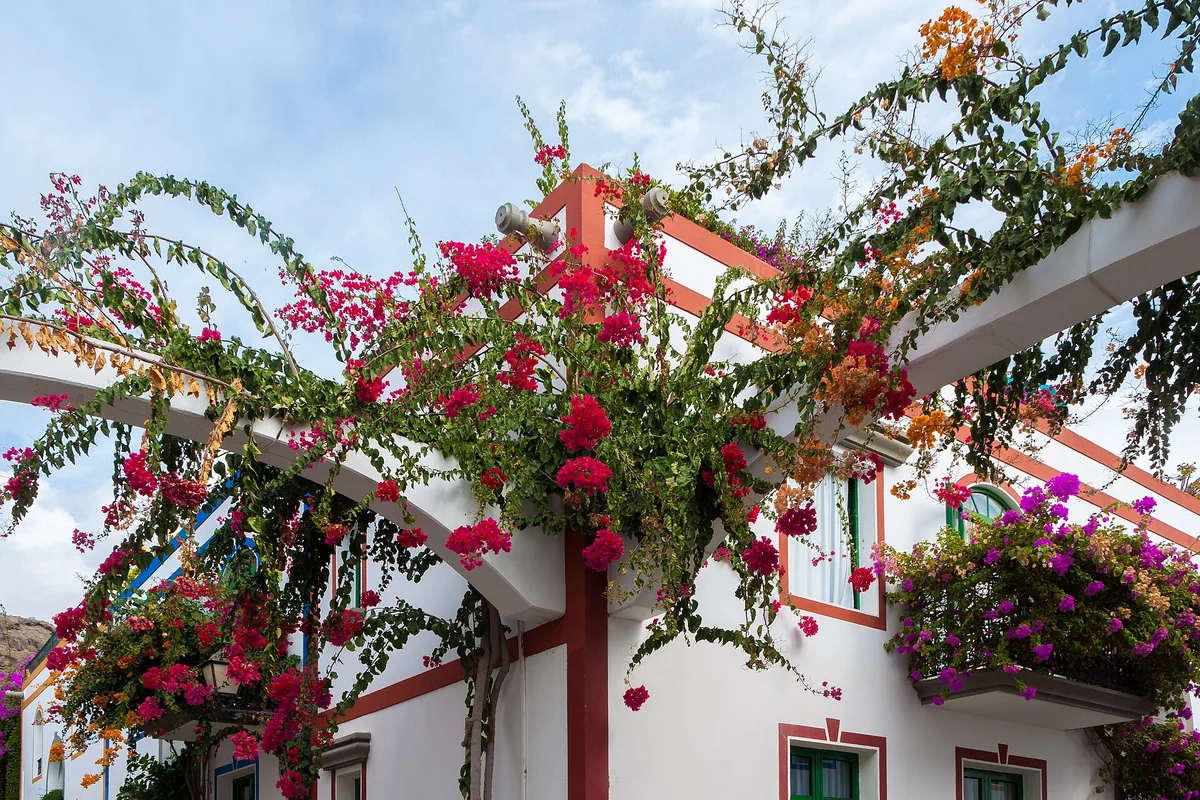
Foto: H. Zell · CC BY-SA 3.0 · Wikimedia Commons Puerto de Mogán offers a calmer, more seafaring Gran Canaria within the resort south: a sheltered beach, a marina, well-kept streets and boat trips along a coast that looks better from the water than from the motorway. It's a comfortable stop if you're staying in Maspalomas, Puerto Rico or Amadores, and a good base for sea activities without having to cross the island.
Tip: Don't save it for the end of a day in the summit: it sits in a different route logic. It works better within a southern day, paired with Maspalomas, Puerto Rico or a boat trip.
-
8
Las Palmas · north
Vegueta, Santa Ana Cathedral and the Casa de Colón
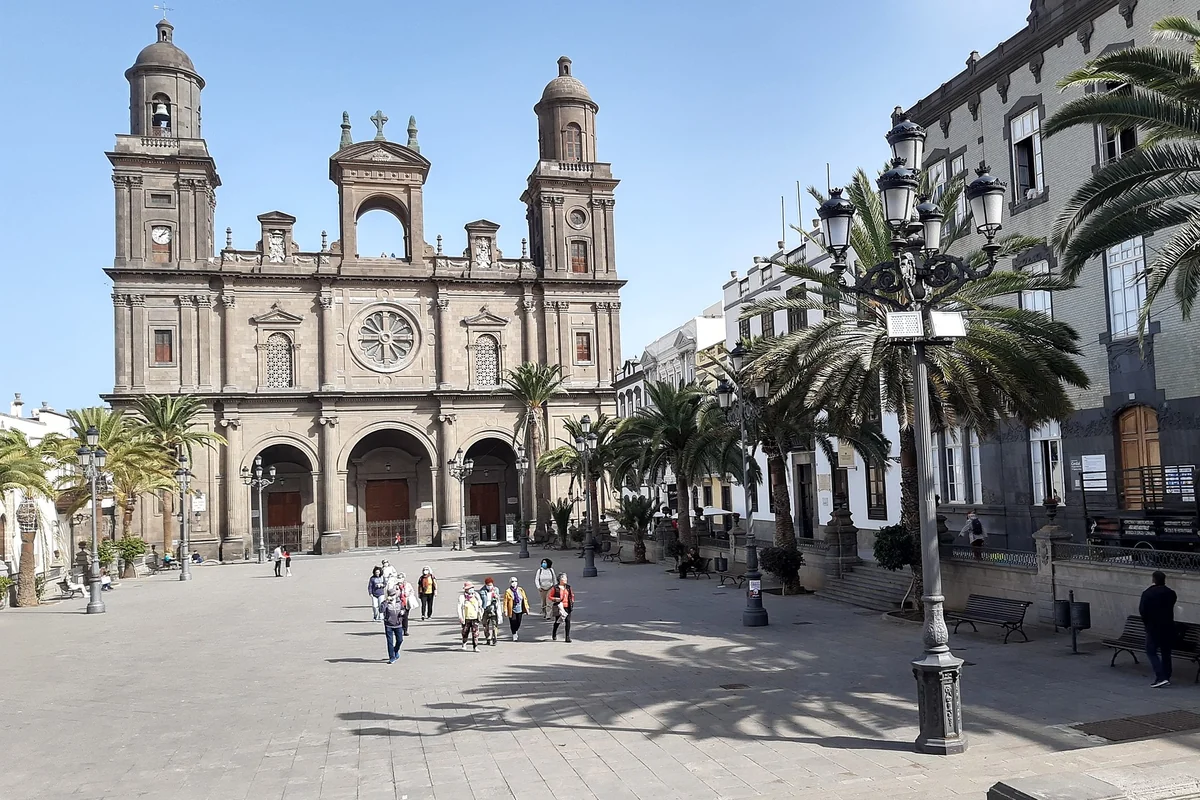
Foto: Gerda Arendt · CC BY-SA 4.0 · Wikimedia Commons Vegueta is the historic piece that answers the question of what to see in Las Palmas de Gran Canaria. The founding quarter brings together Plaza de Santa Ana, the Cathedral, the Casa de Colón, the Vegueta Market and streets that still keep the scale of an old Atlantic city. It's best explored on foot, without the car and without mixing in too many beaches in the same morning.
Tip: Park once or arrive by public transport and walk. If you want to go into museums, check current opening times; if you're just strolling, early morning and late afternoon are the most rewarding moments.
-
9
Las Palmas · north
Las Canteras, the city beach and La Barra
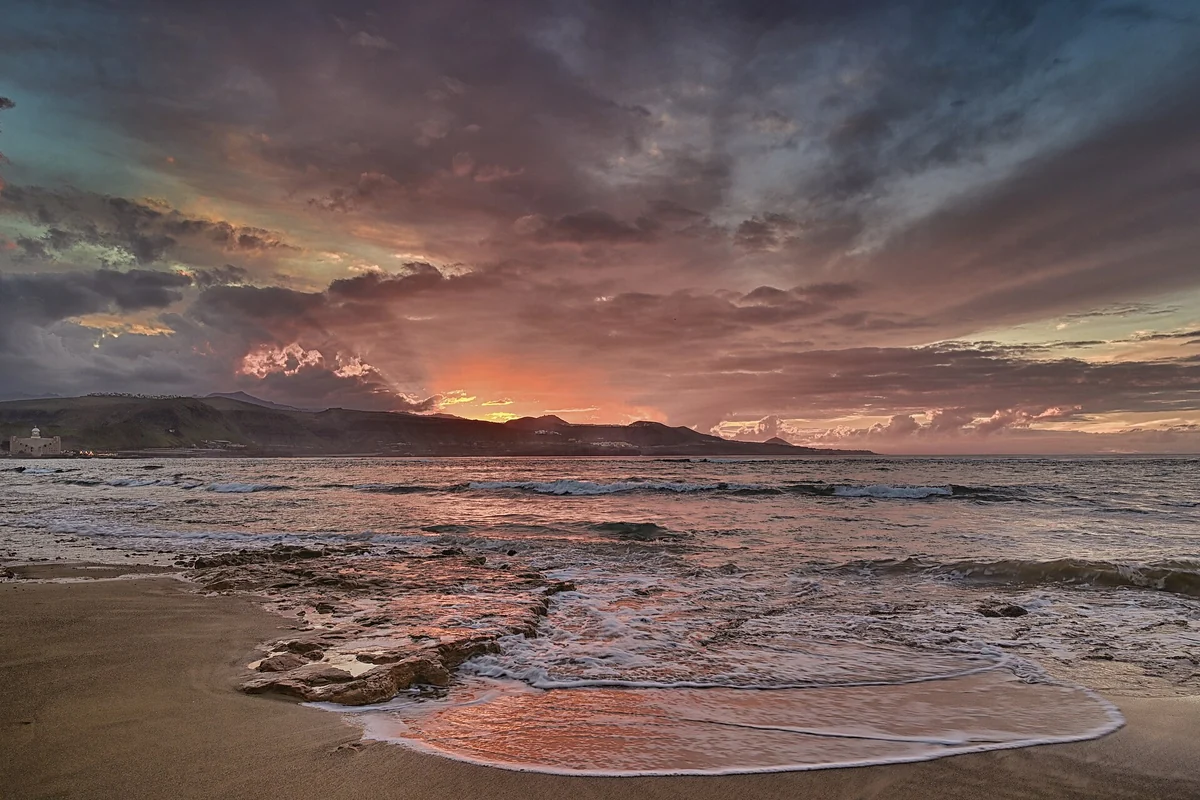
Foto: Matthias Bethke · CC BY-SA 4.0 · Wikimedia Commons Las Canteras is one of the great assets of Las Palmas de Gran Canaria: a long, lively city beach that works all year round, with a promenade, bathing areas, a local feel and the La Barra reef sheltering part of the bay. It needs no elaborate plan. You walk from La Puntilla to the Alfredo Kraus Auditorium, pick a stretch to suit the sea, and let the city do the rest.
Tip: Check the tide and wind before deciding on a swim or snorkel. La Cícer is more for surfers; the area protected by La Barra is usually gentler for swimming when conditions allow.
-
10
Las Palmas · north
Teror and the Basílica del Pino
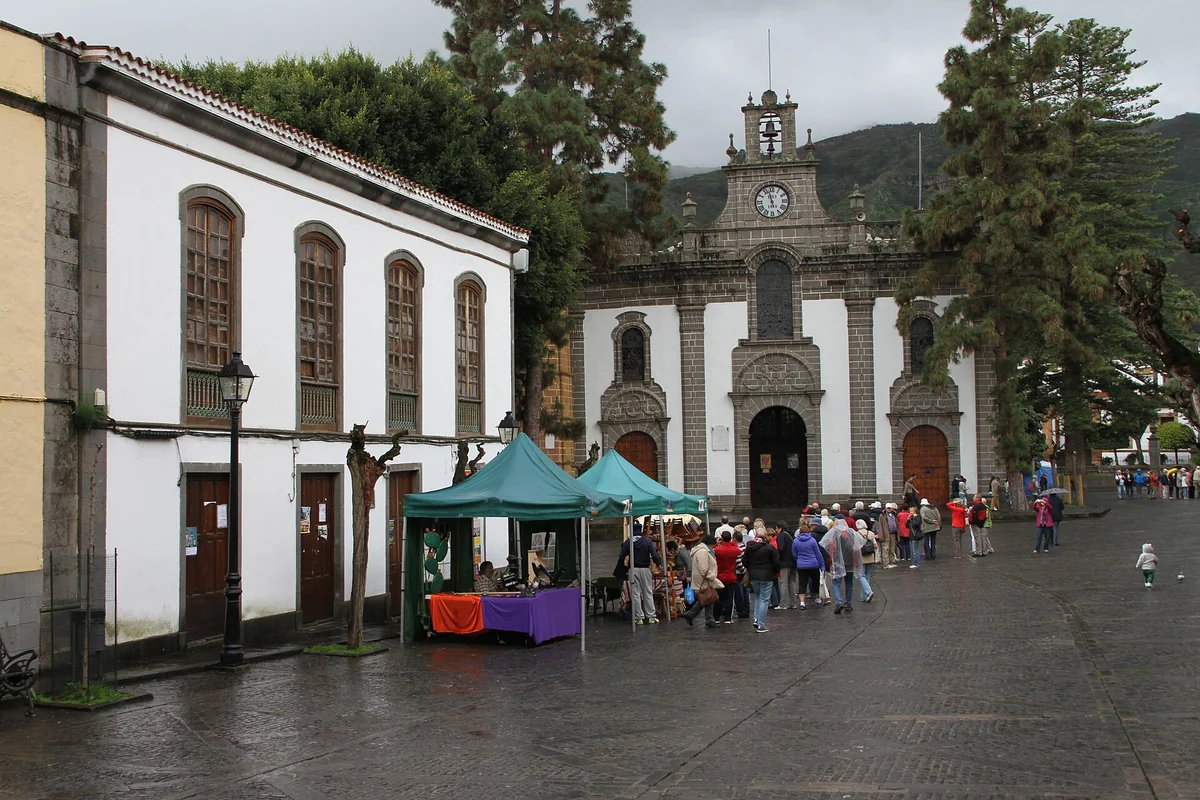
Foto: Gerd Eichmann · CC BY 4.0 · Wikimedia Commons Teror brings the highland pulse of the north: traditional balconies, a historic quarter, a square, a Sunday market and the Basílica del Pino as a religious and symbolic landmark for the island. It isn't a stop about great distances, but about scale, detail and an unhurried stroll. It fits well on a route from Las Palmas towards the inland north.
Tip: If you go on a Sunday, expect more atmosphere and less ease in parking. If you'd rather take in the architecture and streets at leisure, choose another day or arrive early.
-
11
Las Palmas · north
Cenobio de Valerón, an Aboriginal granary
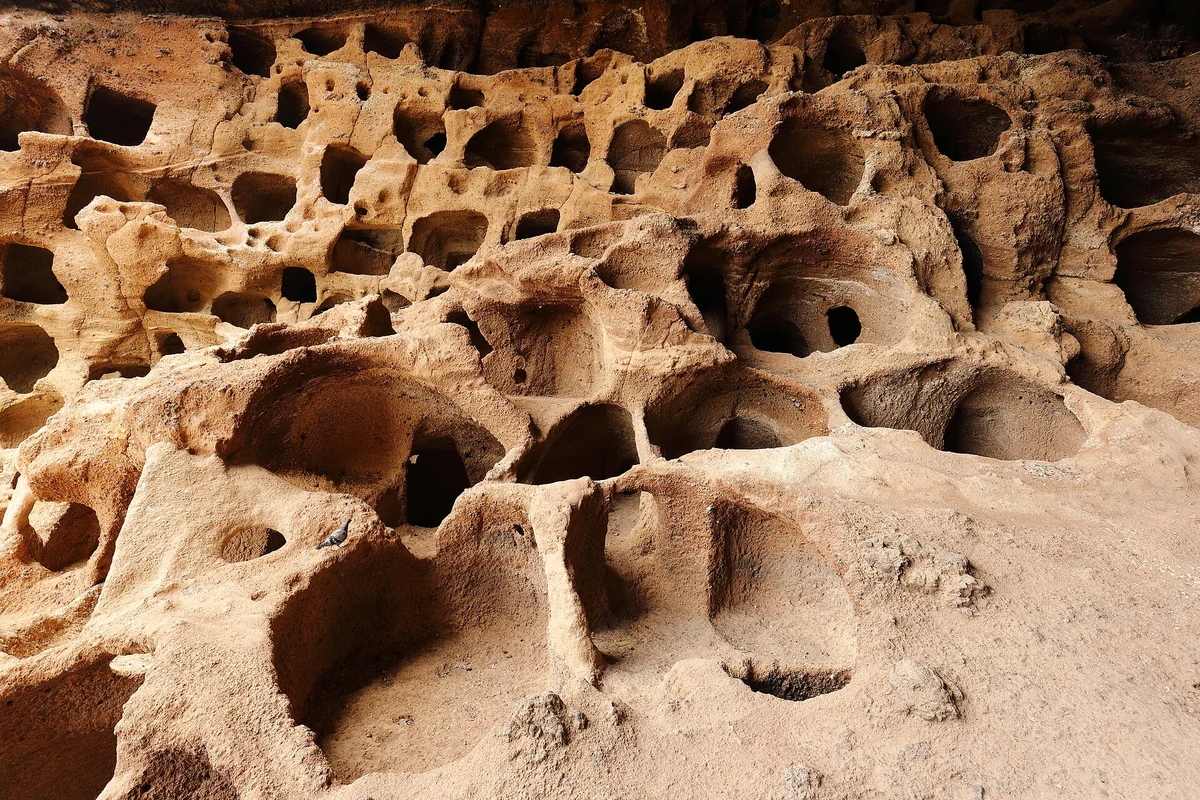
Foto: Martin Falbisoner · CC BY-SA 4.0 · Wikimedia Commons The Cenobio de Valerón is one of the north's most legible archaeological sites: an ancient communal granary carved into the rock, with hundreds of cavities and a strategic position over the landscape. Its value lies in explaining how part of Gran Canaria's pre-Hispanic society was organised, not in piling up another quick photo. It's a brief stop, but one with real cultural weight.
Tip: Check that it's open before making the detour, and wear comfortable footwear. If you're travelling with children it works well, because the visit is visual and doesn't call for a long walk.
-
12
West
Agaete, Puerto de las Nieves and the Tamadaba pine forest
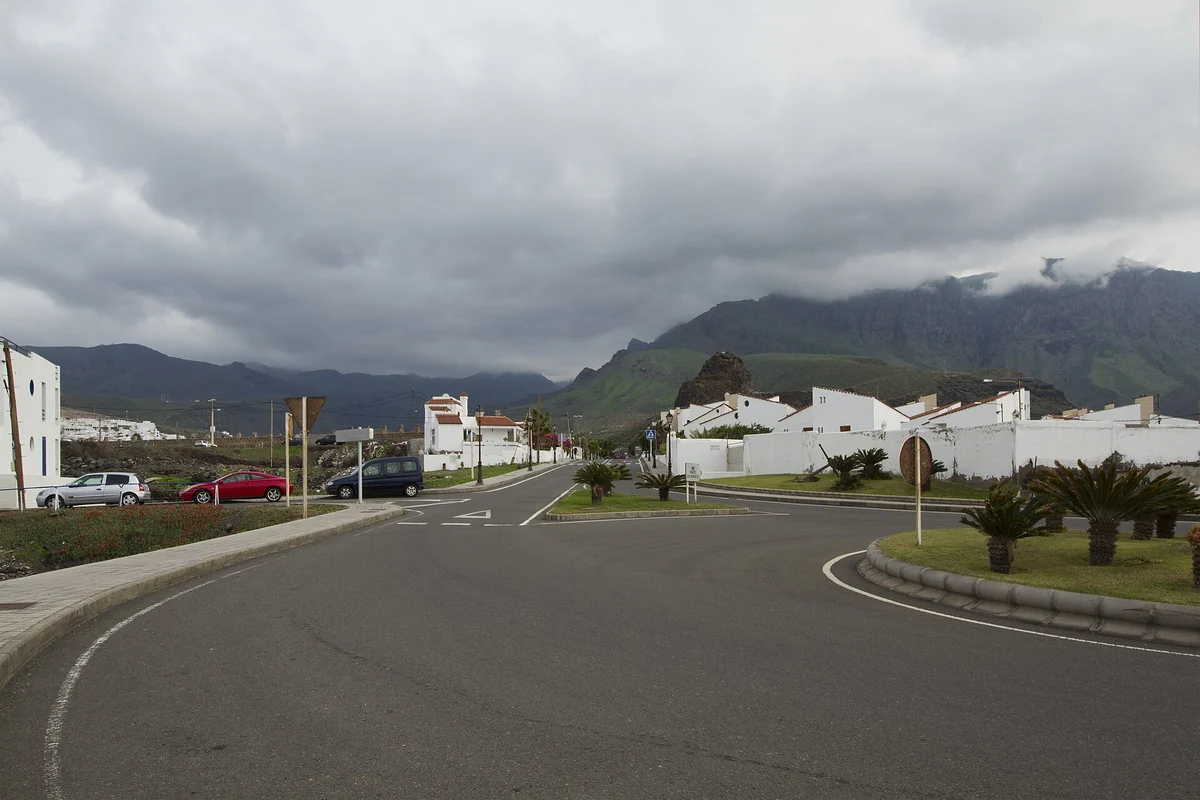
Foto: trolvag · CC BY-SA 3.0 · Wikimedia Commons Agaete changes the mood of the trip: a harbour, a valley, a rocky coast, natural pools nearby and a feel that's more Atlantic and less resort than the south. Puerto de las Nieves is the most direct stop, but the surroundings gain if you look towards the valley and towards Tamadaba, one of Gran Canaria's great masses of pine forest. This is the west as a reward, not a formality.
Tip: Don't head up to Tamadaba in a hurry or in poor weather. The roads are slow, the viewpoints depend on visibility, and the drive back to the south can run long if you reckon by kilometres alone.
-
13
Interior
Bandama Caldera, a volcano beside the capital
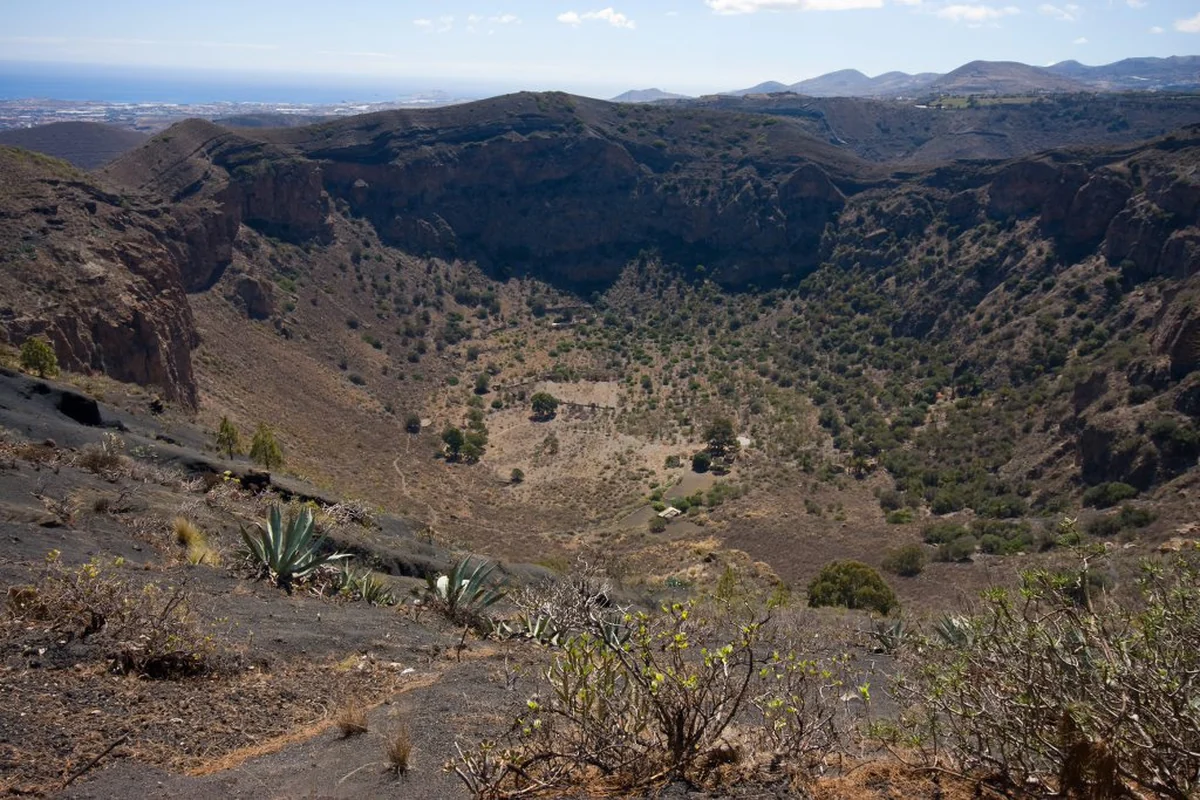
Foto: El Coleccionista de Instantes · CC BY-SA 2.0 · Wikimedia Commons Bandama is one of the best inland outings near Las Palmas: a sharply defined volcanic caldera, vineyards all around and a viewpoint that lets you take in the north-east of the island without driving up to the central summit. It's perfect for a half day if you're staying in the capital or want to mix Vegueta with nature without going down to the south.
Tip: Choose between skirting the rim, looking out from Pico de Bandama or descending into the caldera, depending on time and fitness. Don't improvise the descent in strong heat or in city shoes.
-
14
Interior · east
Barranco de Guayadeque, caves and cultural landscape
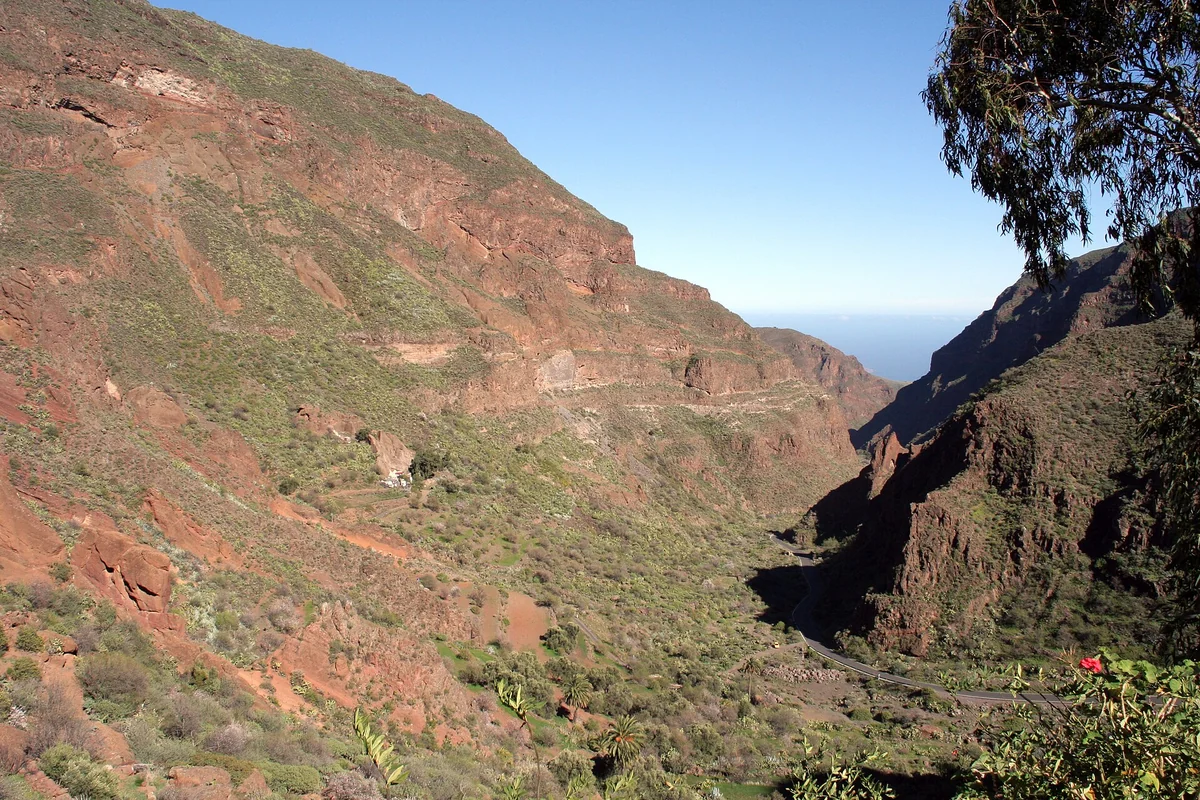
Foto: Tony Hisgett · CC BY 2.0 · Wikimedia Commons Guayadeque blends ravine, palm groves, archaeological memory and cave houses between Ingenio and Agüimes. It's a very Gran Canarian visit because it joins natural landscape with a way of living: it isn't just about gazing at steep walls, but about understanding how the ravine has concentrated life, shelter and paths. It works well as an alternative to the south when you want an inland route without reaching the highest summit.
Tip: Pair it with Agüimes or Ingenio and avoid the hottest hours if you plan to walk. The road runs up through the ravine; drive slowly and don't block access for residents or restaurants.
Itinerary
Gran Canaria in 2-3 days
- Morning: Roque Nublo and the Nublo Rural Park, with access confirmed and an early start to avoid queues, heat or late-morning mist.
- Midday: Tejeda, lunch or a short stroll through the village, then on towards Roque Bentayga if you have time.
- Afternoon: Artenara and the Mirador de Unamuno, or Pico de las Nieves if visibility is good and you're not short on daylight.
This day isn't measured in kilometres. If you only have 2 days, prioritise Roque Nublo and Tejeda, and leave Artenara or Pico de las Nieves for another trip.
- Morning: the Maspalomas Dunes along the marked paths and a stroll towards Maspalomas beach, avoiding the harshest hours of sun.
- Midday: Maspalomas lighthouse, Meloneras or Playa del Inglés depending on where you're staying and your lunch plan.
- Afternoon: Puerto de Mogán or a boat trip from Puerto Rico, closing the day on the south-west coast without returning to the summit.
If you're after sea trips, this is the natural day to fit them in. Don't mix an afternoon boat trip with a long inland route.
- Morning: Vegueta on foot, with Plaza de Santa Ana, the Cathedral, the Casa de Colón and the Vegueta Market if the timings work out.
- Midday: Las Canteras beach, a walk from La Puntilla to the Auditorium or a swim if the tide and wind cooperate.
- Afternoon: pick a slice of the north to suit your energy: Teror for the historic quarter, Cenobio de Valerón for archaeology, or Agaete and Puerto de las Nieves if you want the west coast.
Don't try to do Teror, Cenobio, Agaete and Tamadaba after a long morning in the capital. Choose one line through the north and do it properly.
Activities
Things to do in Gran Canaria
Beyond exploring on your own, Gran Canaria works very well with guided activities if you choose by area and don't double back. For the summit, Agaete, Artenara or Guayadeque, a car saves a lot of friction.
Boat trip and dolphins from Puerto Rico or Mogán
For families and couples already based in the south who want to see the coast from the sea without crossing the island. Favour operators with a clear policy on cancelling if the sea turns, and steer clear of guaranteed promises of sightings.
Summit hiking: Roque Nublo, Tejeda and Tamadaba
For getting off the beach-and-south circuit and understanding the island of ravines, pine forest and viewpoints. Check the access rules, the weather and the real grade of the route: up in the summit, a short walk changes a great deal in wind or mist.
Vegueta and Las Canteras on foot in Las Palmas
For travellers without a car, cruise passengers or anyone staying in the capital. Vegueta is best walked (Cathedral, Casa de Colón, market) and Las Canteras rounds off the day with a city beach; the car gets in the way more than it helps.
Driving route through the summit, north and west
For seeing Roque Nublo, Tejeda, Artenara, Agaete, Teror or Guayadeque without depending on timetables. Book ahead in high season and don't pack the day with far-flung points: the interior slows everything down.
Loading tours & activities in Gran Canaria…
FAQ
FAQs about what to see in Gran Canaria
What to see in Gran Canaria?
The essentials combine summit, south, capital and north: Roque Nublo, Tejeda, Roque Bentayga, the Maspalomas Dunes, the Maspalomas lighthouse, Puerto de Mogán, Vegueta, Las Canteras, Teror, Agaete, Bandama and Guayadeque. If you're short on time, give one day to the summit, one to the south and one to Las Palmas and the north.
What to do in Gran Canaria?
The best activities tend to be boat trips from Puerto Rico or Mogán, hiking routes around Roque Nublo and the summit, a city walk through Vegueta and Las Canteras, kayaking or snorkelling, guided excursions through the interior, and driving routes through Agaete, Teror, Artenara or Guayadeque.
What to see in Las Palmas de Gran Canaria?
In Las Palmas de Gran Canaria, prioritise Vegueta, Santa Ana Cathedral, the Casa de Colón, the Vegueta Market, Triana if you have time, and Las Canteras beach. It's a city for walking: park once or arrive by bus and avoid moving the car between nearby stops.
Is it worth hiring a car in Gran Canaria?
Yes, if you want to see the summit, Agaete, Artenara, Guayadeque, Teror or several viewpoints in 2-3 days. If you're only going to Las Palmas de Gran Canaria or to a beach in the south, you can combine public transport, taxis and the odd excursion. For a full route by area, a car gives a lot of freedom.
How many days do you need to see Gran Canaria?
With 2 days you can do a summit route and one day in the south or the capital. With 3 days it fits much better: the summit one day, the south and dunes another, and Las Palmas and the north on the third. With 4 or 5 days you can add Agaete, Tamadaba, Bandama and Guayadeque without rushing.
Keep planning
More for your trip to Gran Canaria
Other islands