A practical Canarias.app guide
14 places to see in Lanzarote
Volcanoes, black lava, the architecture of César Manrique, improbable vineyards, clear coves and a dry light that changes the island by the hour.
See tours & activities in LanzaroteWhat to see in Lanzarote: Timanfaya, La Geria, Jameos del Agua and Mirador del Río set the tone for the trip: volcanic fire, vineyards sunk into black lapilli, the architecture of César Manrique and views across to La Graciosa. The island rewards short routes that are well sequenced, with the beach as just one more layer.
How to explore it
What to see in Lanzarote, area by area
Lanzarote isn't simply the sum of its beaches. The island has a thread of its own: the fire of Timanfaya, the way César Manrique taught people to look at the landscape, the vineyards sunk into the lapilli of La Geria and a coast where the light turns something already volcanic almost otherworldly. It pays to travel it methodically, because the distances look short, yet every area sets its own pace.
-
1
South-west
Timanfaya, Lanzarote's essential volcanic visit

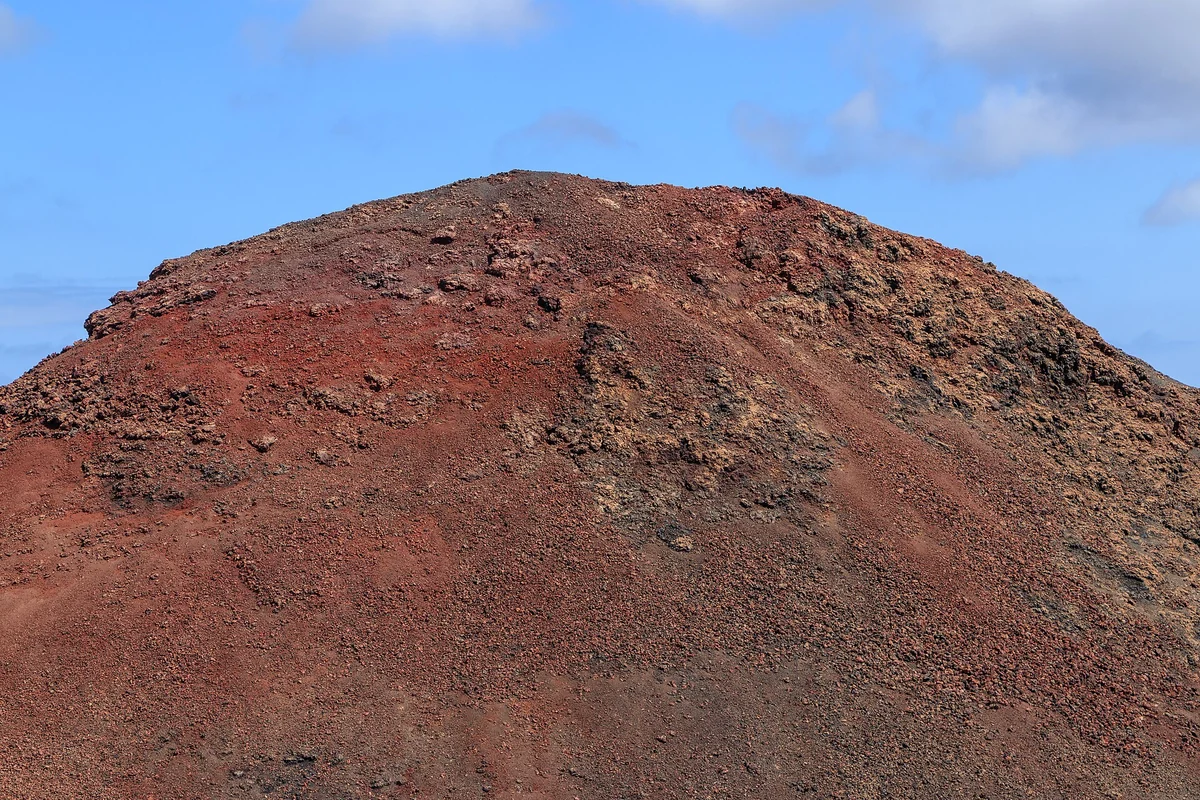
Foto: H. Zell · CC BY-SA 3.0 · Wikimedia Commons Timanfaya is Lanzarote's most powerful image: lava fields, rust-red craters, black ash and a landscape that resembles no coastal stroll. The visitor experience centres on the Montañas del Fuego, with regulated access, geothermal demonstrations at the Islote de Hilario, the Route of the Volcanoes by coach and the El Diablo restaurant built into the ensemble designed by César Manrique.
Tip: Don't approach it as a free-roaming volcano walk. At Timanfaya you must keep to the marked access points, signage and permitted routes; straying from the designated areas damages very fragile terrain and can be dangerous.
-
2
Centre · South-west
La Geria, vineyards on volcanic ash
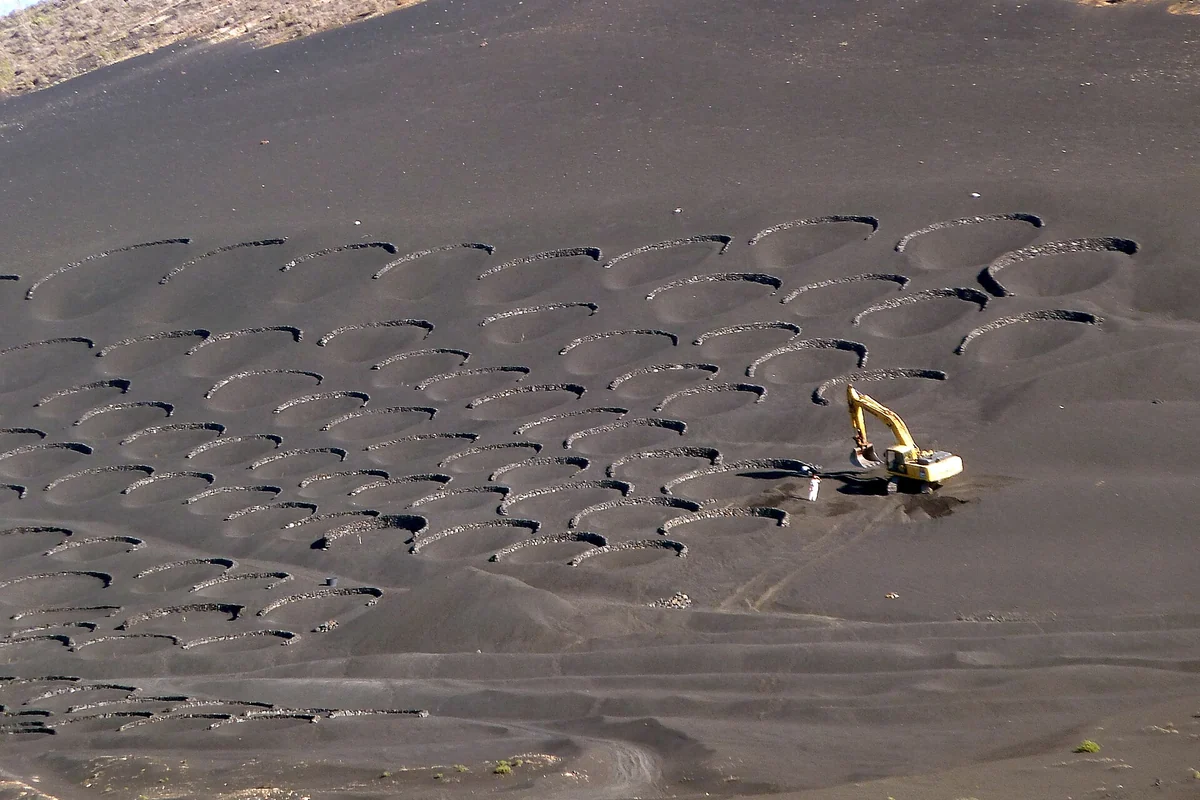
Foto: giggel · CC BY 3.0 · Wikimedia Commons La Geria is one of the most distinctive farming landscapes in the Canaries. The vines grow in hollows scooped out of volcanic gravel, sheltered by low stone walls that shield them from the wind. The result is a road of bodegas, volcanic malvasía, black earth and gentle curves between Timanfaya and the centre of the island.
Tip: Slot it in on the same day as Timanfaya, but don't turn it into an impromptu tasting if you're driving. The best plan is to stop in good light, study the cultivation system and pick one bodega if you genuinely have time.
-
3
North
Jameos del Agua, volcanic nature turned architecture
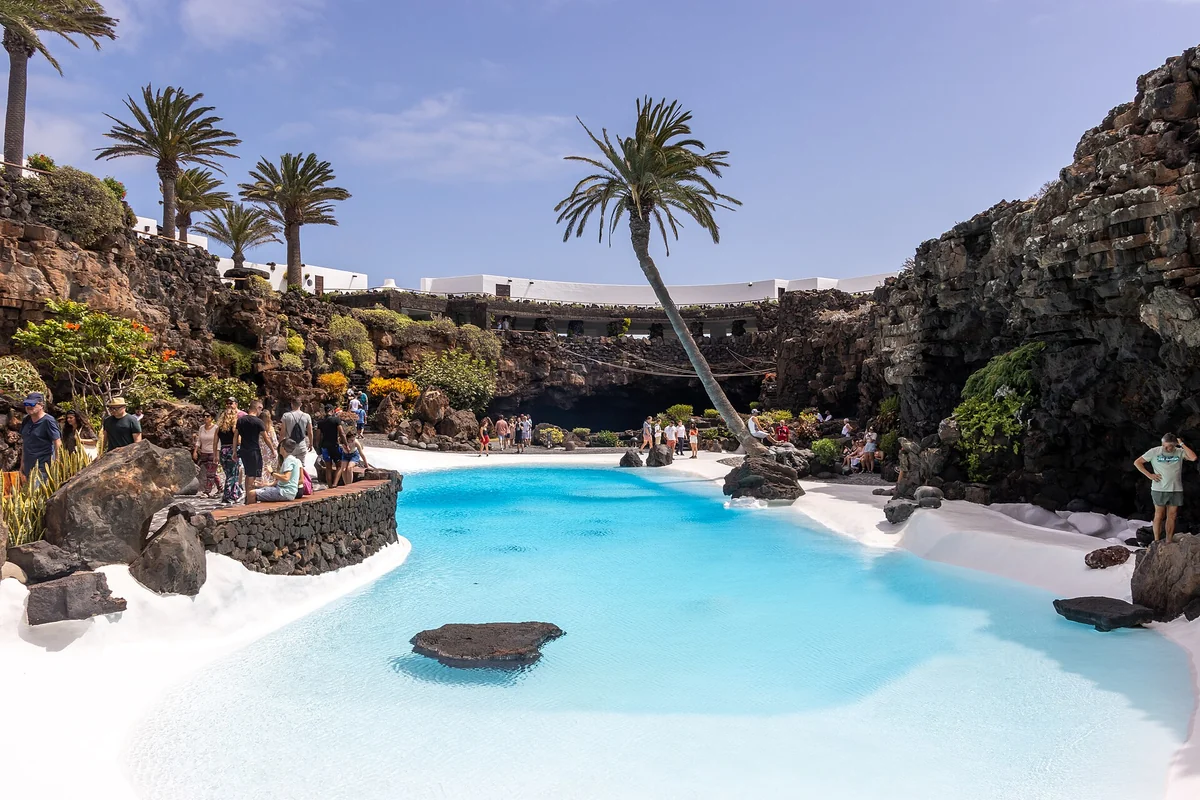
Foto: Mike Peel · CC BY-SA 4.0 · Wikimedia Commons Jameos del Agua sums up César Manrique's eye like few other places: a volcanic tube, an inner lagoon fed by seawater seepage, greenery, white, stone, water and a human intervention that never tries to compete with the cave. It is also the home of the blind albino crab, a species endemic to Lanzarote.
Tip: Pair it with the Cueva de los Verdes, since both belong to the volcanic system of the Volcán de la Corona. In high season, avoid turning up mid-morning without a plan: it's one of the island's busiest sites.
-
4
North
Cueva de los Verdes, into the lava tube of La Corona
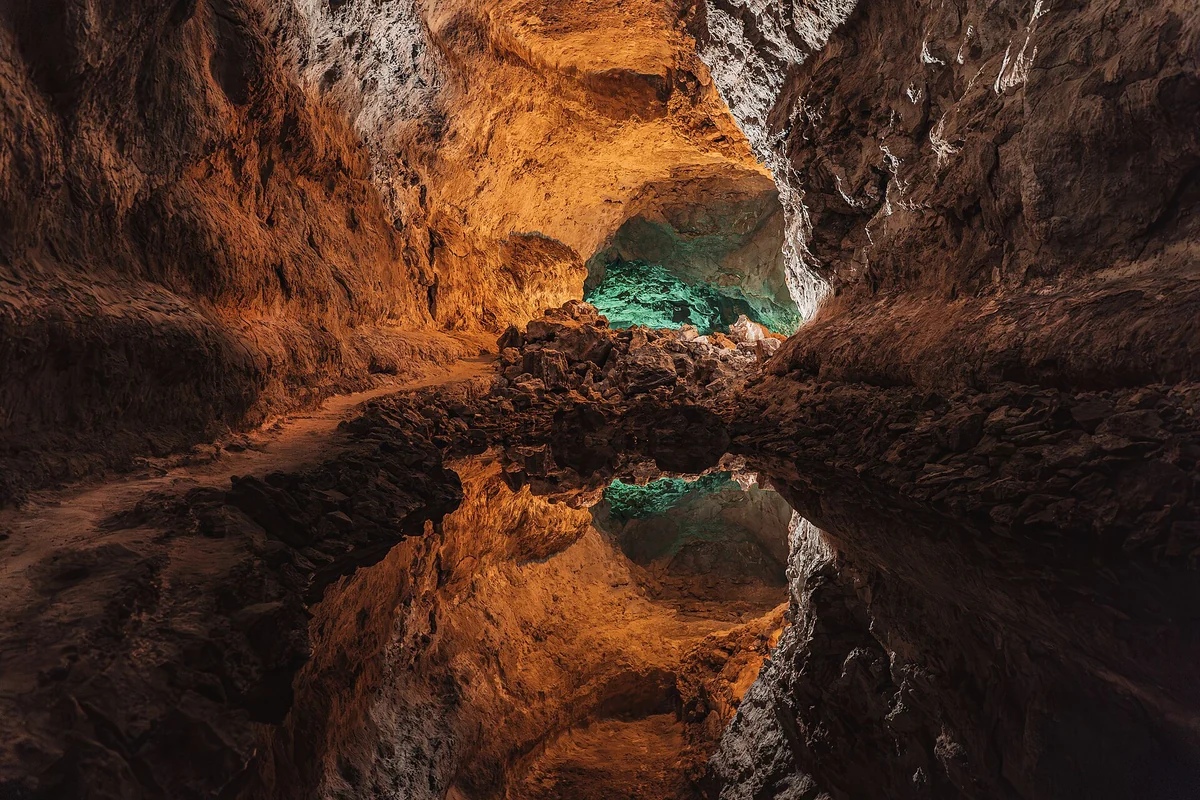
Foto: Aneta p · CC BY 4.0 · Wikimedia Commons The Cueva de los Verdes lets you walk through part of the great lava tube formed by the eruptions of the Volcán de la Corona. This is no decorative show cave: its vaults, passageways, shadows and shifts in scale help you grasp the subterranean Lanzarote, not just the island of visible craters.
Tip: Always check ticketing and the access system before you go. Don't squeeze it in at the last minute after Jameos and the Mirador del Río if you're pushed for time: the north deserves an unhurried day.
- Rent a car to explore Lanzarote
-
5
North
Mirador del Río, La Graciosa and the Chinijo Archipelago from on high
Foto: H. Zell · CC BY-SA 3.0 · Wikimedia Commons The Mirador del Río is camouflaged into the Risco de Famara and opens up one of Lanzarote's cleanest panoramas: the El Río strait, La Graciosa and the islets of the Chinijo Archipelago. Manrique's work matters as much as the view, because the building hides itself so the landscape can take the lead.
Tip: Have a fallback if the north wakes up cloaked in cloud or calima. When visibility is good, don't settle for a quick snap: the terrace and picture windows explain the dialogue between architecture and landscape beautifully.
-
6
North-east
Jardín de Cactus, Guatiza and Manrique's last great work
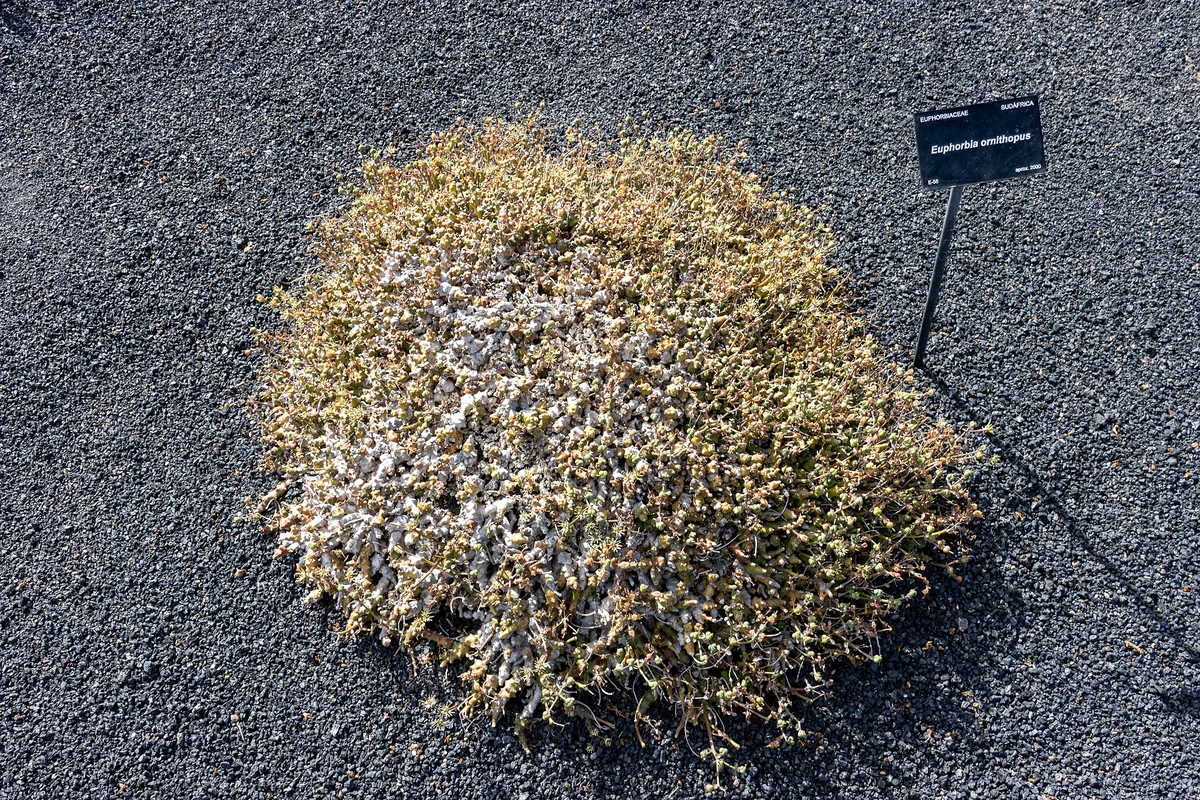
Foto: Mike Peel · CC BY-SA 4.0 · Wikimedia Commons The Jardín de Cactus turns a former lapilli quarry into a plant amphitheatre of stone, prickly pears, cacti and sweeping curves. It sits in Guatiza, within the farming landscape tied to cochineal, and shows another side of Lanzarote: less epic volcano, more aesthetic precision, with Manrique working the detail until the place feels inevitable.
Tip: Don't dismiss it for sounding small. It works well as a stop between Teguise, Jameos or the north, and is best enjoyed under high light, when the shadows trace out the garden's terraces.
-
7
Centre
Fundación César Manrique, the volcanic house that frames the island
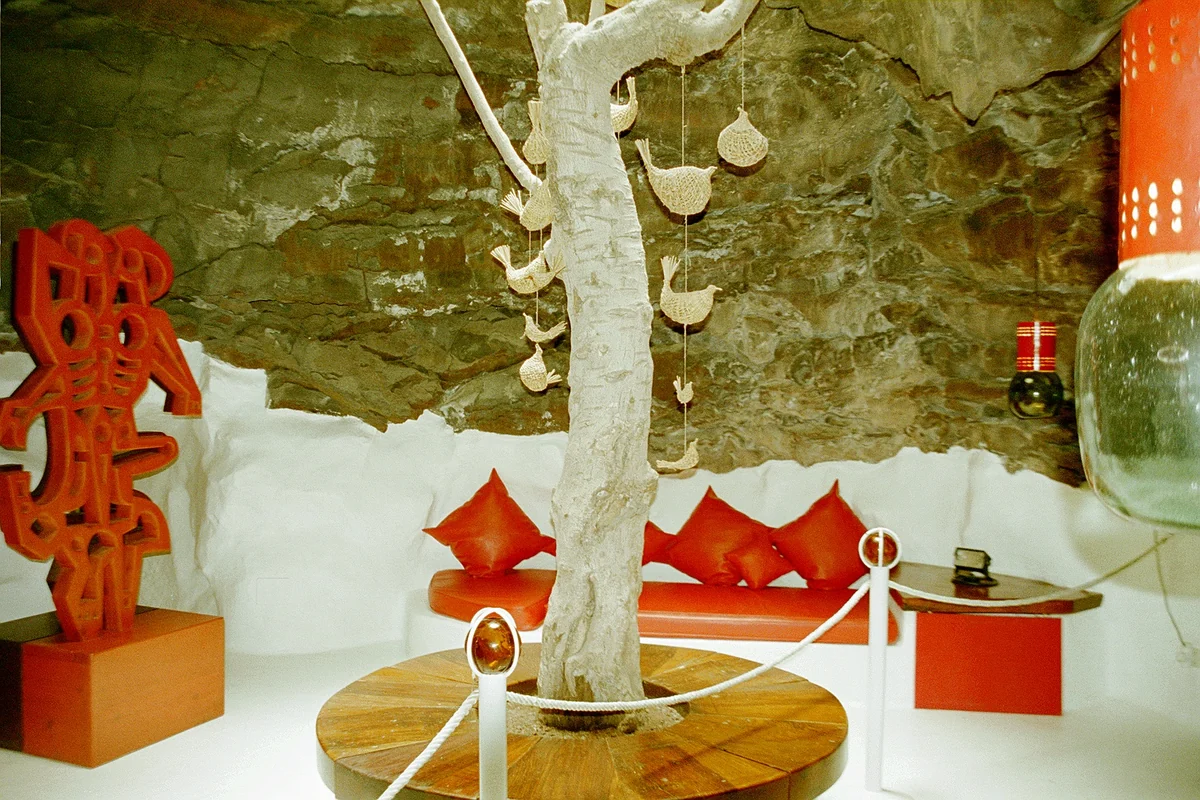
Foto: wollex · CC BY-SA 3.0 · Wikimedia Commons The headquarters of the Fundación César Manrique occupies the artist's former home at Taro de Tahíche, built atop a lava flow. The lower level is arranged around interconnected volcanic bubbles, while the upper level converses with Lanzarote's traditional architecture. It's the visit that best helps you understand why the island never developed like other coastal destinations.
Tip: Do it early in the trip if you can. Once you've seen the house, Jameos, the Mirador del Río, the Jardín de Cactus and Timanfaya read with far more insight, rather than as standalone attractions.
-
8
South
Papagayo, the clear coves of southern Lanzarote
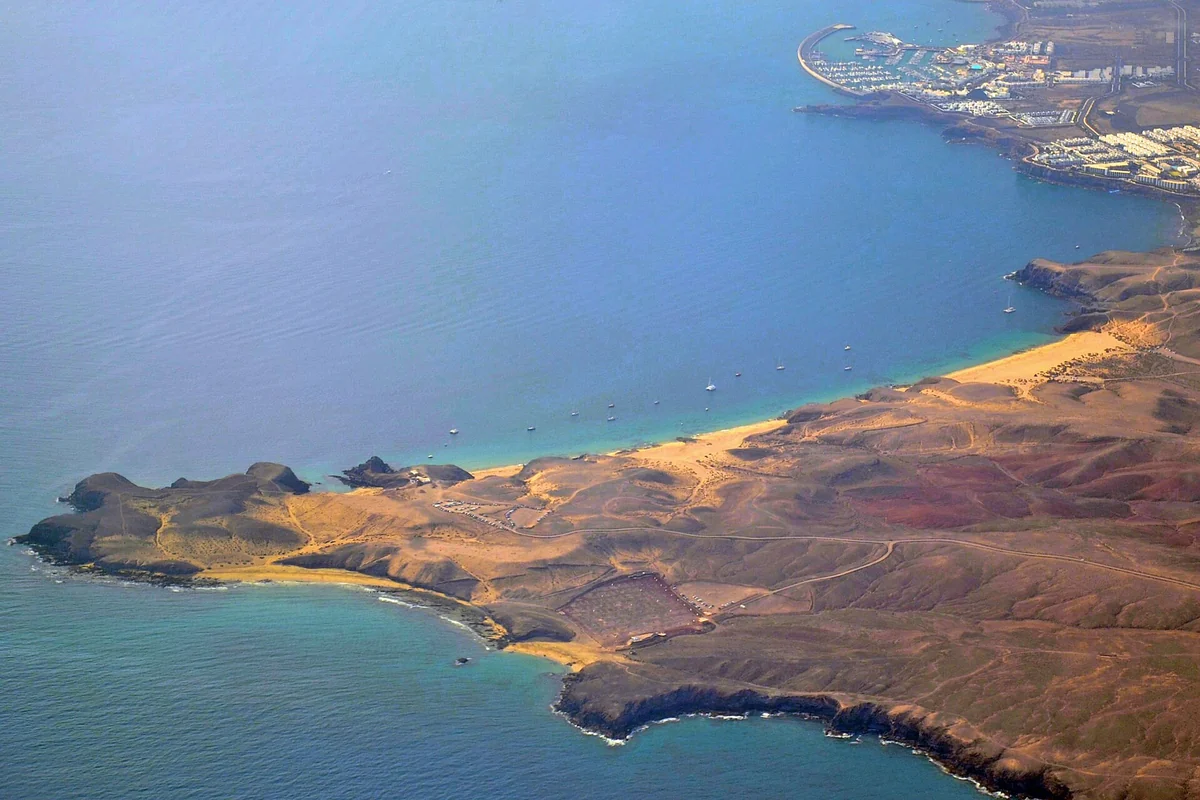
Foto: Wiki05 · CC0 · Wikimedia Commons Papagayo is the south's most famous cove, but it's best thought of as part of the cluster of beaches protected by Los Ajaches: pale sand, calm water when the sea allows and a landscape more bare than built-up. It's the most logical place for a swim after a route through Yaiza, La Geria, El Golfo or Janubio.
Tip: Bring water, sun protection and realistic expectations: the setting is almost wild and vehicle access may come with specific conditions. Don't leave the car where it gets in the way, or turn the visit into a race round every cove.
-
9
North-west
Famara, surf, wind and one of Lanzarote's great lights
Foto: Chmee2 · CC BY-SA 3.0 · Wikimedia Commons Famara changes the island's mood entirely. Against the apparent calm of Papagayo, here the wind, the swell, the Risco de Famara and the silhouette of La Graciosa beyond hold sway. It's a beach for long walks, surfing and sunsets rather than carefree daily swims.
Tip: Respect the flags, the swell and the currents. If you're not surfing, the best plan is usually a walk at low tide ending in Caleta de Famara, without assuming it will be a calm family beach.
-
10
North · Chinijo
La Graciosa, the natural escape from Órzola
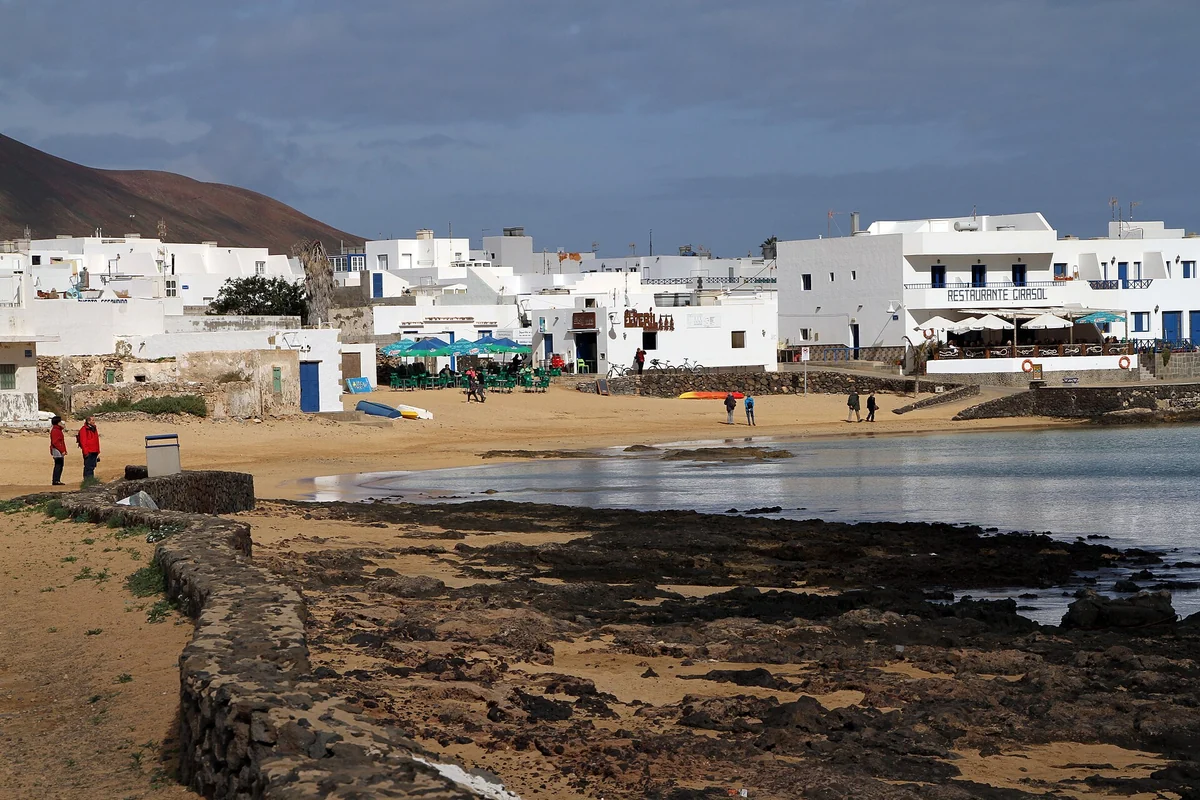
Foto: Gerd Eichmann · CC BY 4.0 · Wikimedia Commons La Graciosa is the trip that extends Lanzarote into the Chinijo Archipelago. You reach it by ferry from Órzola and the pace shifts at once: sandy streets in Caleta de Sebo, bicycles, marked trails, clear beaches and the feeling of an island within the island. It's no decorative appendage, but a protected territory that demands care.
Tip: Give it the best part of a day if you decide to go. Take shade, water and the discipline to stay on the paths: La Graciosa looks simple, but its fragility leaves no room for improvising off the permitted routes.
-
11
Centre · North
Teguise, Lanzarote's former capital and historic centre
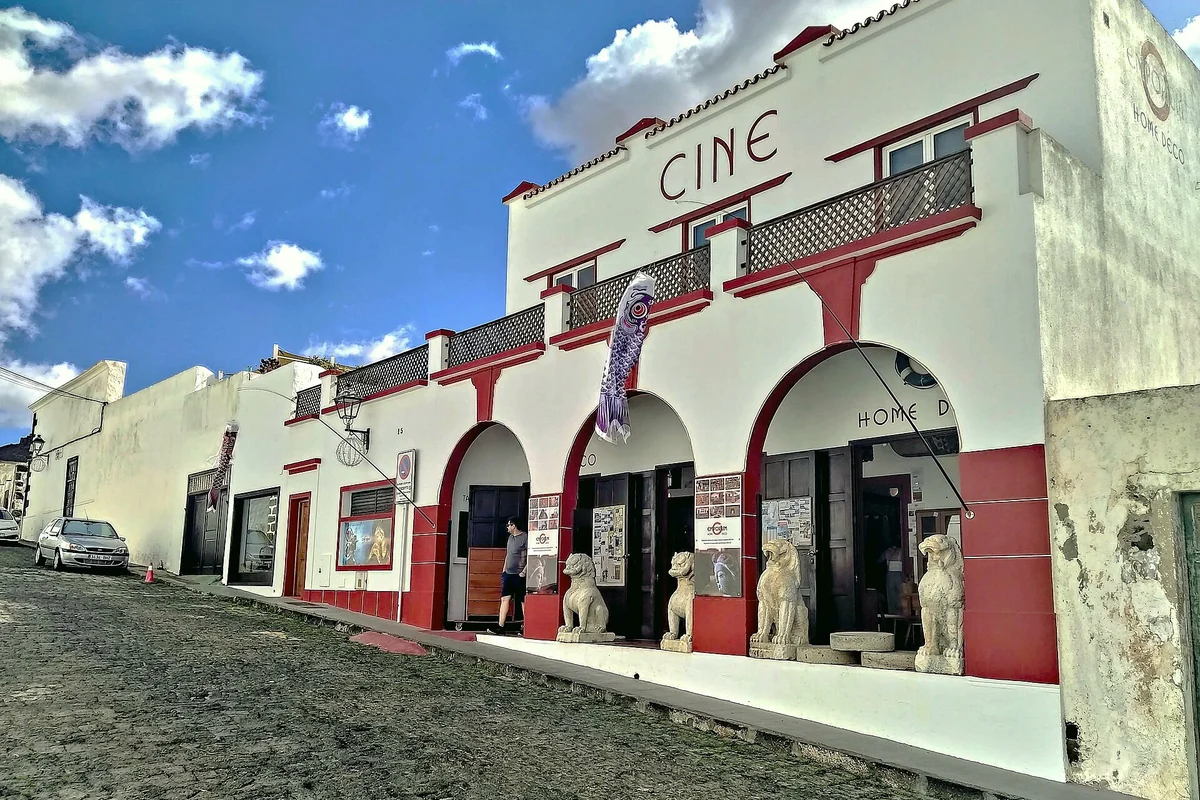
Foto: Alberto-g-rovi · CC BY 4.0 · Wikimedia Commons The Villa de Teguise preserves the historic scale that Lanzarote sometimes hides behind its volcanic landscapes. The island's former capital still has a centre of cobbled streets and low houses, rounded off by the Castillo de Santa Bárbara atop the Guanapay volcano, today home to the Museo de la Piratería.
Tip: The Sunday market is hugely popular and transforms the atmosphere completely. If you want quiet and architecture, come outside those hours; if you're after the market, accept the parking, the crowds and a less contemplative visit.
-
12
West
El Golfo and the Lago Verde, volcanic contrast beside the Atlantic
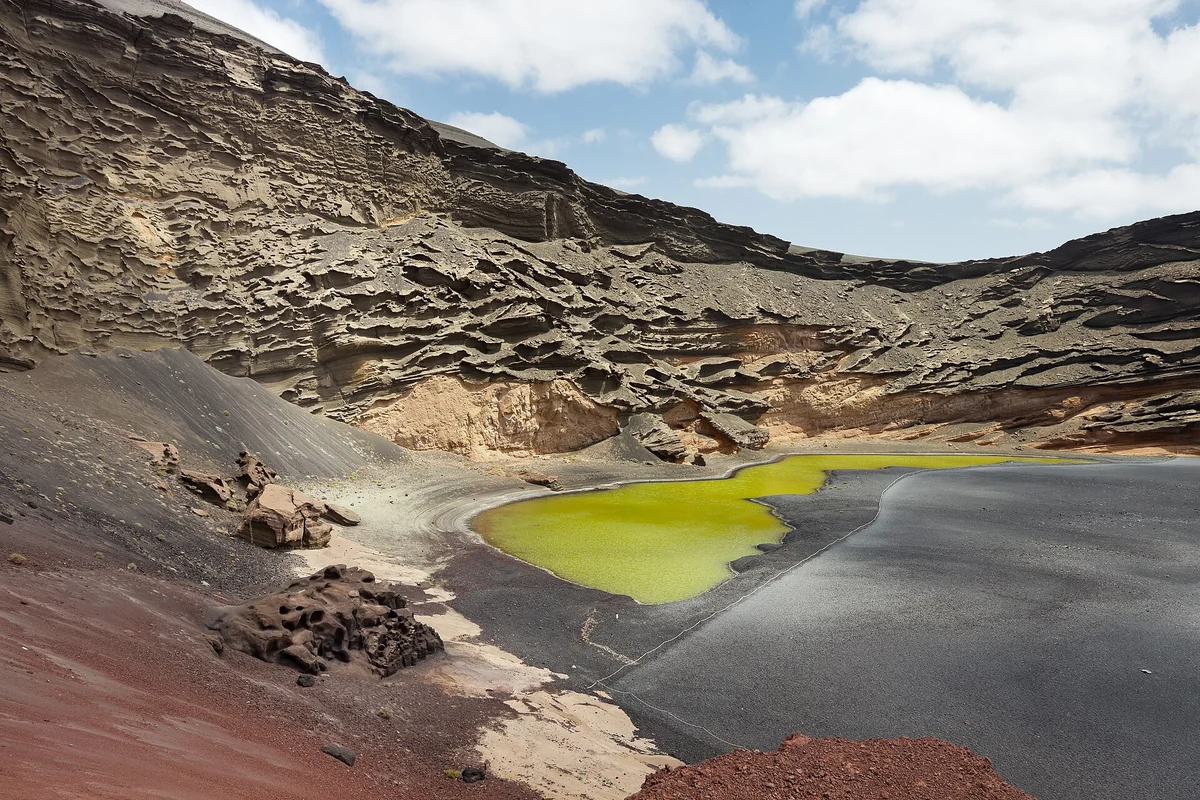
Foto: Luis Miguel Bugallo Sánchez · CC BY-SA 3.0 · Wikimedia Commons El Golfo holds one of Lanzarote's most recognisable scenes: the crater open to the sea, the dark sand, the fishing village and the Charco de los Clicos, also known as the Lago Verde. The colour of the water, the volcanic wall and the afternoon light make it a wonderfully photogenic stop, but also one to view only from the designated access points.
Tip: Don't climb down or cross signposted areas to get closer to the lagoon. The right approach is to use the viewpoints and permitted paths, and combine it with Los Hervideros and Janubio if you're touring the west coast.
-
13
West · South
Los Hervideros and Janubio, lava, sea and salt
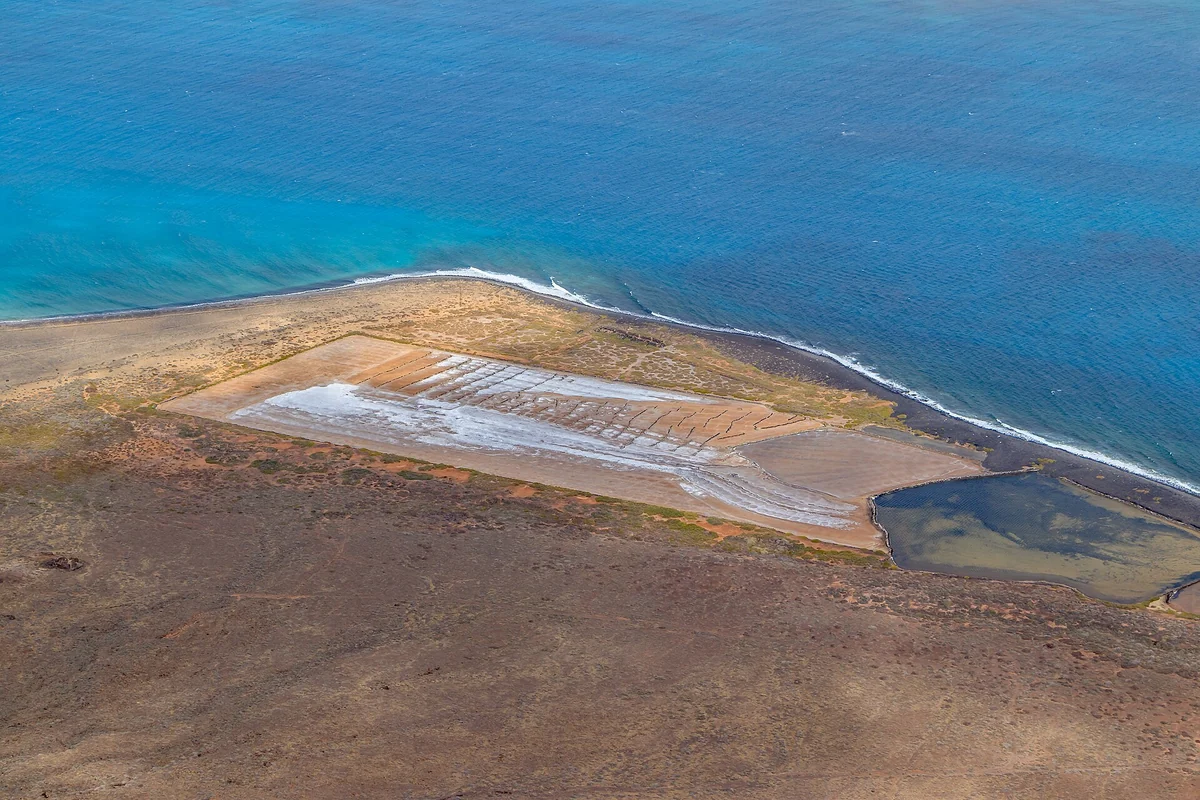
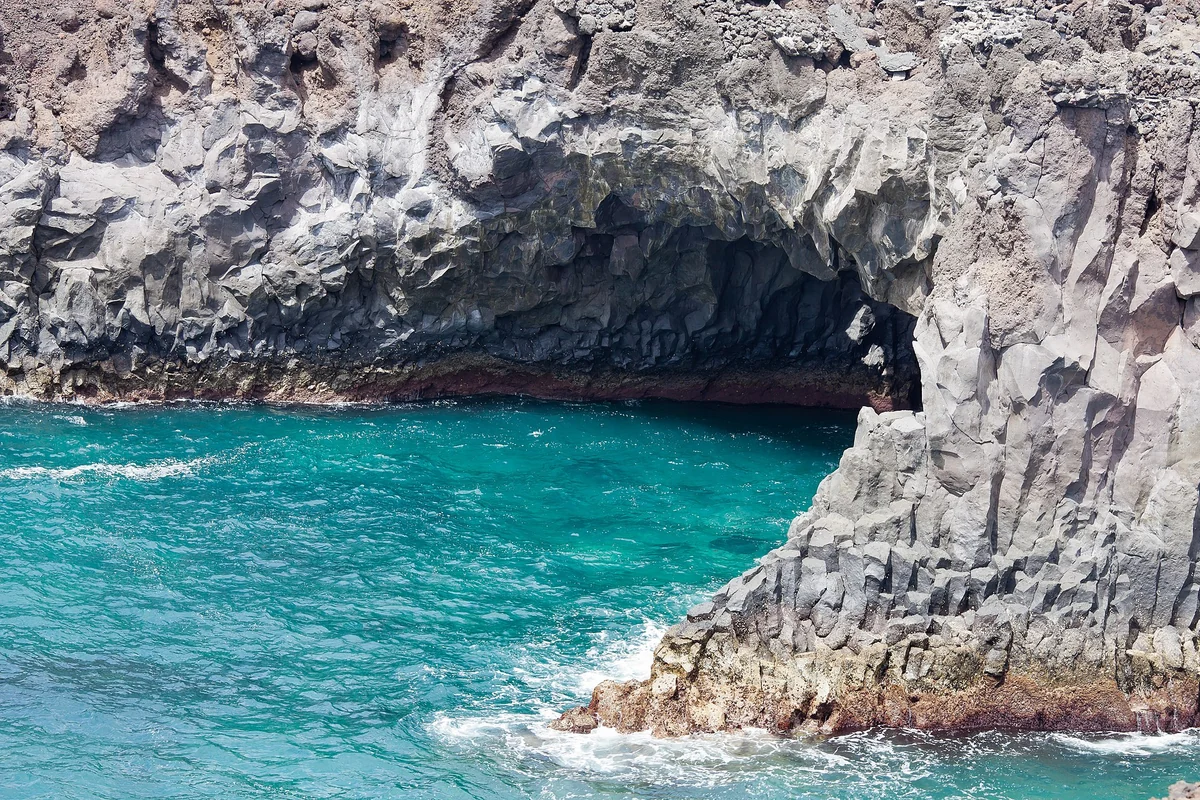
Foto: Luis Miguel Bugallo Sánchez · CC BY-SA 3.0 · Wikimedia Commons Los Hervideros shows the volcanic coast in motion: the Atlantic pounds the lava cavities and the water seems to boil through tunnels and natural balconies. Close by, the Salinas de Janubio add another layer: historic salt pans, geometric pools, birdlife and colours that shift at the end of the day.
Tip: At Los Hervideros, never turn your back on the sea or stray beyond the railings and paths. For Janubio, the late afternoon usually orders the landscape best, but don't get caught without light to drive by if you're crossing the island afterwards.
-
14
Capital
Arrecife, the seafaring capital worth not skipping
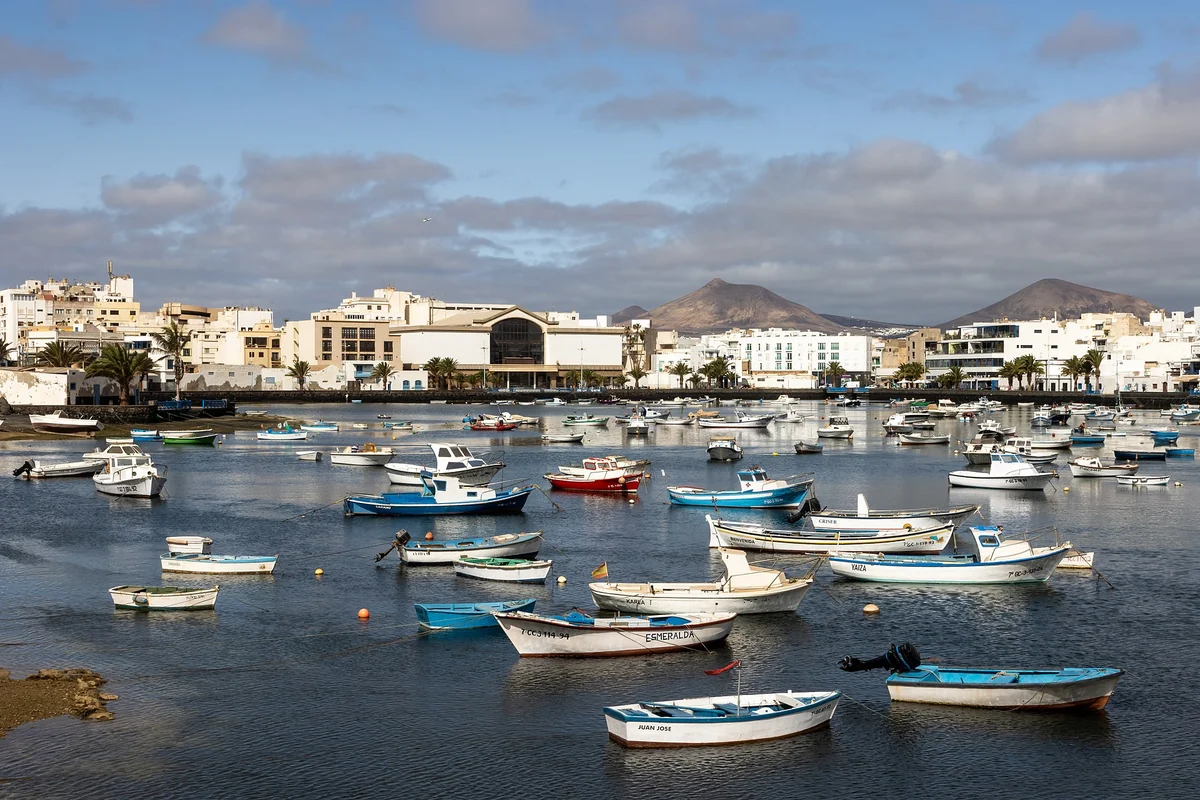
Foto: Mike Peel · CC BY-SA 4.0 · Wikimedia Commons Arrecife doesn't compete with Timanfaya or the north, but it brings urban life, a harbour, a seafront promenade and defensive history. The Charco de San Ginés, reworked with a César Manrique intervention, keeps the capital's seafaring character; the Puente de las Bolas and the Castillo de San Gabriel round off an easy visit before or after a flight.
Tip: Slot it in as a light half-day, not as aimless filler. It works well if you arrive early, leave in the afternoon, or want to close the trip with a walk and a meal without more driving.
Itinerary
Lanzarote in 2-3 days
- Morning: the Fundación César Manrique at Taro de Tahíche, to grasp the island's visual language before entering the northern sites.
- Midday: Jameos del Agua and the Cueva de los Verdes, allowing enough time not to string the two together as if they were a single stop.
- Afternoon: the Mirador del Río if visibility allows, then down to Guatiza for the Jardín de Cactus, or Teguise if you'd rather have a historic centre.
If the north is overcast, reverse the order and save the Mirador del Río for the clearest stretch of the day. Jameos and the Cueva are more dependable than a panorama.
- Morning: the Montañas del Fuego and the Route of the Volcanoes at Timanfaya, with regulated access and no improvised walks into off-limits areas.
- Midday: La Geria and its vineyards on volcanic lapilli, with a brief stop at a bodega or viewpoint if you're driving.
- Afternoon: El Golfo and the Charco de los Clicos, Los Hervideros, the Salinas de Janubio and a finish at Papagayo if you want a swim and southern light.
This is the most rounded day with a car. If you're travelling without one, consider an organised tour for Timanfaya and La Geria, and leave Papagayo for another time.
- Morning: Teguise and the Castillo de Santa Bárbara if you want heritage, or the ferry from Órzola to La Graciosa if you'd rather give the day to Chinijo.
- Midday: Famara and Caleta de Famara to eat, walk the beach and take in the Risco at leisure, always keeping an eye on the wind and the sea.
- Afternoon: Arrecife, the Charco de San Ginés and the Castillo de San Gabriel if you need an urban finish near services, the airport or your accommodation.
With only 2 days, prioritise Day 1 and Day 2. La Graciosa deserves the best part of a day of its own; don't squeeze it in as a quick stop between viewpoints.
Activities
Things to do in Lanzarote
As well as what to visit under your own steam, Lanzarote works very well with guided activities when there's regulated access, boat logistics or multi-stop routes involved. Timanfaya, La Geria, Famara, Papagayo and Órzola are far easier to organise with your own transport.
Timanfaya and the Route of the Volcanoes
To grasp Lanzarote's volcanic origins without straying from regulated areas or turning the national park into an improvised outing. Choose between an independent visit to the designated centre or an organised tour if you'd rather not drive and park.
The César Manrique trail and the CACT sites
To read Lanzarote through architecture and landscape: Jameos del Agua, the Mirador del Río, the Jardín de Cactus, the Cueva de los Verdes and the Fundación César Manrique. Group them by the north and centre, and leave time to take the spaces in, not just photograph them.
Ferry or boat to La Graciosa
To add a quieter island, clear beaches, a bike ride and the view of the Risco de Famara from the sea. Check the timetables, the departure point in Órzola and the sea conditions; La Graciosa demands time and strict respect for its paths.
A road route through La Geria, the south and the beaches
For a flexible day of vineyards, El Golfo, Los Hervideros, Janubio, Papagayo or Famara without depending on piecemeal transfers. Order the day: a few well-chosen stops, no tastings if you're driving and a margin for wind and parking.
Loading tours & activities in Lanzarote…
FAQ
FAQs about what to see in Lanzarote
What is there to see in Lanzarote?
The essentials combine volcanoes, the work of César Manrique, wine and coast: Timanfaya and the Montañas del Fuego, La Geria, Jameos del Agua, the Cueva de los Verdes, the Mirador del Río, the Jardín de Cactus, the Fundación César Manrique, Papagayo, Famara, La Graciosa, Teguise, El Golfo, Los Hervideros, the Salinas de Janubio and Arrecife.
What is there to do in Lanzarote?
The best things to do are visiting Timanfaya on the Route of the Volcanoes, following a trail around the César Manrique sites, crossing to La Graciosa from Órzola, touring La Geria and the south by car, trying a bodega with responsible planning, or surfing and walking at Famara when the sea allows.
What to do in Lanzarote
If you search what to do in Lanzarote, focus on four plans: Timanfaya and the volcanic landscape, César Manrique sites such as Jameos del Agua and Mirador del Río, a day trip to La Graciosa, and a road route through La Geria, El Golfo, Los Hervideros, Janubio, Papagayo or Famara.
What to see in Lanzarote
The must-see places in Lanzarote are Timanfaya, Jameos del Agua, Cueva de los Verdes, Mirador del Río, Jardín de Cactus, Fundación César Manrique, La Geria, Papagayo, Famara, La Graciosa, Teguise, El Golfo, Los Hervideros, Salinas de Janubio and Arrecife.
How many days do you need to see Lanzarote?
With 2 days you can see the essentials if you set aside one day for the Manrique north and another for Timanfaya, La Geria and the south. With 3 days the island is far more rewarding, because you can add Teguise, Famara, Arrecife or an escape to La Graciosa without rushing.
Is it worth hiring a car in Lanzarote?
Yes, especially if you want to combine Timanfaya, La Geria, Papagayo, Famara, Teguise, Órzola and several viewpoints in a few days. Organised tours help with Timanfaya or La Graciosa, but a car gives you the freedom to sequence the areas and avoid retracing your route.
What to see in Lanzarote in 3 days?
In Lanzarote over 3 days, the best approach is to split the island by area. Day 1: the César Manrique north, with Jameos del Agua, the Cueva de los Verdes, the Mirador del Río and the Jardín de Cactus. Day 2: Timanfaya, La Geria, El Golfo and Los Hervideros. Day 3: Papagayo, Teguise and Famara, or a day trip to La Graciosa.
Keep planning
More for your trip to Lanzarote
Other islands