Canarias.app travel guide · Lanzarote
Jardín de Cactus in Lanzarote: César Manrique’s Landmark in Guatiza
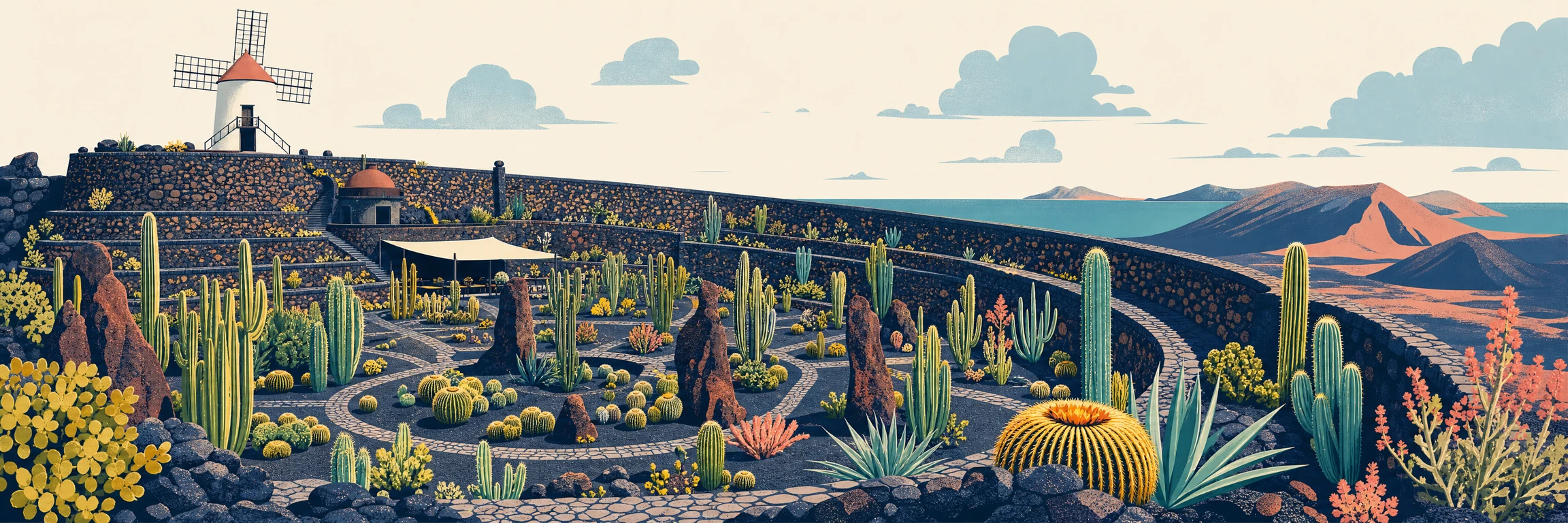
The Jardín de Cactus is in Guatiza, in the Lanzarote municipality of Teguise, and was César Manrique’s last major intervention on the island. Set inside a former rofe quarry, it brings together cacti from different parts of the world with integrated architecture, volcanic stone and a restored windmill as its visual landmark.
What it is and why visit
The Jardín de Cactus turns a former picón quarry into a botanical and architectural space on a human scale. César Manrique worked here with volcanic stone, circular routes, terraces and design pieces that never compete with the plants. The collection gathers cacti from many origins and invites you to look closely at shapes, spines, flowers and volumes. The restored windmill, set on the upper level, helps place the garden within the agricultural landscape of Guatiza and northern Lanzarote.
How to get there
It is in Guatiza, within the municipality of Teguise, in the north of Lanzarote. Access is by road from the island’s main towns, following signs for Guatiza and the Centros de Arte, Cultura y Turismo de Lanzarote. The visit fits well into a northern route, combined with other Manrique sites or nearby villages. As it is a managed venue, check opening times, admission and current conditions on the official CACT Lanzarote website.
Tips for visiting
Admission is paid, so do not assume opening times or availability without checking the official website first. The route is relaxed, but much of it is outdoors, so sun protection and water are advisable, especially on clear days. Take time to move up and down through the different levels: the garden changes considerably depending on where you view it from. Respect the plants and avoid getting too close to cacti with visible spines.
What to see inside: Manrique’s final major work
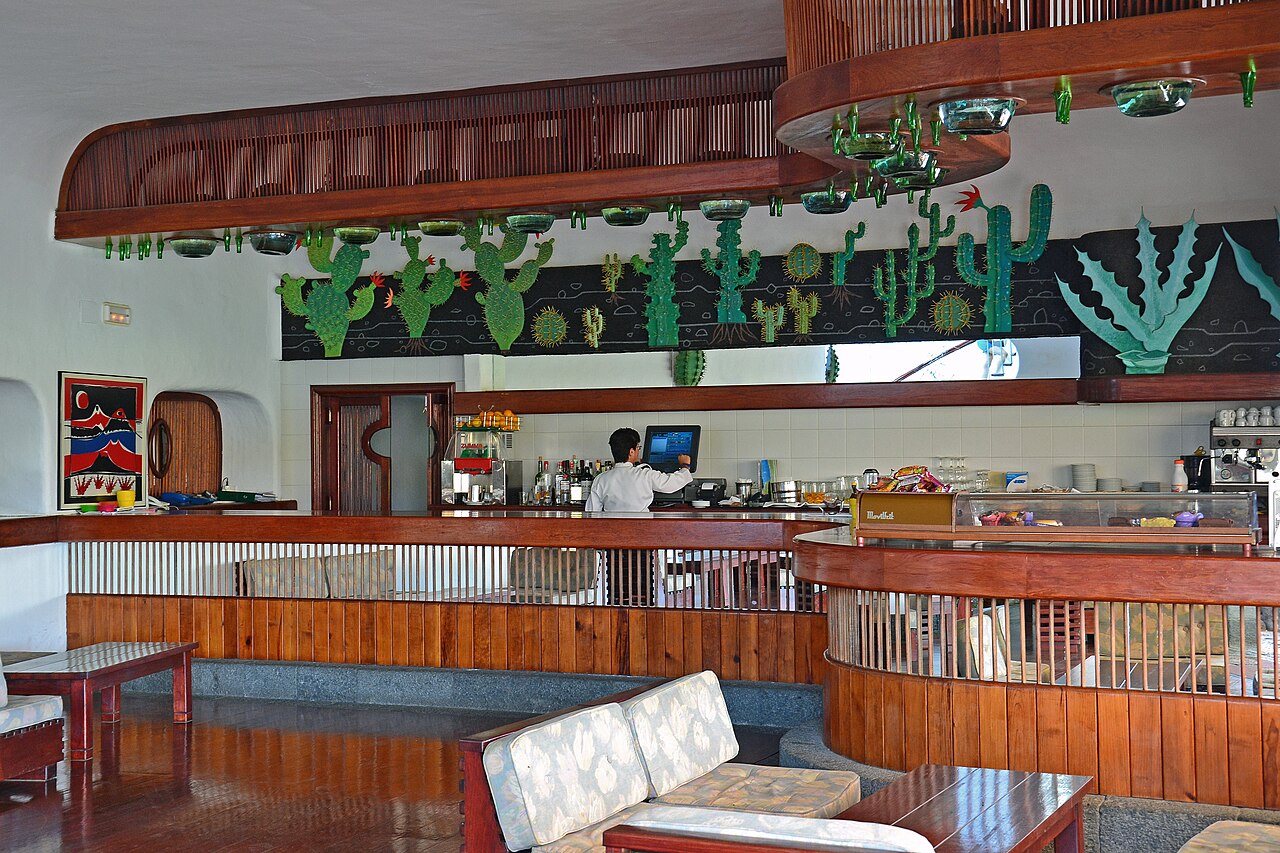
The Jardín de Cactus was César Manrique’s last major work, opened in 1990, and it sums up his approach exceptionally well: reclaiming a degraded space, reading the surrounding agricultural landscape and turning it into a precise public artwork. It was built in a former rofera in Guatiza, a picón quarry in an area traditionally associated with prickly pear cultivation and cochineal. Inside, it works like a botanical amphitheatre, with around 4,500 plants and roughly 450-500 species of cacti and succulents from several continents. The visit is not just about counting specimens: the route alternates low viewpoints, terraces, volcanic-stone walls and the contrast between the garden’s geometry and the plants’ natural forms. On the upper level, a restored gofio windmill overlooks the whole site. The 8-metre cactus monument marks the entrance, and inside there is a café with a terrace. It belongs to the CACT network.
FAQ
Questions about Jardín de Cactus in Lanzarote
Is the Jardín de Cactus free?
No. It is one of Lanzarote’s Centros de Arte, Cultura y Turismo and has paid admission. Check the latest information on the official website.
Where is the Jardín de Cactus?
It is in Guatiza, in the municipality of Teguise, in northern Lanzarote. Access is by road, following local signage.
What is its connection with César Manrique?
It was César Manrique’s last major work in Lanzarote. It integrates botany, architecture, volcanic stone and agricultural landscape inside a former rofe quarry.
How much time should I allow?
It depends on your pace and how closely you want to study the collection. It is best not to treat it as a five-minute stop, as the route has several levels and viewpoints.
How many cacti are there in the Jardín de Cactus?
The Jardín de Cactus brings together around 4,500 cacti and succulents, with several hundred species from different continents. The exact number may vary with the collection, but the site is arranged as a large botanical amphitheatre inside a former rofe quarry.
What is the rofera it was built in?
A rofera is a former quarry for rofe or picón, the volcanic lapilli used by farmers to retain moisture in the soil. Manrique reused that hollow in Guatiza to create the Jardín de Cactus, surrounded by an area linked to prickly pear and cochineal cultivation.
Book online
Tickets, tours and activities
Jardín de Cactus is a paid attraction: booking your tickets in advance secures your spot and usually skips the ticket-office queue.
Buy tickets for Jardín de CactusKeep exploring
More to see in Lanzarote
Tours and activities in Lanzarote
Loading tours…