Canarias.app travel guide · Lanzarote
Lanzarote Travel Guide: What to See, Beaches, Getting Around and Where to Stay
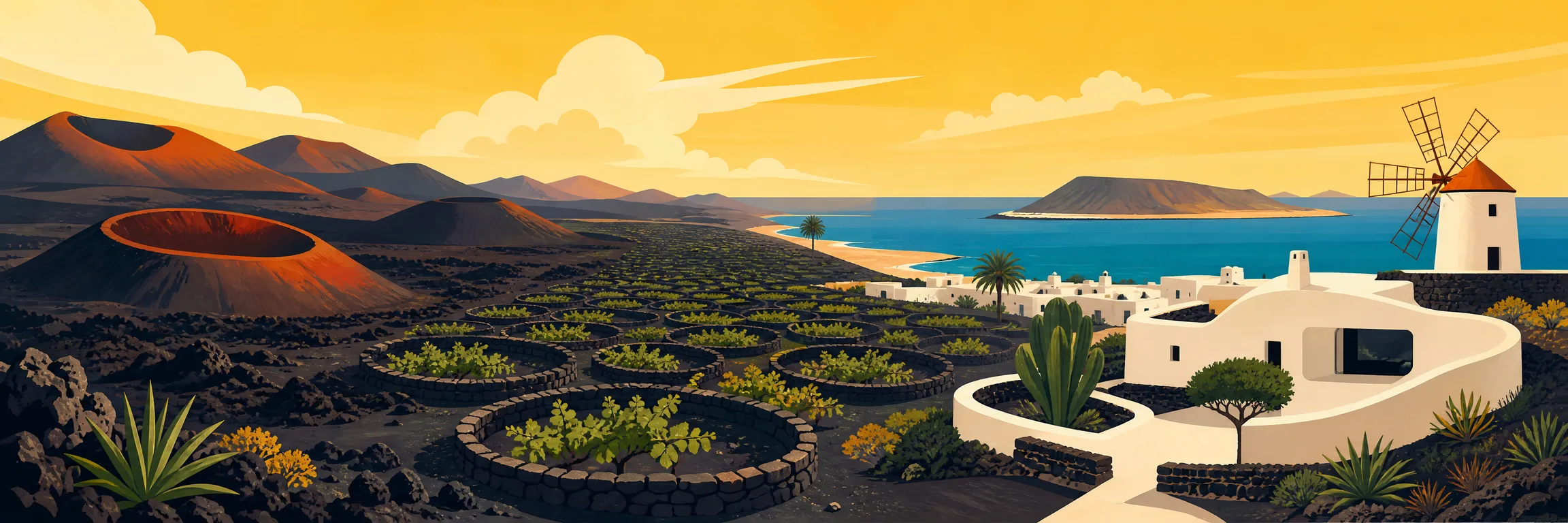
Lanzarote looks like nowhere else in the Canaries. Its landscape was sculpted by the great eruptions of 1730-1736, which tore open 32 volcanoes along an 18 km fissure and buried a quarter of the island under lava. On that black earth, César Manrique imposed an aesthetic all his own (no high-rise blocks, no billboards) that turned the entire island into a UNESCO Biosphere Reserve back in 1993. Timanfaya, the Jameos del Agua, the vineyards of La Geria and the coves of Papagayo sum up exactly why this is the most distinctive island in the archipelago.
The unmissable sights
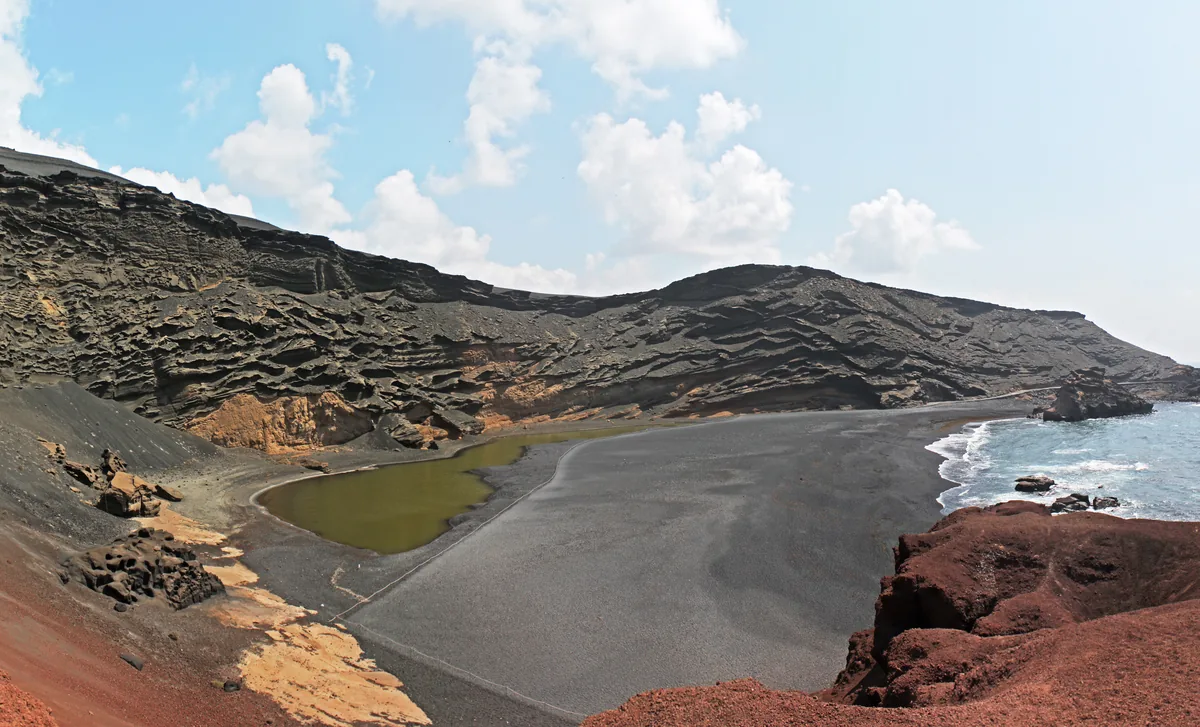
The beating heart of the island is Timanfaya, the Fire Mountains: the only way in is the Ruta de los Volcanes coach tour, paired with the geothermal demonstrations (just 13 metres down, the ground nudges 600 °C), and tickets must be bought online in advance. Equally essential is the legacy of César Manrique: the Jameos del Agua, with its lagoon and tiny blind albino crabs; the Cueva de los Verdes, a lava tube with a clever optical surprise at the end; the Mirador del Río, perched high above the Chinijo Archipelago; and the Jardín de Cactus, a former volcanic-gravel quarry given a new life. Add Teguise, the historic capital, and Haría, the valley of a thousand palms where Manrique lies at rest.
The best beaches
The jewels are the Papagayo beaches, a string of turquoise coves within the Los Ajaches Natural Monument, just outside Playa Blanca. You reach them along a dirt track with a small toll, or by water taxi, and there is next to nothing in the way of facilities, so bring water and shade. For surfing, kiting and windsurfing, Playa de Famara unfurls two kilometres of sand beneath the towering Risco de Famara cliff, though its currents make swimming dangerous. For families, there's Playa Dorada and Flamingo (Playa Blanca), Las Cucharas and El Jablillo (Costa Teguise), or Playa Chica (Puerto del Carmen), a fine spot for snorkelling. Arrecife has its own Playa del Reducto, an easygoing urban beach.
Getting around
You arrive at César Manrique-Lanzarote Airport (ACE), around 5 km from Arrecife, with good links to the UK and the rest of the Canaries. The best way to explore is a hire car: distances are short, the roads are excellent and the network fans out from Arrecife (the LZ-1 heading north, the LZ-2 towards Playa Blanca and the south). The local buses (guaguas) connect the resort towns but serve Timanfaya and Papagayo poorly; check routes and fares at intercitybuslanzarote.es. By sea, Órzola links to La Graciosa in about 25 minutes, and Playa Blanca to Corralejo (Fuerteventura) in another 25.
When to go and the climate
Lanzarote can fairly boast of an eternal spring: a subtropical desert climate, mild year-round, with the little rain it gets falling almost entirely in winter. The warmest month is August, averaging around 25 °C, with the sea at 22 °C; the coolest is January, hovering near 17 °C, which makes the island a bolt-hole of European sunshine when the cold bites further north. The wind is the real headline act: the trade winds blow steadily, which is why the sailing sports thrive at Famara and Costa Teguise. The odd calima (a dusty Saharan haze) can roll in. Almost any time of year works, but spring and autumn are the sweet spot: warm, with fewer crowds.
Where to stay, area by area
Puerto del Carmen (Tías) is the biggest, liveliest resort, with the Avenida de las Playas, diving and nightlife all on the doorstep. Costa Teguise is more family-friendly and laid-back, purpose-built and a windsurfing mecca at Las Cucharas. Playa Blanca, in the south, is the newest and most upmarket option: the perfect base for Papagayo, Timanfaya and the ferry to Fuerteventura. Arrecife offers the most authentic local feel, with the Charco de San Ginés and its tapas bars, plus Puerto Calero, an exclusive marina with a yachting air. To get properly away from it all by car, head for the boutique rural fincas and farmhouses inland (Yaiza, Haría, La Geria) and the bohemian buzz of Famara, in the shadow of the cliff.
Food and practical tips
Lanzarote's cooking is part seafarer, part volcano: papas arrugadas (wrinkly potatoes) with red and green mojo, fresh fish such as vieja, cherne or sama, sancocho, the ever-present gofio, and prize-winning goat's cheeses. The star turn is La Geria, a vineyard unlike any other on earth, where each vine grows in a pit dug into the volcanic gravel and sheltered behind a low semicircular wall; its malvasía wine, with the Lanzarote DO, is well worth a tasting. For fish, try El Golfo beside the Lago Verde, Arrieta or Órzola. Key tips: book Timanfaya online and days ahead, remember you can't wander the park freely, and however mild the temperature feels, the sun is fierce all year.
FAQ
Questions about Lanzarote Travel Guide
Do I need to book Timanfaya tickets in advance?
Yes, it's compulsory. The Fire Mountains can only be visited with a ticket bought online beforehand; nothing is sold at the gate, and capacity is limited, so slots sell out in high season. It's wise to book several days ahead. The park is open 9:30am to 3:45pm every day of the year, and the ticket includes the Ruta de los Volcanes coach tour and the geothermal demonstrations. Once inside, you can't explore the park on foot.
How do you get to the Papagayo beaches?
Papagayo sits next to Playa Blanca in the south, inside the Los Ajaches Natural Monument. You can drive in along a dirt track that has charged a toll since 1998, or arrive by boat and water taxi from Playa Blanca. It's a cluster of white-sand coves with turquoise water, ideal for snorkelling, but most have barely any facilities, so it pays to go early and bring your own water and shade.
When is the best time to visit Lanzarote?
Almost any time, because the island enjoys mild weather all year round. August is the warmest month (averaging around 25 °C) and January the coolest (about 17 °C), which makes it a great sun destination even in winter. The sweet spot tends to be spring (March to May) and autumn (September to November): fine weather with fewer crowds than at the height of summer. The trade winds blow steadily throughout the year.
Is the trip to La Graciosa worth it?
Very much so. La Graciosa is the eighth Canary Island, officially recognised in 2018, and it keeps an unspoilt feel with no tarmacked roads: you get around by bike or 4x4 taxi. The ferry from Órzola takes about 25 minutes. Its wild beaches, such as Las Conchas, Playa Francesa or La Cocina, are the big draw, though swimming is dangerous at some of them. The ideal plan is a day trip with a hire bike; bear in mind that everything tends to cost more out there.
What is La Geria and why is it so special?
La Geria is Lanzarote's wine-growing region and a landscape found nowhere else in the world. Because the island gets very little rain each year and faces relentless wind, every vine is planted in a pit several metres across, dug into the volcanic ash (picón), and sheltered by a semicircular stone wall that traps the morning dew. The signature grape is malvasía, protected by the Lanzarote DO. You can tour the area along the LZ-30, visiting bodegas and stopping for tastings.
Make the most of your visit
Tickets, tours and activities
There are excursions, guided tours and activities in Lanzarote to round off your visit to Guía de Lanzarote.
See tours and activitiesKeep exploring
More to see in Lanzarote
Tours and activities in Lanzarote
Loading tours…