Canarias.app travel guide · Gran Canaria
Cenobio de Valerón, Gran Canaria: what it is, opening times and how to get there
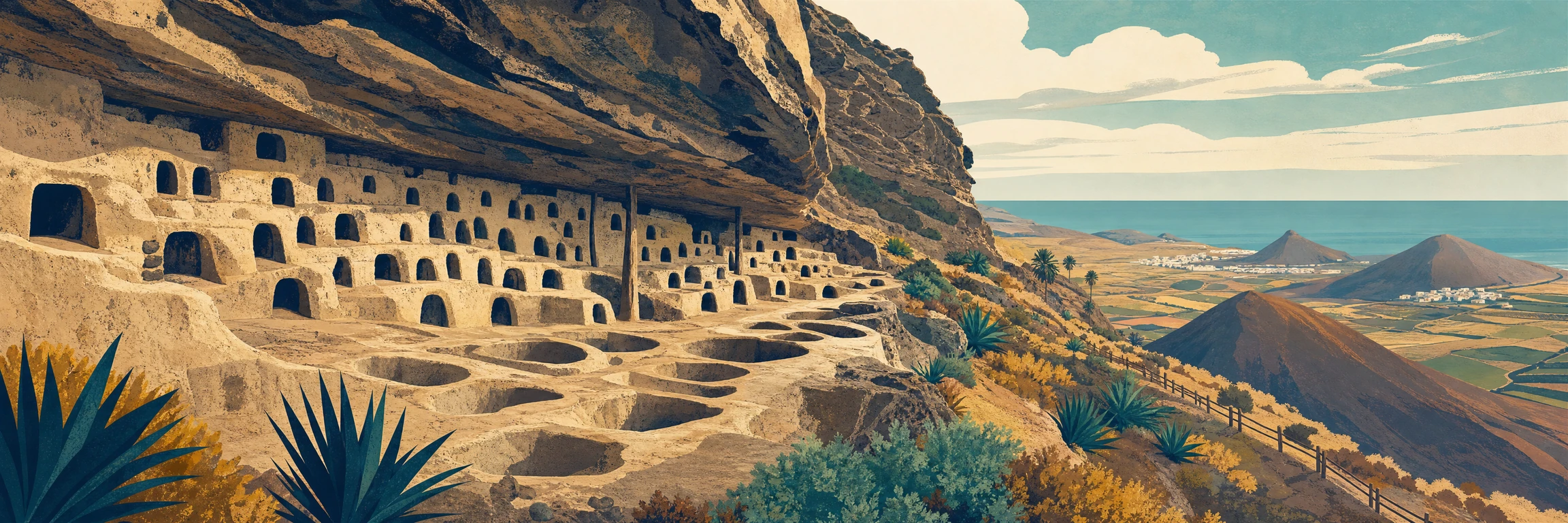
Cenobio de Valerón is an aboriginal collective granary carved into volcanic tuff in Santa María de Guía, in northern Gran Canaria. It preserves almost 300 silos and helps explain a key part of the island’s pre-Hispanic agricultural organisation. The visit usually involves a symbolic or reduced admission fee; check opening times and conditions on the official website.
What it is and why go
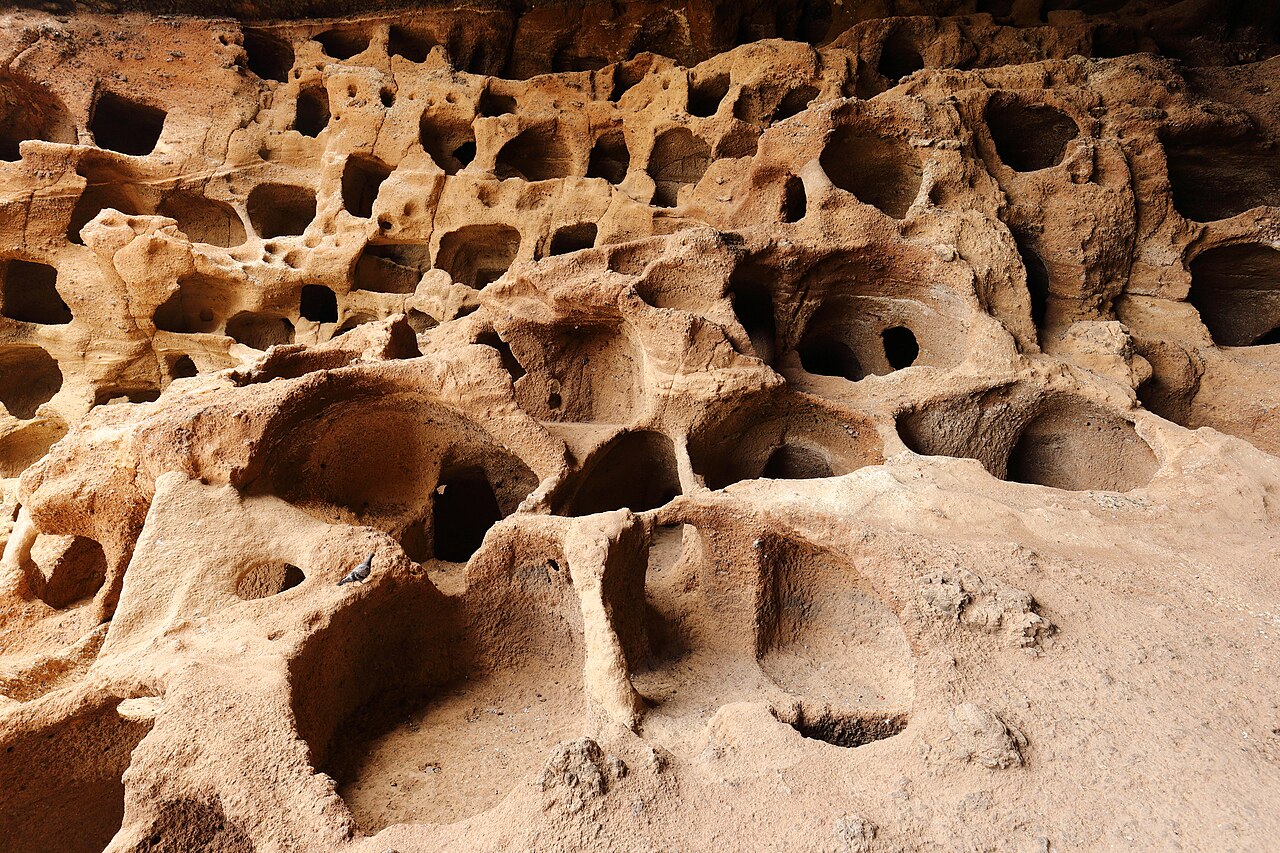
Cenobio de Valerón is one of the clearest surviving traces of Gran Canaria’s Indigenous world. Its chambers, excavated into volcanic tuff, served as collective silos for storing grain, within a system that speaks of farming, food control and community organisation before the conquest. The perforated cliff face is striking, but its real value lies in understanding its function: this was not a decorative complex, but an economic infrastructure. Visiting it helps you read the island beyond beaches and viewpoints.
How to get there
The site is in the municipality of Santa María de Guía, in northern Gran Canaria. It is reached by road from the island’s northern area, following signs for the archaeological site. The visit is organised as a heritage attraction, so it is better not to treat it as a spontaneous stop without checking the conditions first. As it operates with admission and opening hours, consult the official website or municipal channels before setting off, especially if your route is tightly timed.
Tips for visiting
Allow enough time to look at the silos calmly and read the interpretive information on site. Cenobio de Valerón is most rewarding when you understand what it was used for and what it reveals about pre-Hispanic life in Gran Canaria. Wear comfortable shoes and sun protection on hot days, as part of the visit is outdoors or in exposed areas. Respect the barriers, do not touch the structures and confirm opening times, availability and the current ticket type on the official website.
Opening times, tickets and the visit
Cenobio de Valerón is part of Gran Canaria’s visitable archaeological network and is located in Santa María de Guía. Heritage information links it to the Santa María de Guía Town Council and the island network of archaeological parks, so the sensible approach is always to check the official site website or the Cabildo channels before going. It usually opens from Tuesday to Sunday, with closures on some public holidays, but opening hours and admission conditions can change by season, works or site management. The ticket is modest rather than expensive, but fixed prices should not be published unless updated daily. The route includes walkways, steps and sloping access areas leading to viewpoints over the granary; it is not suitable for very reduced mobility. The cavities are viewed from the designated itinerary and are not entered. Bring comfortable footwear, water in hot weather and enough time to read the panels.
FAQ
Questions about Cenobio de Valerón, Gran Canaria
Is Cenobio de Valerón free?
No. The visit usually has a symbolic or reduced admission fee. To avoid outdated information, check prices, opening times and conditions on the official website.
What exactly was Cenobio de Valerón?
It was an aboriginal collective granary excavated into volcanic tuff. Its silos were used to store cereal and other products within an organised storage system.
Where is Cenobio de Valerón?
It is in Santa María de Guía, in northern Gran Canaria. It is reached by road and signposted as an archaeological site.
Is it worth visiting if you are not an archaeology expert?
Yes, because the place is very easy to read visually. The wall of silos helps you understand how food was stored and protected in Indigenous Gran Canaria society.
What was a cenobio, really?
The name can be misleading: for a long time it was interpreted as a monastery or a space for priestesses, but it is now understood as an aboriginal collective granary. Its cavities were used to store grain and other food, protected in a difficult-to-access wall.
Are Cenobio de Valerón and Cueva Pintada the same place?
No. Cenobio de Valerón is in Santa María de Guía and is a collective granary carved into the rock. Cueva Pintada is in Gáldar and operates as a museum and archaeological park. They work very well together on the same northern route.
How long does the visit take?
The visit is usually short: allow around 30 to 45 minutes if you read the panels and look at the complex properly. It can be quicker if you only make a panoramic stop, but it is worth understanding the function of the silos before leaving.
Book online
Tickets, tours and activities
Cenobio de Valerón is a paid attraction: booking your tickets in advance secures your spot and usually skips the ticket-office queue.
Buy tickets for Cenobio de ValerónKeep exploring
More to see in Gran Canaria
Tours and activities in Gran Canaria
Loading tours…