Canarias.app travel guide · Gran Canaria
Telde (Gran Canaria): what to see, beaches and where to eat
Telde is one of Gran Canaria's historic cities, with Indigenous roots, founding districts such as San Juan and San Francisco, strong religious heritage and a very useful coastline for swimming near Las Palmas. It is worth visiting for its history, beaches such as Melenara, nearby Indigenous archaeological sites and local life without tourist staging or a prefabricated postcard feel.
What it is and why go
Telde is a key city for understanding Gran Canaria before and after the conquest. The name is linked to the old Indigenous Telle, and the area was one of the island's major Indigenous centres, associated with the figure of the faycán and with a network of settlements that included present-day neighbourhoods and nearby archaeological spaces. Today, Telde does not present itself as a sealed tourist postcard, but as a living city: old centre, shops, traffic, neighbourhoods, coast and heritage all mixed together. That is precisely why it is worth visiting. San Juan and San Francisco keep the most attractive scale for visitors, with squares, streets, traditional houses and the basilica of San Juan Bautista as a reference point. The coast, with Melenara, Salinetas and La Garita, adds a practical dimension for eating by the sea or swimming without going down south. Telde suits anyone looking for real Canarian history, not only viewpoints and catalogue beaches. It is best seen without rushing.
What to see in Telde
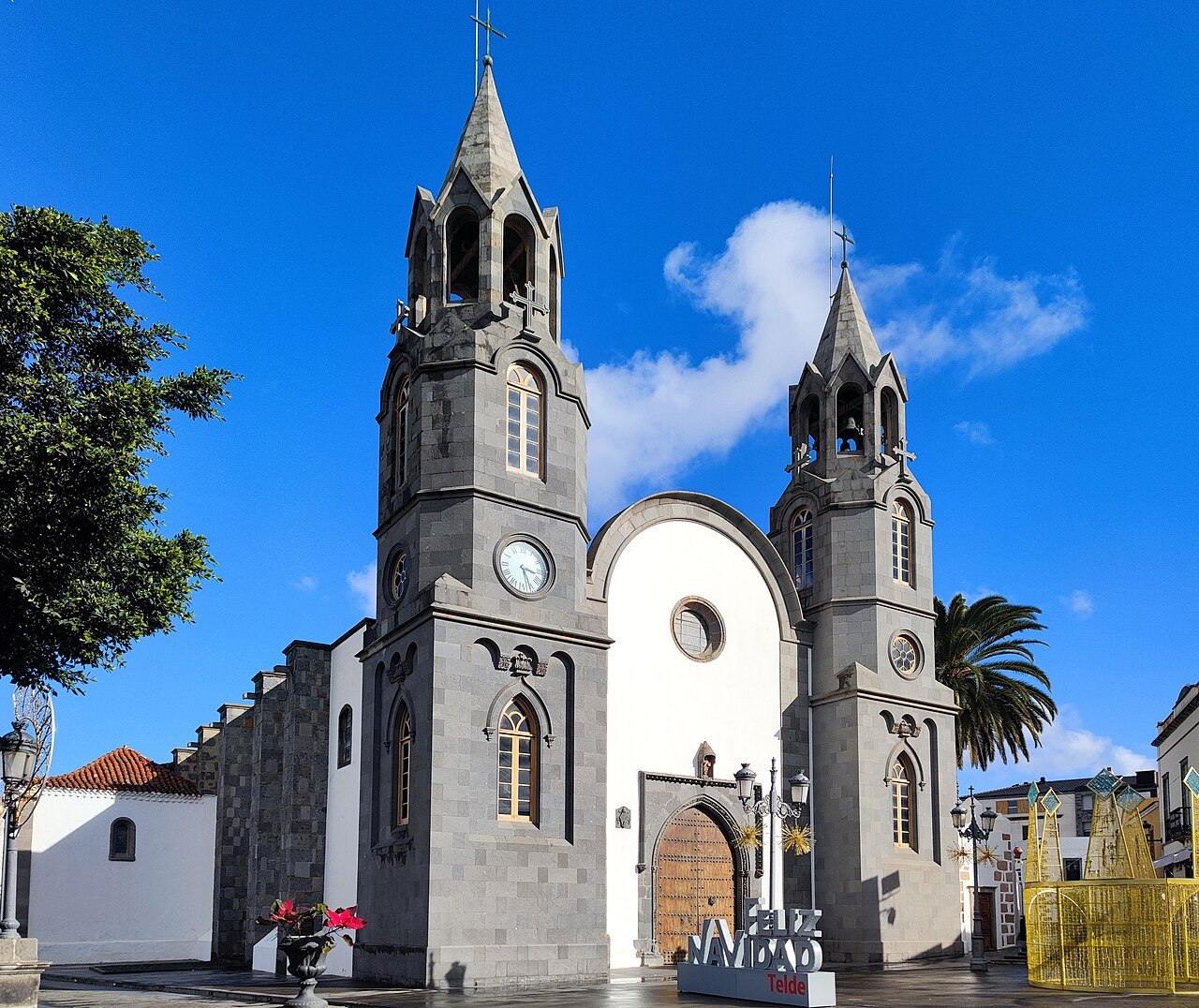
The best place to begin is San Juan. The basilica of San Juan Bautista contains one of Gran Canaria's great devotional references: the Cristo de Telde, a light image made using techniques associated with millet or maize-cane paste, said by tradition and historical studies to have arrived from the Mexican sphere in the sixteenth century. The square and its surroundings allow you to read the old city calmly. From there, San Francisco offers one of Telde's most pleasant scenes: cobbled streets, low houses, balconies and a more intimate tone than that of a large city. Casa-Museo León y Castillo completes the cultural visit if it is open, linked to the brothers Fernando and Juan de León y Castillo, essential figures in Canarian politics, diplomacy and engineering. To extend the route, you can add archaeological sites such as Cuatro Puertas or Tufia on another outing, but do not try to combine too much if you only have a morning. Prioritise the quality of the walk.
The beaches of Telde
Telde's coast is one of its least-used advantages for visitors rushing through Gran Canaria. Melenara is the best-known beach for an easy day, with a local atmosphere, promenade, restaurants and a very recognisable image by the water: it is the clearest reference for a coastal day in Telde. Salinetas is smaller and family-friendly, good for a calm swim when the sea allows. La Garita adds a beach and the nearby Bufadero, which should be observed with care and without getting too close when there is swell. These are not resort beaches, and that is part of their interest: they are heavily used by residents, work well for lunch beside the sea and sit close to Las Palmas, the airport and the island's eastern corridor. As always on open coast, the flag and sea conditions rule. If there is strong wind or rough sea, swap the swim for a walk and a meal. The plan still works.
How to get there and move around
Telde is very well placed in eastern Gran Canaria, close to Las Palmas and the airport. By car, access is quick via the GC-1 and the inland roads towards the old centre or out to the coast. There are also frequent bus connections, although a car gives more freedom if you want to link San Juan, San Francisco, beaches and archaeological sites. In the historic centre, the best approach is to park where permitted and walk. San Juan and San Francisco make sense on foot, with gentle slopes and streets where it is worth noticing facades, patios and balconies. For the beaches, move the car or use transport depending on the exact spot; they are not attached to the old centre. If you come from Las Palmas, Telde can be a morning with lunch on the coast. If you come from the south, it can work as a cultural stop on the way to the capital, avoiding a direct dive into the urban pace of Las Palmas.
Local advice
Telde rewards an orderly visit by areas. First San Juan and San Francisco, then coast or lunch, and leave the archaeological sites for another block if you have time. If you go on a Sunday, do not depend on an unconfirmed market: fairs, markets and activities can change, so check the municipal agenda before organising the day around them. The historical-and-beach plan, however, is stable. For food, the coast is usually more rewarding than improvising in the old centre if you are after fish or a terrace by the sea; Melenara and Salinetas concentrate much of that experience. Wear comfortable shoes and do not underestimate rush-hour traffic: Telde is a working city, with real daily life. If you want the prettiest district, start with San Francisco; if you want the strongest heritage piece, go straight to San Juan. Do not force too many stops, and leave the coast for the end.
FAQ
Questions about Telde
Is Telde worth visiting?
Yes, especially if you are interested in Gran Canaria's history beyond the capital and the tourist south. Telde combines a historic centre, religious heritage, old districts, local coast and nearby archaeological sites. It is not a quick postcard visit, but a real city with layers.
What is the prettiest district in Telde?
For a first visit, San Francisco is usually the most pleasant district for its scale, cobbled streets and traditional houses. San Juan is essential for the basilica, the square and its historical weight. Ideally, see both on foot, as they are very close and complement each other.
What can you do on a Sunday in Telde?
A Sunday works well with a walk through San Juan and San Francisco, an exterior visit to the basilica, lunch in Melenara or Salinetas and a stroll along the coast. If you are looking for a market or event, confirm it first on the municipal agenda rather than basing the plan on outdated information.
What is special about the Cristo de Telde?
The Cristo de Telde, venerated in the basilica of San Juan Bautista, is a historic image linked to American techniques using millet or maize-cane paste. It arrived in the sixteenth century and has become one of Gran Canaria's most important religious pieces.
What are the best beaches in Telde?
Melenara is the best known for eating and spending the day in a local atmosphere. Salinetas is comfortable for a calm swim when the sea allows, and La Garita adds a beach plus the nearby Bufadero. Always check the flag and swell, because the east coast can change quickly.
Make the most of your visit
Tickets, tours and activities
There are excursions, guided tours and activities in Gran Canaria to round off your visit to Telde.
See tours and activitiesKeep exploring
More to see in Gran Canaria
Tours and activities in Gran Canaria
Loading tours…