Canarias.app travel guide · Gran Canaria
Gran Canaria Travel Guide: What to See, Best Beaches and Tips for the Island
Gran Canaria has long been called a "miniature continent", and the nickname earns its keep: within barely 50 kilometres from coast to coast you'll find desert dunes, green ravines and peaks rising to almost 2,000 metres. That contrast is the whole point of the trip. The cool, humid north sits under the trade winds, while the arid, sun-soaked south is where the beach crowds gather. Capital of the Atlantic since 1478 and joint capital of the Canaries, it pairs the urban buzz of Las Palmas with mountain villages, picture-postcard marinas and one of the finest city beaches in Europe.
The unmissable sights
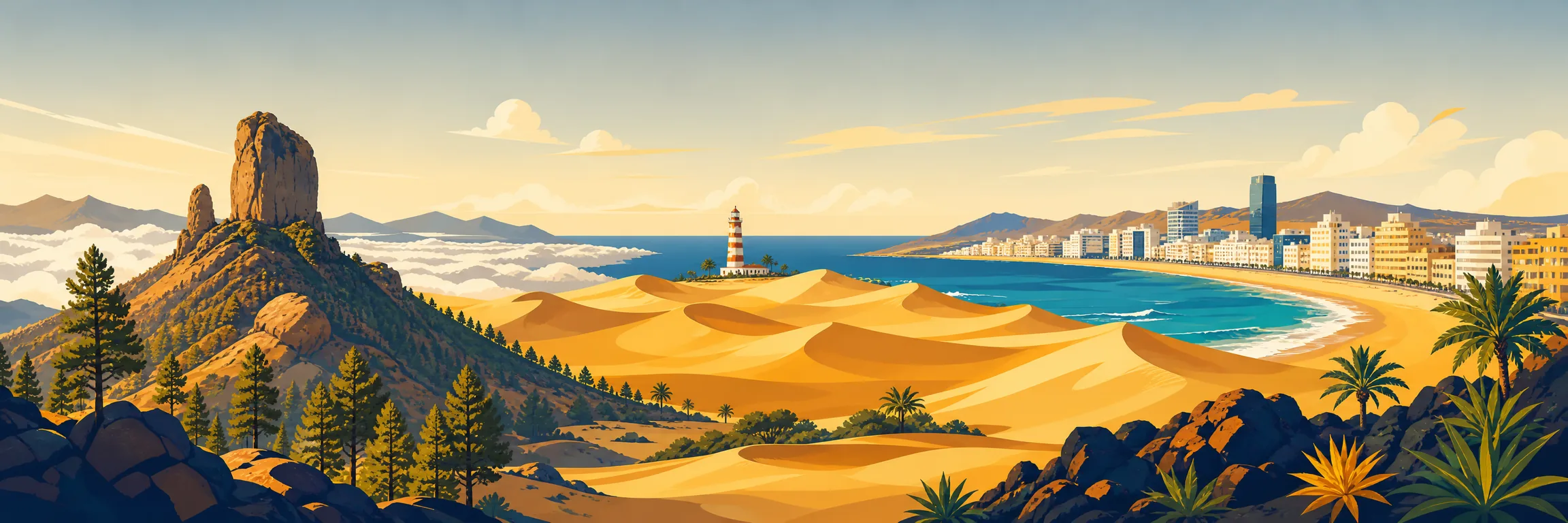
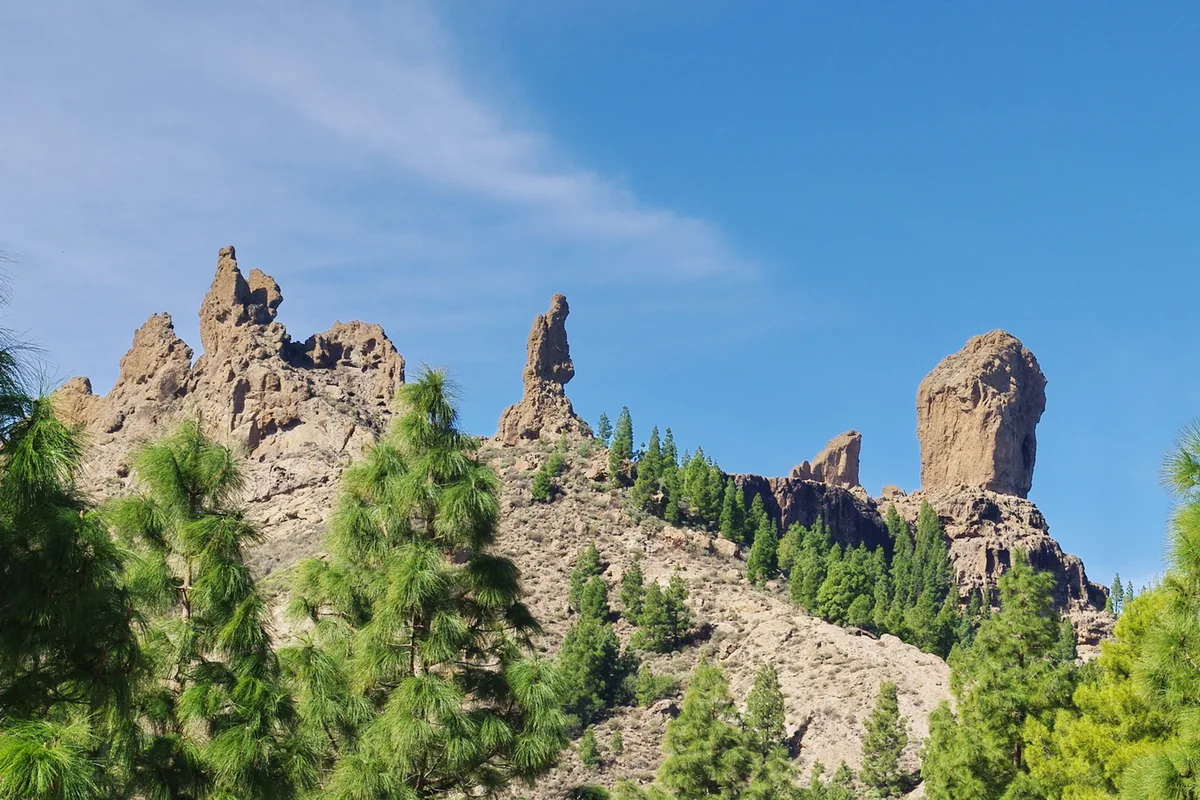
Start with the Maspalomas Dunes, a Special Nature Reserve of 403.9 hectares of shifting sand, complete with the La Charca wetland, the palm grove at the Oasis and an 1890 lighthouse. Up in the highlands, the Roque Nublo rears 80 metres above its base at 1,813 metres, within the Risco Caído Cultural Landscape (a UNESCO World Heritage Site); the path to its foot runs around 2.5 km, and on clear days you can pick out Mount Teide. Tejeda, the first Canarian village admitted to "The Most Beautiful Villages in Spain", crowns the caldera alongside the Roque Bentayga. In Las Palmas, the Vegueta quarter holds Santa Ana Cathedral and the Casa de Colón. Rounding off the south is Puerto de Mogán, the "little Venice" with its canals.
The best beaches
Las Canteras, in Las Palmas, is the urban jewel: three kilometres of sand sheltered by La Barra, a parallel reef that turns it into a natural swimming pool and makes year-round bathing possible, with a Blue Flag flying without a break since 1989. In the south, Maspalomas and Playa del Inglés form the island's longest stretch of sand, some 5,600 unbroken metres butting up against the dunes, with sunshine all but guaranteed. The south-west gathers smaller, more sheltered coves and marinas at Puerto de Mogán, Puerto Rico and Amadores, ideal for families and watersports. The north has a different character altogether, wilder and with darker sand, at spots like Agaete or El Confital beside La Isleta, for those after fewer crowds.
Getting around
Gran Canaria's airport sits on the bay of Gando, roughly 19 km south of Las Palmas and 25 km from the resort areas. The intercity guagua (bus) links them directly: route 60 reaches Las Palmas in 13–25 minutes with departures every 20, while route 66 gets to Maspalomas in around half an hour. Between the capital and the south, route 30 makes the trip in about 46 minutes. To make the most of the "miniature continent", though, a car is the most practical bet: the GC-1, the Southern Motorway, joins the capital, airport and Maspalomas, while the GC-2 climbs towards Agaete. The mountain roads up to Tejeda and the Roque Nublo are spectacular but narrow and full of hairpins, so leave yourself plenty of time at the wheel.
When to go and the weather
Gran Canaria is a twelve-month destination, with a wonderfully mild subtropical climate: daytime averages hover around 20 degrees in winter and 26 in summer, and Las Palmas averages 21.2 degrees over the year. The trick is choosing the right side of the island. The north, swept by the trade winds, is cloudier and more humid, with the famous "panza de burro" (low grey cloud) a regular sight in summer; the south is dry and sunny almost without exception, which is why the beach tourism concentrates there. The peaks can turn genuinely cold, with the odd dusting of snow on the Pico de las Nieves, so pack something warm even when it's 24 degrees on the coast. The Saharan calima (dust haze) can blow in briefly in any month.
Where to stay by area
Las Palmas is the pick for anyone wanting a city, culture and a year-round urban beach: Vegueta, Triana and Las Canteras are all within strolling distance, with genuine local life and a handy base for exploring the north. Playa del Inglés and Maspalomas offer the most developed tourist infrastructure, dependable sun, lively nightlife and the dunes on the doorstep; it's also a leading LGBTQ+ destination. Meloneras, more recent, is where the upmarket hotels, the seafront promenade and the golf are concentrated. The south-west, taking in Puerto de Mogán, Puerto Rico and Amadores, is quieter and prettier, perfect for families and sailing. And the highlands around Tejeda are all about nature, hiking and starry skies.
Food and practical tips
Gran Canaria's cooking is hearty and unpretentious. Don't leave without trying papas arrugadas con mojo (wrinkly potatoes with mojo sauce), either the spicy red or the coriander green, or sancocho, a robust dish of salted fish with potatoes, sweet potato and gofio. The Flor de Guía cheese, which carries a protected designation of origin and is curdled with cardoon flower, is a local emblem, as is the parrotfish or fresh wreckfish (cherne). For pudding, there's bienmesabe and the almond sweets of Tejeda, washed down with DO Gran Canaria wines or rum from Arucas. One practical pointer: hire a car so you can combine the green north, the highlands and the south in just a few days, stick to the marked paths on the dunes, and take sturdy footwear and water if you're walking up to the Roque Nublo.
FAQ
Questions about Gran Canaria Travel Guide
Why is Gran Canaria called the "miniature continent"?
Because an island roughly 50 kilometres across packs in wildly different landscapes: dunes and desert in the south, green, humid ravines in the north thanks to the trade winds, peaks brushing 2,000 metres and pockets of woodland. That extreme contrast between one side and the other is real, and you can drive through the lot of it in a single day.
When is the best time to visit Gran Canaria?
Any time, really, because the climate is mild all year. Winter works as a warm bolthole, especially in the south, where sunshine is all but guaranteed. Summer brings easy swimming and balmy evenings, though the north can wake up cloudy under the "panza de burro" grey. Spring and autumn strike the best balance. The calima dust haze can crop up briefly in any month.
Do I need to hire a car or will the buses do?
The guaguas cover the main routes very well: airport to Las Palmas and to Maspalomas, and between the capital and the south. For a straightforward beach holiday they may be all you need. But if you want to combine the green north, the Tejeda highlands and the Roque Nublo, and the south in a few days, a car is the better option, as the interior is poorly served by public transport.
Where's the best beach for going with children?
Las Canteras, in Las Palmas, is ideal for families: the La Barra reef calms the swell and turns it into a vast natural swimming pool, with easy bathing all year round. In the south and south-west, the coves at Amadores and Puerto Rico, with their calm waters and plenty of facilities, also work very well for little ones.
Can you go in and walk across the Maspalomas Dunes?
The dunes are a Special Nature Reserve and a fragile wetland, so access is regulated and you have to keep to the marked paths, boardwalks and designated areas; it isn't open ground to roam at will. The specific restrictions (which stretches you can walk, wildlife zones such as La Charca) are set by the managing body, so always follow the official signage on the ground.
Make the most of your visit
Tickets, tours and activities
There are excursions, guided tours and activities in Gran Canaria to round off your visit to Gran Canaria.
See tours and activitiesKeep exploring
More to see in Gran Canaria
Tours and activities in Gran Canaria
Loading tours…