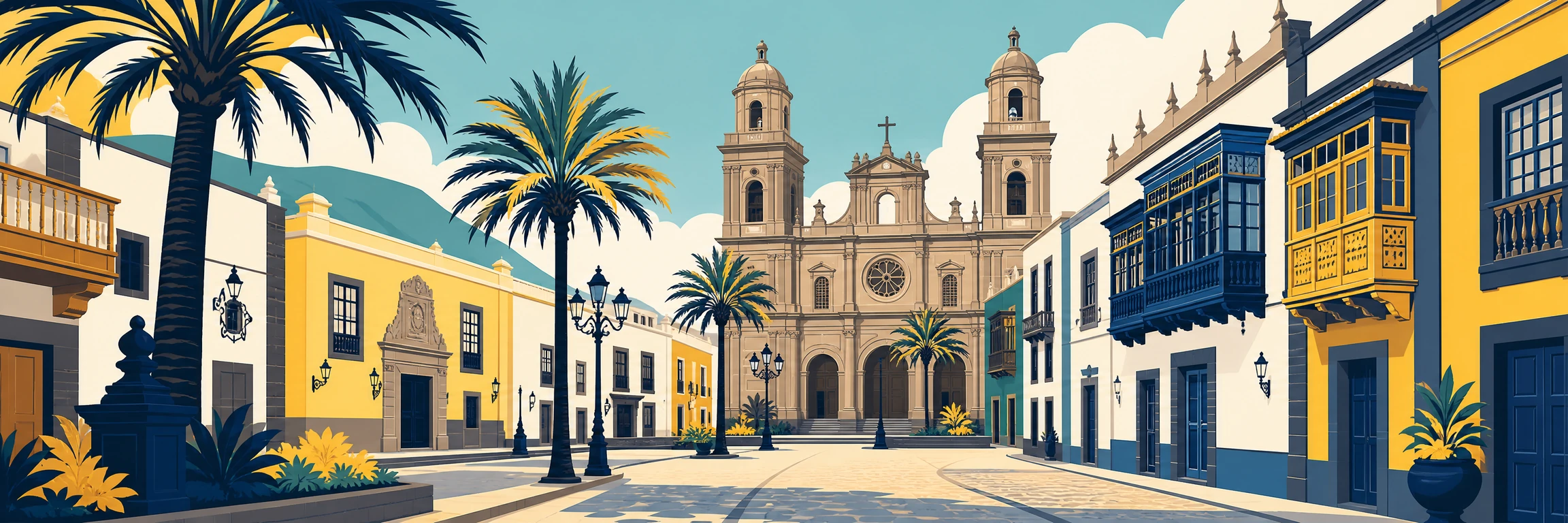
Canarias.app travel guide · Gran Canaria
Vegueta, Las Palmas: what to see, where to eat and local tips
Vegueta is the founding quarter of Las Palmas de Gran Canaria, born around the Real de las Palmas in 1478 and protected as a historic ensemble. In just a few streets it brings together the Catedral de Santa Ana, Casa de Colón, El Museo Canario, squares, market life, traditional architecture and the most rewarding cultural introduction to the capital.
What it is and why go
Vegueta is the historic heart of Las Palmas de Gran Canaria and the right place to start if you want to understand the city beyond the beach. The Castilian foundation is dated to 1478, around the old Real de las Palmas, near today’s Ermita de San Antonio Abad. From there grew the island’s political, religious and administrative centre. The quarter is protected as a historic ensemble and still keeps a walkable scale, with cobbled streets, patios, wooden balconies, squares and buildings spanning several centuries. It is not an isolated stage set: Triana, with its main shopping street, sits alongside it, while the Guiniguada ravine marks the shift between old town and modern city. Vegueta works for a two-hour visit or a full morning with museums and lunch. Its value is not in ticking off monuments, but in walking slowly, stepping into patios when possible and reading the city through its squares.
What to see in Vegueta
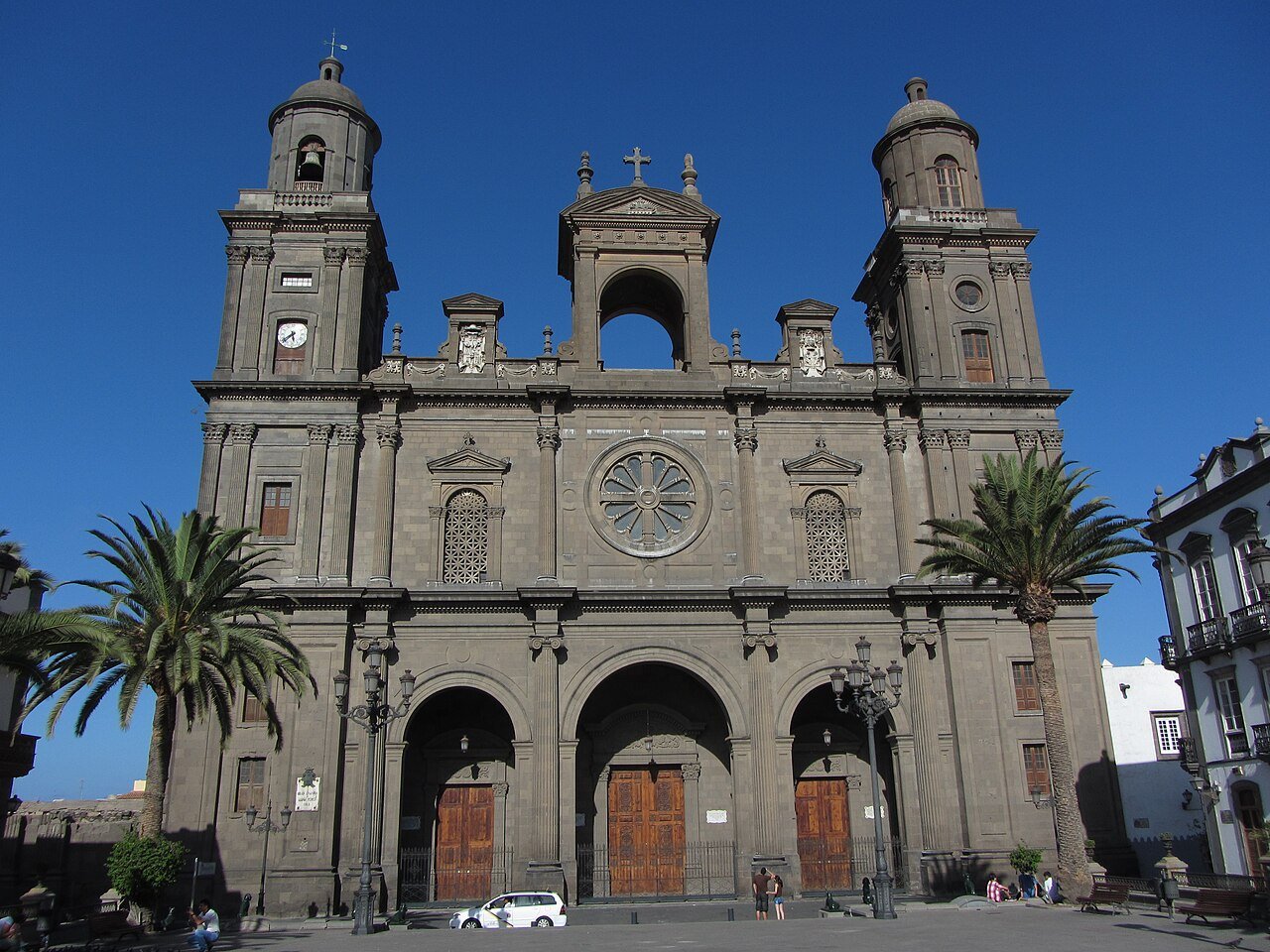
The Catedral de Santa Ana and Plaza de Santa Ana are the clearest focal points. Around them are the Casas Consistoriales, the Palacio Episcopal, Casa Regental and a sequence of façades that speak to the city’s former administrative role. Close by, Casa de Colón focuses on Atlantic voyages and the city’s link with the Americas, while El Museo Canario is essential for understanding the Indigenous population of Gran Canaria. The Ermita de San Antonio Abad connects the area with the first settlement; Plaza de Santo Domingo and Plaza del Espíritu Santo reveal a quieter, slower Vegueta. Mercado de Vegueta, the first purpose-built food market in the Canary Islands, dating from the mid-19th century, is a good morning stop. If you have time, add Teatro Guiniguada, Centro Atlántico de Arte Moderno and Calle de los Balcones. The route improves if you do not try to make it too linear: Vegueta is best enjoyed by drifting in and out of small squares.
Where to eat and what to try
Vegueta mixes tapas bars, Canarian restaurants, market-led places and terraces that work well between museum visits. In the morning, Mercado de Vegueta gives you fruit, cheeses, fish and local produce, although opening times should be checked if you are going late or on a public holiday. For lunch, look for straightforward island dishes: papas con mojo, cheeses, fish, stews, ropa vieja or more contemporary cooking that uses Canarian produce without turning it into cliché. On Thursday evenings Vegueta traditionally hosts a tapas and pinchos route, although participating venues and the format vary by season; if that is the main reason for going, check the local agenda before planning the night around it. For a first visit, the best rhythm is museum in the morning, market if open, a walk through the squares and an unhurried lunch. If you prefer shopping and cafés, cross to Triana afterwards.
How to get there and move around
Vegueta sits in the lower part of Las Palmas de Gran Canaria, beside Triana and the market area. From other parts of the city it is easy to reach by urban bus, taxi or on foot if you are already near San Telmo, Triana or the historic waterfront. The city has main stations at San Telmo and Santa Catalina, and San Telmo is especially convenient for walking on to Vegueta and Triana. By car, assume that much of the quarter is pedestrianised or has restricted traffic: trying to park at the door of each monument is not a good plan. Use nearby car parks or regulated spaces around the market, San Telmo or Triana, depending on availability. Once inside, walk. Distances are short, but cobbles and narrow streets make comfortable shoes sensible. With a pushchair or reduced mobility, choose the main streets and avoid improvising through uneven side lanes.
Local tips
The best time for Vegueta is usually the morning, when the market, museums and streets are lively without the weight of the late-night scene. In summer or on hot days, use the central hours for museums and leave squares and façades for early morning or late afternoon. Do not reduce the visit to the cathedral and Casa de Colón: Plaza del Espíritu Santo, Santo Domingo and the inner streets give a fuller, less rushed picture. Cross to Triana when you finish to compare two faces of the city: historic Vegueta and commercial Triana. On cruise days and long weekends there may be more groups, so book tickets or check museum hours if they matter to your plan. If your trip falls on a Thursday, stay into the evening: the tapas route is the best possible finale to the quarter.
FAQ
Questions about Vegueta, Las Palmas
What should I see in Vegueta?
The essentials are the Catedral de Santa Ana and Plaza de Santa Ana, Casa de Colón, El Museo Canario, Ermita de San Antonio Abad, Mercado de Vegueta, Plaza de Santo Domingo and Plaza del Espíritu Santo. With more time, add CAAM, Teatro Guiniguada and Triana.
What does Vegueta mean?
The name is linked to the fertile plain around the first settlement of the Real de las Palmas. Historical references speak of the Vegueta de Santa Ana: a small vega, or fertile area, associated with the origin of the quarter and the city.
How do I get to Vegueta by bus?
San Telmo is usually the most convenient reference point, from where you can walk towards Triana and Vegueta. There are also urban stops around the market and Guiniguada. Check Guaguas Municipales routes on the day if you are coming from another part of the capital.
Do Thursday tapas nights in Vegueta still happen?
Yes. On Thursday evenings Vegueta still has its tapas and pinchos route, although participating venues and the format change by season. If you are going specifically for that plan, check the current programme beforehand or ask restaurants in the area that same day.
Can Vegueta and Triana be visited together?
Yes. They are separated by the Guiniguada area and are very easy to link on foot. Vegueta has the founding old town and museums; Triana adds shopping streets, modernist buildings, cafés and a natural continuation towards San Telmo, also just a few minutes away.
Make the most of your visit
Tickets, tours and activities
There are excursions, guided tours and activities in Gran Canaria to round off your visit to Vegueta.
See tours and activitiesKeep exploring
More to see in Gran Canaria
Tours and activities in Gran Canaria
Loading tours…