Canarias.app travel guide · Fuerteventura
Antigua, Fuerteventura: the windmill, what to see and how to get there
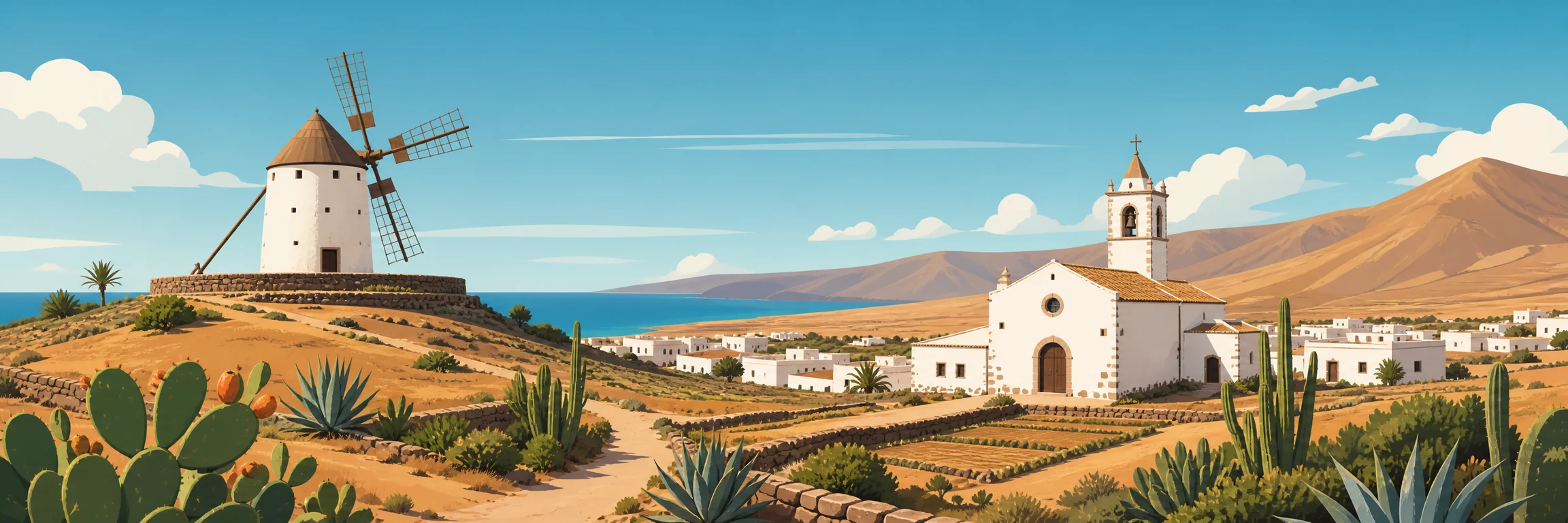
Antigua is inland, rural Fuerteventura: windmill, Majorero cheese and a quiet village centre far from the bustle of the coast. The visit revolves around the Molino de Antigua, the historic church and its brief spell as island capital in 1834, without confusing it with Caleta de Fuste.
An inland village, not a beach area
Antigua is a rural village in the centre-east of Fuerteventura and the administrative centre of the municipality of the same name. Its role is best understood through its crossroads position between Betancuria, Caleta de Fuste and Pozo Negro, and through its agricultural and livestock past. It should not be confused with the municipality’s tourist strip, which lies in Caleta de Fuste or El Castillo: this guide is about the inland village, with no coastline, a quiet pace and a historical reading. Antigua became an independent municipality in 1812 and briefly held the island capital in 1834. Unlike Corralejo, the Dunas de Corralejo, El Cotillo or Morro Jable, you do not come here for the beach. You come to understand windmills, grain, Majorero cheese and the more austere interior of the island. It is a short stop, but one with a clear identity.
Molino de Antigua and the Cheese Museum
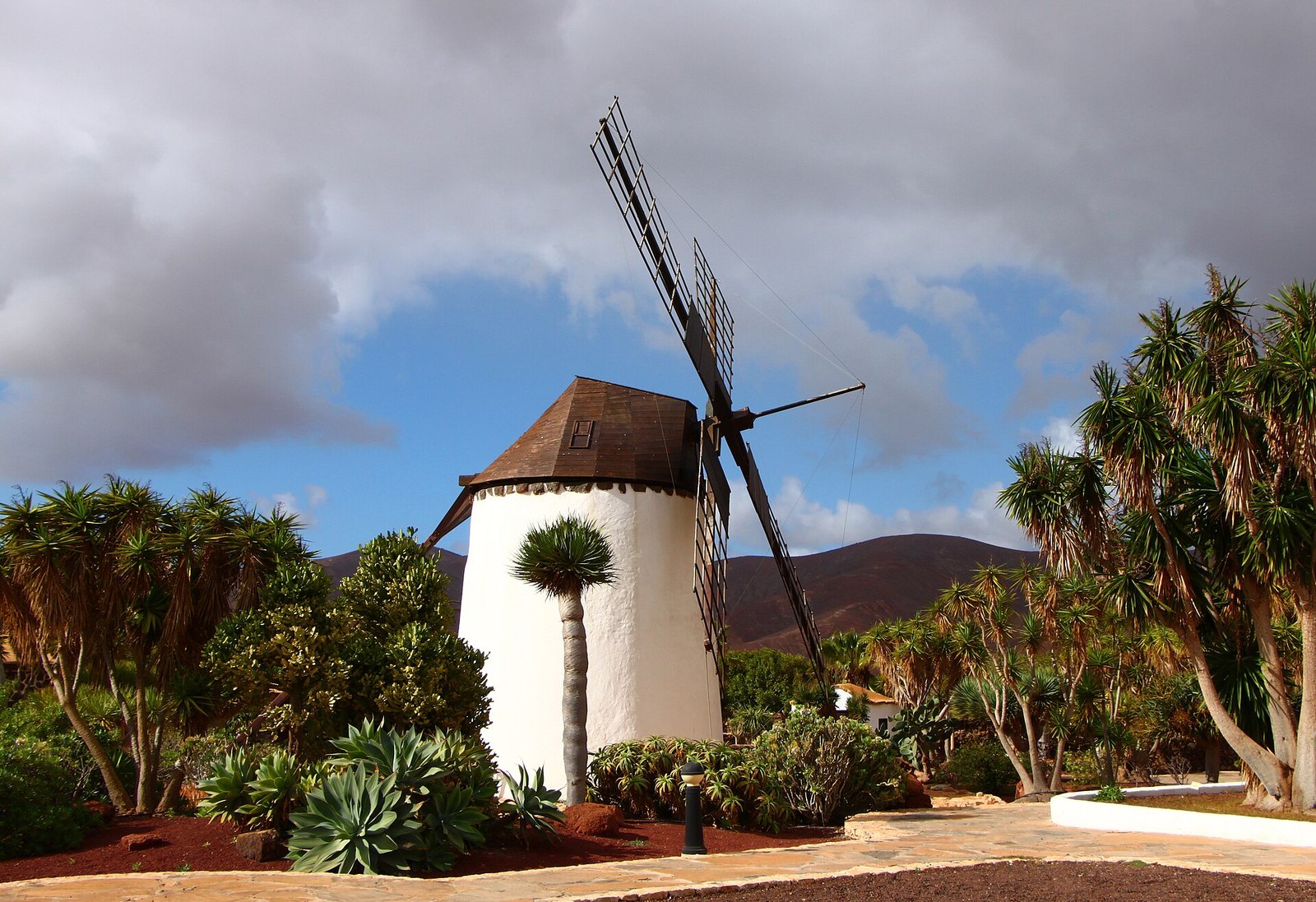
The Molino de Antigua is the key stop. It is a restored old windmill converted into a cultural centre within the Cabildo’s museum network, with an exhibition room, craft shop and a botanical garden of cactus, palms and native species. The same complex houses the Museo del Queso Majorero, dedicated to the island’s volcanic geology, the Majorero goat and the cheese-making tradition. The presence of the gofio mill and tasting or retail areas reinforces the point that this is not only a monument visit: it is an entry point into rural Fuerteventura’s economy. Antigua is one of the six municipalities where Majorero cheese with Denominación de Origen is produced; it was the first goat’s cheese in Spain to receive that recognition and has held DOP status since 1999. Before visiting, check opening times and prices on the official museum website. If you choose only one stop, make it this one.
Church, brief capital status and rural centre
The other essential stop is the church of Nuestra Señora de la Antigua, built between the 16th and 19th centuries from an earlier hermitage. It is a single-nave church with a square bell tower and has been listed as a Bien de Interés Cultural since 1990. Antigua’s appeal is not a dense concentration of monuments, but the whole ensemble: church, windmill, quiet streets, dry landscape and grain-growing memory. Its capital status in 1834 was brief, but it helps explain why the village carried weight on Fuerteventura’s inland route. The clearest contrast is Betancuria: Betancuria is the great historic and monumental village, the island’s first capital; Antigua is better understood through the pairing of windmill and cheese. If you are touring the interior, read both as complementary stops rather than repeated visits. The comparison makes the visit richer.
How to get there and plan the visit
Antigua lies in the centre-east interior, about twenty kilometres from Puerto del Rosario and at a moderate altitude for the island. A car is the most comfortable way to arrive, because it lets you link the village with Betancuria, the Molino de Antigua and other inland points without relying on frequencies. There is parking near the centre, and the windmill complex has its own car park as well as wheelchair-accessible entrances. There is also a bus connection with the capital, but current Tiadhe lines and timetables should be checked before planning. To avoid harsh sun, especially in summer, mid-morning or late afternoon works well. Bring water, sun protection and something windproof: Fuerteventura is windy, and windmills are not an accidental symbol. Do not treat entry prices as fixed without checking official sources first. The plan does not require rushing or major movement within the village.
What to see nearby without mixing areas
Antigua fits very well into an inland route. You can pair it with Betancuria if you want to compare two historical moments of the island: the first capital, more monumental and set in a valley, against this agricultural village that briefly became capital and now revolves around the windmill and DOP cheese. Another logical stop on the same axis is Mirador Morro Velosa, useful for reading the inland landscape before or after the village. If the day calls for coast, the conceptual shift is clear: Lajares and El Cotillo belong to the Atlantic, surf-minded north; Antigua belongs to the grain-growing interior. Keeping that separation avoids false expectations. Do not come looking for a seafront promenade or sand. Come for a short, calm, cultural visit to traditional Fuerteventura. That is how the village makes sense on its own terms.
FAQ
Questions about Antigua, Fuerteventura
What is there to see in Antigua, Fuerteventura?
The essentials are the Molino de Antigua with the Museo del Queso Majorero and its cactus garden, the church of Nuestra Señora de la Antigua and the rural village centre itself. It is a quiet inland visit linked to Fuerteventura’s agricultural tradition.
Was Antigua once the capital of Fuerteventura?
Yes. Antigua briefly held the island capital in 1834. The first historic capital was Betancuria, and later the role passed to Puerto del Rosario. That episode explains part of the village’s historical importance.
What is the Molino de Antigua?
It is a restored windmill converted into a Cabildo cultural centre. Its complex includes the Museo del Queso Majorero, a gofio mill, exhibition room, craft shop and a botanical garden with cactus and native species.
Where is Majorero cheese made?
Majorero cheese is made in Fuerteventura, and its production area includes Antigua, Betancuria, La Oliva, Pájara, Puerto del Rosario and Tuineje. It was the first goat’s cheese in Spain with Denominación de Origen and has had DOP status since 1999.
Is Antigua on the coast?
No. The village of Antigua is an inland agricultural and livestock centre. The municipality does include coastal tourist areas such as Caleta de Fuste and El Castillo, but this guide focuses on the historic village, the windmill and the cheese-making tradition.
Make the most of your visit
Tickets, tours and activities
There are excursions, guided tours and activities in Fuerteventura to round off your visit to Antigua.
See tours and activitiesKeep exploring
More to see in Fuerteventura
Tours and activities in Fuerteventura
Loading tours…