Canarias.app travel guide · Fuerteventura
Dunas de Corralejo: the natural park, beaches and essential tips
The Dunas de Corralejo are Fuerteventura’s great dune field, with organogenic sand, pale beaches and views towards Lobos. The visit means respecting the natural park, watching the wind and currents, and choosing your time, access point and swimming area carefully. This is not somewhere to improvise without water or a clear sense of where you entered.
The great pale desert of the north
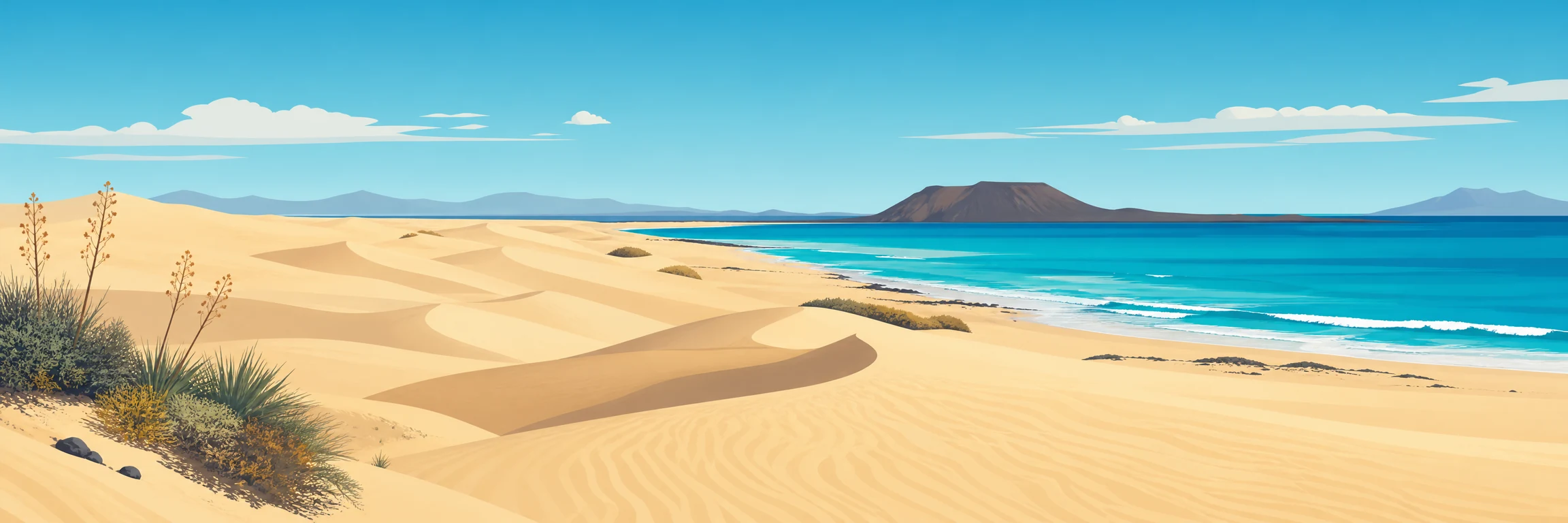
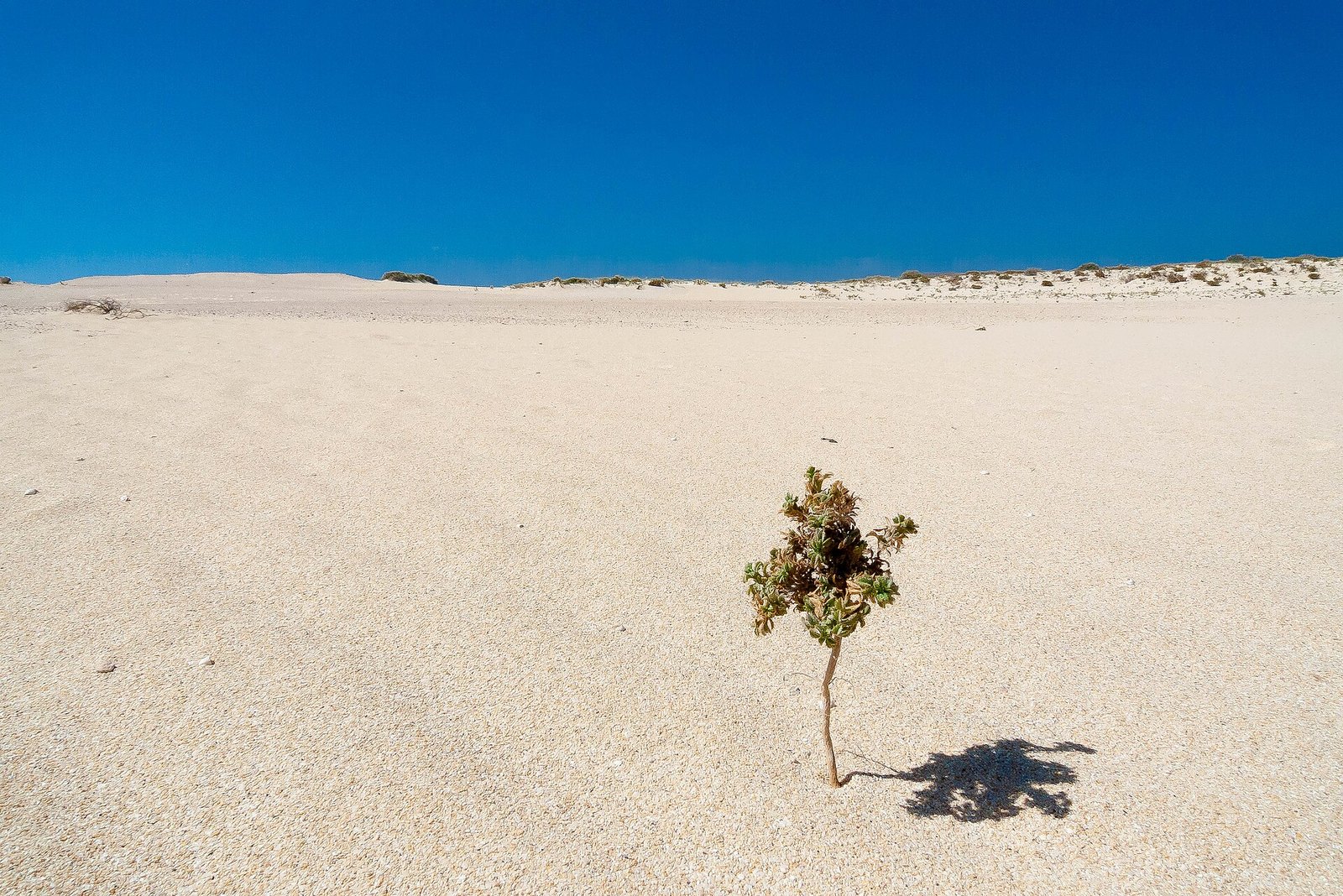
The Dunas de Corralejo occupy the north-eastern tip of Fuerteventura, between Puerto del Rosario and the town of Corralejo, within the municipality of La Oliva. It is the largest dune field in the Canary Islands and one of the landscapes that best sums up the island: pale sand, trade wind, turquoise water and a reddish volcanic backdrop. It is not an urban beach or a backdrop to cut through by car; it is a protected space, declared a Natural Park and also linked to the Natura 2000 network as a Special Protection Area for Birds. The sand has an origin worth explaining properly: it does not come from the Sahara, but from marine remains ground down over millennia, shells and skeletons of organisms that the wind moves and reshapes. A visit works both for swimming at the Grandes Playas and for walking through the dune field, photographing the first light or looking across to Isla de Lobos. Its value lies as much in the bathing as in understanding where the landscape comes from.
Beaches, dunes and Montaña Roja
The park brings several landscapes together within a short distance. The Grandes Playas offer kilometres of pale sand and shallow waters, with sections that are easier to reach from the road and others that become quieter if you walk for a few minutes. The mobile dune field changes shape with the trade wind, so the same place can look different from one visit to the next. Off the coast you can see Isla de Lobos and, farther back, Lanzarote and La Graciosa across La Bocaina. At the southern end stands Montaña Roja, a cone of around 300 metres that gives an ochre volcanic contrast to the white sand. There are also more sheltered coves between the road and the sea. If you are looking for the wider Corralejo destination, with harbour, ferry and town centre, see What to see in Corralejo; this guide focuses on the natural park.
Access via the FV-1a
The FV-1a road, known along this stretch as Avenida Grandes Playas, crosses the park for around 10 kilometres and gives access to different areas for swimming and walking. From Corralejo, the first sandy areas are only a few minutes away by car, bicycle or even on foot; from Puerto del Rosario, simply follow the coast north. There are several parking areas on both sides of the road, generally free and unsurfaced. In high season, arrive early so you can choose calmly, avoid improvised manoeuvres on the hard shoulder and leave yourself time to get oriented. Once on the sand, remember your entry point or choose a visual landmark: the dune field is more disorientating than it looks, especially in wind and strong light. There is hardly any natural shade and services are not continuous throughout the park, so the logistics need to be sorted before you arrive: water, hat, sun cream and comfortable footwear. On windy days, getting back to the car can take longer than expected.
Wind, swimming and respect for the park
The trade wind is part of Corralejo’s character. It often blows from the north-east, can lift sand at ground level and make lying down uncomfortable on strong days, but it also keeps the dune system alive. For swimming, the transparent waters of the Grandes Playas are often tempting, although the more exposed areas can receive swell, waves and rip currents. The prudent approach is to choose lifeguarded sections when they are operating, check flags and signs, and stay out if the sea looks unsettled. In some sectors, swimming and sunbathing without clothes are normalised; simple naturalness and respect are enough. As a protected space, the park should not be crossed just anywhere when marked access exists, nor should vegetation be pulled up, rubbish left behind or the dunes treated like a track. The landscape looks resilient, but the system is damaged by uncontrolled footfall and movement outside permitted areas. The best plan combines a brief swim, a mindful walk and leaving before the hard sun.
The sand that did not come from the Sahara
The most repeated curiosity about the Dunas de Corralejo is also the one most often misunderstood. Although the island faces the African continent and receives calima episodes, the sand of this dune field was not formed by Saharan dust settling here. Its origin is organogenic: fragments of mollusc shells and other marine organisms broke down over thousands of years, mixed with coastal remains and were left to the wind. The trade wind shifts and accumulates it over older materials, including fossil dunes probably from the Upper Pleistocene. It is better not to promise exact dune heights, because figures vary and the relief is mobile; it is enough to explain that the wind constantly reshapes them. Nor does the visit need to become a technical geology route. The useful fact for travellers is clear: this pale, fine, living sand is a fragile ecosystem, not just another beach. Seen that way, every step is also a small, real conservation choice.
FAQ
Questions about Dunas de Corralejo
Why does the sand of the Dunas de Corralejo not come from the Sahara?
Because it is organogenic sand: it comes from ground-down marine remains, such as mollusc shells and skeletons of organisms, accumulated and moved by the trade wind over millennia. Calima can arrive from Africa, but it does not explain this dune field within the natural park.
Can you park for free at the Dunas de Corralejo?
Yes. There are several free, usually unsurfaced parking areas beside the FV-1a, the road that crosses the park. In high season or around the middle of the day, it is best to arrive early so you can park without blocking access points or the hard shoulder, and with a little margin.
Are there hotels inside the Corralejo Natural Park?
Yes, there are two complexes built before the park was declared. Their administrative situation has been subject to changing proceedings and resolutions, so it is better not to present the outcome as final or state demolitions as an accomplished fact.
Is it safe to swim at the Grandes Playas?
In general it can be safe on calm days and in lifeguarded sections, but do not be complacent. With swell, waves and currents can appear in exposed areas. Check flags, choose areas with lifeguards when they are operating and avoid swimming if the sea is rough.
Can you walk from Corralejo?
Yes, from the town centre of Corralejo you can walk to the first beaches, although the park extends for kilometres. To explore farther areas, such as the surroundings of Montaña Roja, a car, bicycle or organised transport is more convenient.
Make the most of your visit
Tickets, tours and activities
There are excursions, guided tours and activities in Fuerteventura to round off your visit to Dunas de Corralejo.
See tours and activitiesKeep exploring
More to see in Fuerteventura
Tours and activities in Fuerteventura
Loading tours…