
Canarias.app travel guide · Fuerteventura
Playa de Sotavento (Fuerteventura): windsurfing, kite and lagoon
Sotavento is Jandía’s beach of wind, lagoon and sailing sports. The tide creates a shallow sheet of water at Risco del Paso, while the trade wind turns the area into one of the great stages for windsurfing and kitesurfing. Before you go, check tide and wind: they completely change the visit.
The wind beach of Jandía
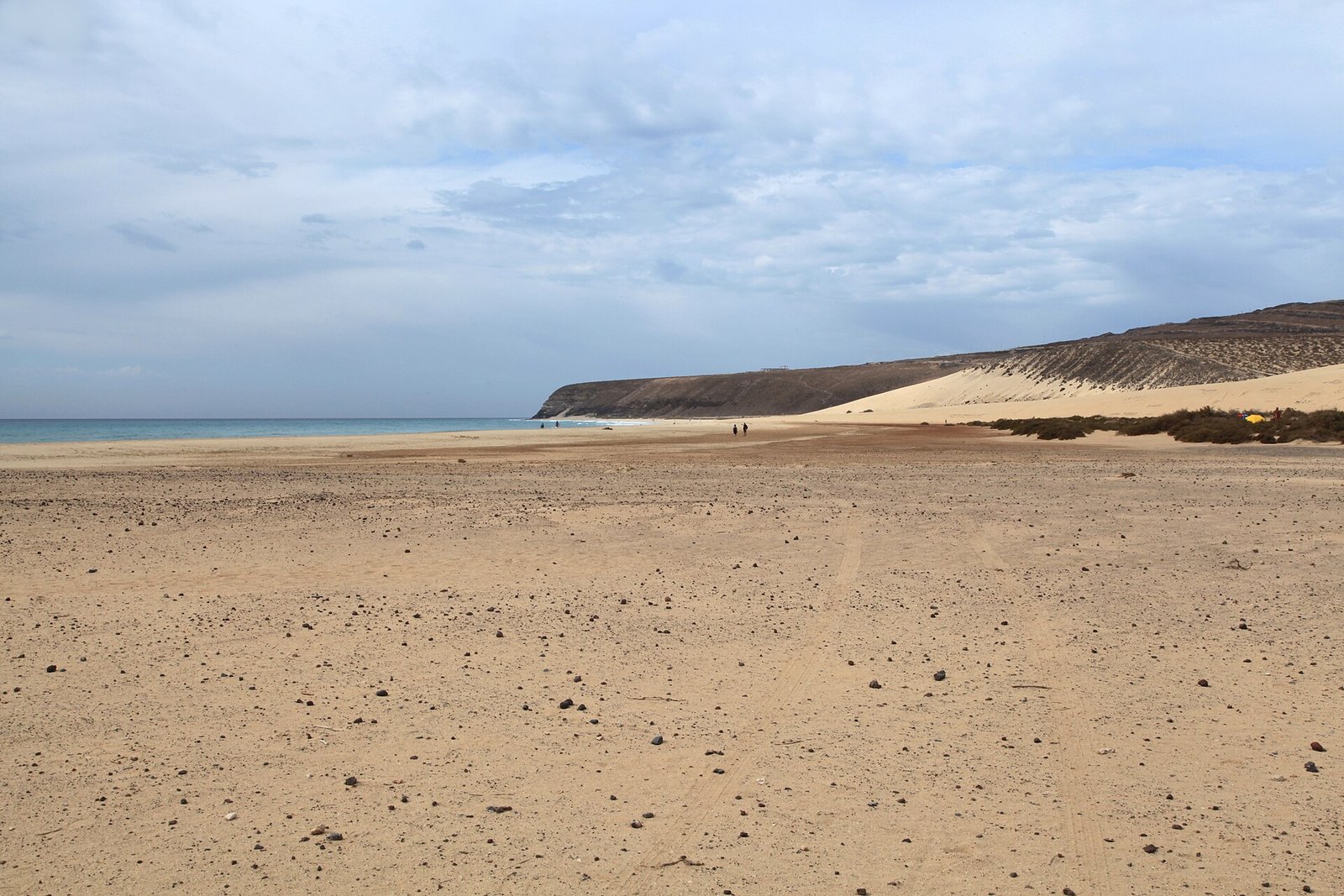
Playa de Sotavento stretches along the east coast of the Jandía peninsula, in the municipality of Pájara, next to Costa Calma. It is a pale-sand beach, open and strongly shaped by the north-easterly trade wind. The key word here is not only swimming, but wind: Jandía’s relief channels the air and creates strong, steady conditions that have made the area famous among windsurfers and kitesurfers worldwide. It runs for several kilometres along the coast, with sectors known as La Barca, Risco del Paso, Mirador, Malnombre and Los Canarios. Sotavento is not an intimate cove or an urban beach; it is a wide, luminous strip, transformed by the tide and especially powerful for travellers seeking wind sports. That scale also explains why each access point offers a different experience, from a simple walk to an organised sailing-school setting.
The Risco del Paso lagoon
The most distinctive section is Risco del Paso, at the southern end, where the tide can form a large lagoon between the shore and a sandbank. When full, this flat, shallow sheet of water becomes a very valuable space for learning windsurfing or kitesurfing, always within marked areas and with a school or supervision if you lack experience. The lagoon is not guaranteed all day or every day: it depends on the tidal cycle, and it usually offers more water and a more comfortable window on spring tides, around full moon or new moon. That is why checking tide tables before going is the practical move. At low tide, the sea withdraws a long way and leaves vast areas of sand; at high tide, the landscape changes and the lagoon may become the main feature. The same beach can look entirely different within a few hours. At high tide, also confirm how to return to the car park without crossing flooded areas.
Windsurfing, kitesurfing and the championship
Sotavento entered windsurfing history in 1986, when Pascal Maka broke the world sailing speed record here at 71.8 km/h. That episode cemented a relationship that continues today: the area hosts a world windsurfing and wingfoil event every summer around Playa Barca, although the exact dates and edition should be checked with the organisers before being published as current information. The presence of centres and schools, including the historic René Egli, helps beginners and advanced riders share the beach with some order. Even so, the wind that makes the place famous also demands respect. If you are learning, do not improvise on your own; use a school, listen to instructions, respect separated areas and do not enter navigation zones if you only want to swim. In Sotavento, the visual spectacle of sails is part of the landscape, but it also sets the safety rules. Prudence helps avoid interfering with kites, sails and fast manoeuvres close to the shore.
How to get there and what to bring
The beach is reached via the FV-2, the main road in southern Fuerteventura. From the airport it is around 60 kilometres, and from Puerto del Rosario around 70, always along the main route down towards Jandía. Access points are spread between La Barca and Risco del Paso, with several parking areas close to the road; some final stretches towards coves or specific spots may be on dirt tracks. There is no meaningful natural shade, so water, hat, sun cream and some way of protecting yourself from the wind are basics. The wind cools and deceives: you can burn without feeling hot. If you only want to look, viewpoints and higher access points let you see the lagoon, sails and sandbanks. If you want a nearby base, Costa Calma lies to the north; Morro Jable lies further south and has its own guide at Morro Jable. Avoid leaving lightweight objects unsecured.
Swimming with respect for the tide
Sotavento can be beautiful for walking and swimming on suitable days, but it should not be presented as a calm beach in every condition. Outside the lagoon, the wind, open sea and force of the tide can make swimming difficult, especially for children or people not used to the ocean. With an incoming tide, water rises quickly over tongues of sand that only shortly before looked like dry paths; keeping an eye on the tide avoids scares and long detours. The lagoon is gentler because it is shallow, but it shares space with windsurfing and kitesurfing lessons, so you must respect signs and separated areas. Some sections have services or lifeguards depending on the season and proximity to the centres, but coverage is not the same across the whole beach. Naturism is common on parts of this open coast; simply choose your area and coexist naturally. If in doubt, first watch how the water moves before setting up or going in, and ask at nearby active local centres.
FAQ
Questions about Playa de Sotavento
Where is Playa de Sotavento?
In southern Fuerteventura, on the east coast of the Jandía peninsula, in the municipality of Pájara. It lies just south of Costa Calma and is accessed via the FV-2, with entries towards areas such as La Barca and Risco del Paso.
Why is Playa de Sotavento famous?
For its constant wind, the tidal lagoon at Risco del Paso and the conditions for windsurfing and kitesurfing. It is one of Fuerteventura’s major stages for sailing sports and hosts an international event every summer, with dates to be confirmed.
When does the Sotavento lagoon form?
It depends on the tide. It fills and empties with the tidal cycle, and usually offers more to see and do on spring tides, near full moon or new moon. Before going, check updated tide tables so you do not find it dry.
Can you learn windsurfing or kitesurfing in Sotavento?
Yes. The flat, shallow lagoon is very suitable for beginners when it has formed, and there are schools and centres in the area. It is best to learn under supervision and respect separated areas for different levels.
Is Sotavento a good beach for swimming with children?
Only with great caution and by choosing the moment well. The lagoon, when formed, can be gentler because it is shallow, but outside it the wind and tide can complicate swimming. Always watch conditions, signs and children.
Make the most of your visit
Tickets, tours and activities
There are excursions, guided tours and activities in Fuerteventura to round off your visit to Playa de Sotavento.
See tours and activitiesKeep exploring
More to see in Fuerteventura
Tours and activities in Fuerteventura
Loading tours…