Canarias.app travel guide · Fuerteventura
Playa del Matorral, Morro Jable: lighthouse, salt marsh and beach
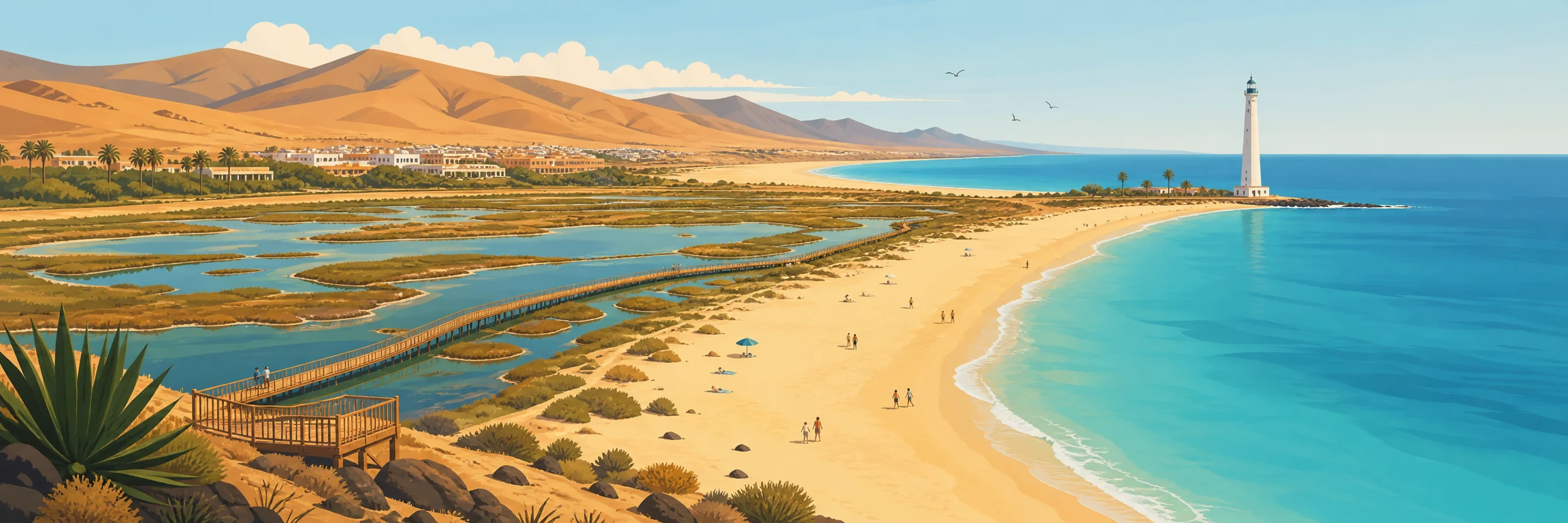
Playa del Matorral is Morro Jable’s great urban beach: golden sand, lighthouse and seafront promenade, but also the Saladar de Jandía, a Ramsar wetland unique in the Canary Islands, best experienced respectfully from its boardwalks. It is an easy beach, but never separate from its protected ecosystem.
Morro Jable’s main beach
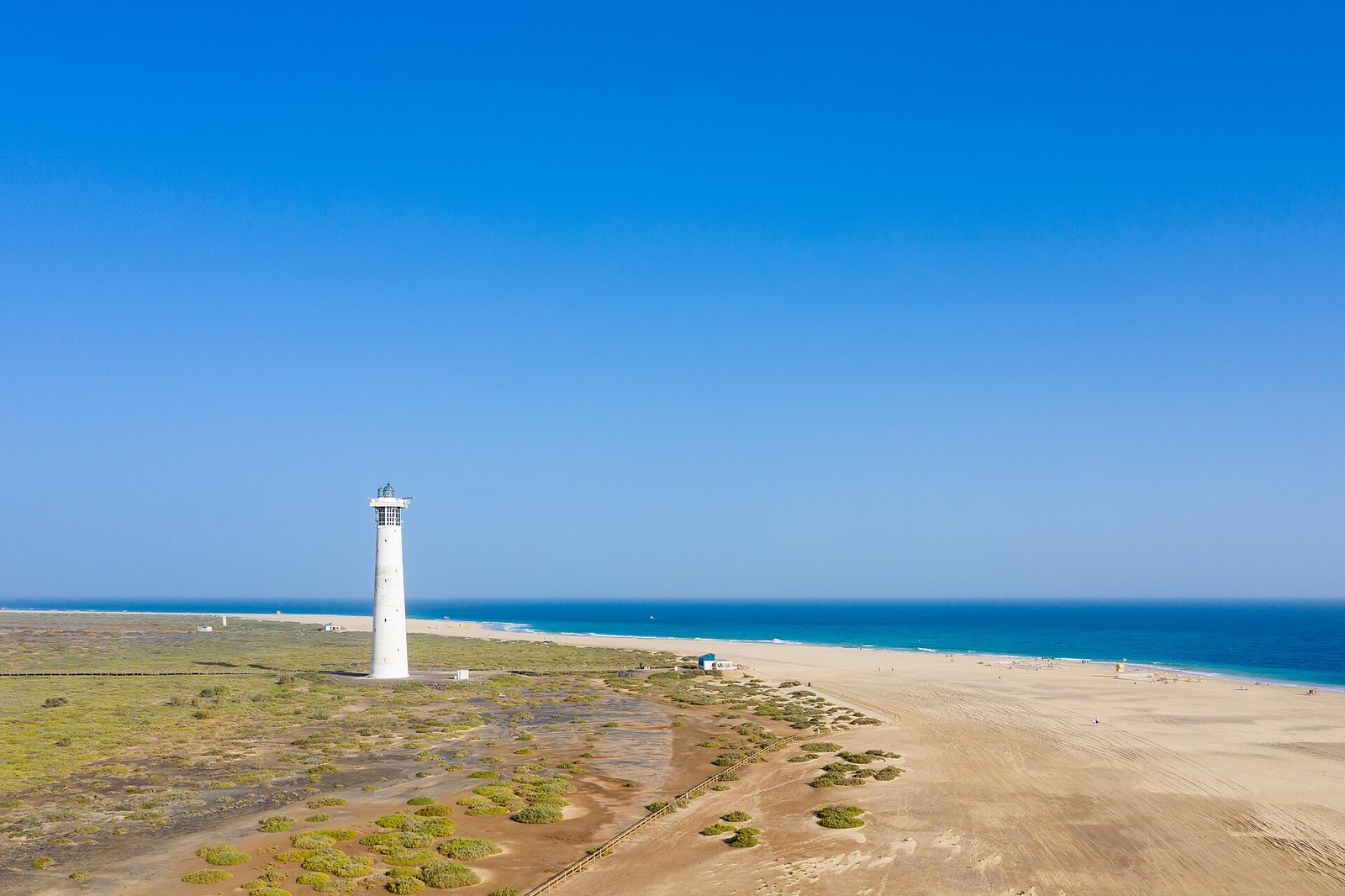
Playa del Matorral, also known as Playa del Saladar, is the long sweep of sand running beside Morro Jable in southern Fuerteventura. It has more than four kilometres of fine golden sand, usually calm and shallow water, and an urban edge that makes access simple from hotels, the promenade and the town centre. It should not be confused with the destination guide to Morro Jable, which focuses on the town, harbour and travel base. Here the emphasis is the beach itself: the lighthouse, bathing areas, different uses, the protected salt marsh and the relationship between tourism and nature. It is one of the most convenient beaches in the south if you want services close by without losing the sense of open landscape. Even so, conditions can change: the trade wind may pick up, the tide alters the usable width of sand, and lifeguard cover depends on the season. That focus keeps it distinct from the main town page.
The lighthouse and bathing areas
The Morro Jable lighthouse, also called the Matorral lighthouse, is the beach’s visual marker. It is a white, truncated-cone concrete tower, in service since 1996 and 58.60 metres high, a figure consistently cited in available sources. Beyond anchoring the landscape, it helps visitors understand the beach’s informal zoning: north of the lighthouse, towards Jandía, naturism is common; south of it, closer to the town, textile and family use predominates. Both share the same long strand, so choosing the right area is simply a matter of preference. The sea is often calm thanks to the beach’s east-south-east aspect and the relative shelter of the island’s south, although wind can arrive in the afternoon. Beach services, adapted access, lifeguard posts and showers may vary by season, so check on arrival. Using the lighthouse as your reference point makes a first visit much easier and avoids confusion over areas.
The Saladar de Jandía
What sets Playa del Matorral apart from other urban beaches is the Saladar de Jandía, the protected coastal wetland between Morro Jable and the sand. It is a Site of Scientific Interest and the only wetland in the Canary Islands included on the Ramsar list of internationally important wetlands, since 24 October 2002. Its salt-tolerant vegetation includes species such as salado, mato moro and sea grape, and in places can reach up to two metres. High tide floods it periodically, so the sheet of water changes with the tide. For visitors, the rule is simple: use the wooden boardwalks and interpretation panels, and do not step on the vegetation or create shortcuts. The beach allows leisure; the salt marsh asks for distance, reading and respect. It is also worth remembering that this is not an urban garden: it is a habitat shaped by salt, tide and daily tourism pressure, and its condition depends on responsible visitors.
Birdlife, promenade and urban access
The salt marsh adds a layer of biodiversity to a heavily visited beach. Birds associated with this wetland include waders such as Kentish plover, whimbrel, godwits, sandpipers and, on passage, spoonbill. You do not need to turn the visit into a birdwatching outing: observing from the boardwalks and avoiding disturbance is enough. Morro Jable’s promenade connects the beach with the town centre, harbour and beach bars, so you can combine swimming, walking and eating without relying on a car if you are staying nearby. From other parts of the island, the FV-2 is the main access road; Puerto del Rosario and the airport are about 90 kilometres away, and Costa Calma about 22. There is parking around the beachfront and near the lighthouse, with the usual availability pattern of a tourist area. Small binoculars are useful if you want to look without entering the wetland or approaching resting birds too closely.
How to enjoy a protected beach
The best way to enjoy Playa del Matorral is to understand its two rhythms: the beach and the salt marsh. On the sand, bring sun protection because natural shade is almost non-existent; if the trade wind starts blowing sand, a beach screen or windbreak can make the stay more comfortable. For swimming, respect buoys and lifeguard posts when in operation, and keep an eye on children even when the sea looks calm. In the salt marsh, stay on the boardwalks: the ecosystem is fragile and floods at high tide. The beach has appeared among the Blue Flag beaches in the municipality of Pájara, but that distinction is reviewed every season, so the current year should be checked before stating it as fact. Avoid doubtful figures for the wetland’s surface area; if an approximation is needed, speak of around 120 hectares. If you are walking with children, explain first the difference between open sand and protected salt marsh, because here not every open space is meant to be stepped on.
FAQ
Questions about Playa del Matorral, Morro Jable
Why is it called Playa del Matorral?
Because of the Saladar de Jandía behind the beach: a salt-tolerant scrubland growing on the wetland. It is also known as Playa del Saladar, and the lighthouse is referred to as either Morro Jable or Matorral.
Is Playa del Matorral a nudist beach?
Partly. The Morro Jable lighthouse is the reference point: to the north, towards Jandía, naturism is common; to the south, beside the town, textile and family use predominates. Both uses coexist on a very long beach without obvious conflict.
What is the Saladar de Jandía?
It is a protected coastal wetland between Morro Jable and the beach, with vegetation adapted to salt. It is a Site of Scientific Interest and the only Canary Islands wetland included on the Ramsar list. It should be visited from the boardwalks, without stepping on the vegetation.
How long is Playa del Matorral?
It is more than four kilometres long, around 4.3 km, making it one of the longest beaches in southern Fuerteventura. It is a long golden-sand beach with enough width to spread out different uses.
Is it a good beach for families?
Yes, especially in the southern area beside the town, where access is more urban and the sea is usually calm. Even so, check flags, wind and seasonal lifeguard cover, and do not let children enter the salt marsh outside the boardwalks.
Make the most of your visit
Tickets, tours and activities
There are excursions, guided tours and activities in Fuerteventura to round off your visit to Playa del Matorral.
See tours and activitiesKeep exploring
More to see in Fuerteventura
Tours and activities in Fuerteventura
Loading tours…