Canarias.app travel guide · Fuerteventura
Corralejo (Fuerteventura): beaches, ferry to Lobos and things to do
Corralejo is the base for northern Fuerteventura: a harbour with ferries, urban beaches and the rhythm of a coastal town in the municipality of La Oliva. It helps to separate the destination properly: the dunes have their own guide, while activities belong in the things-to-do article, so open beach, harbour and itinerary do not get mixed together.
What Corralejo is and why it matters
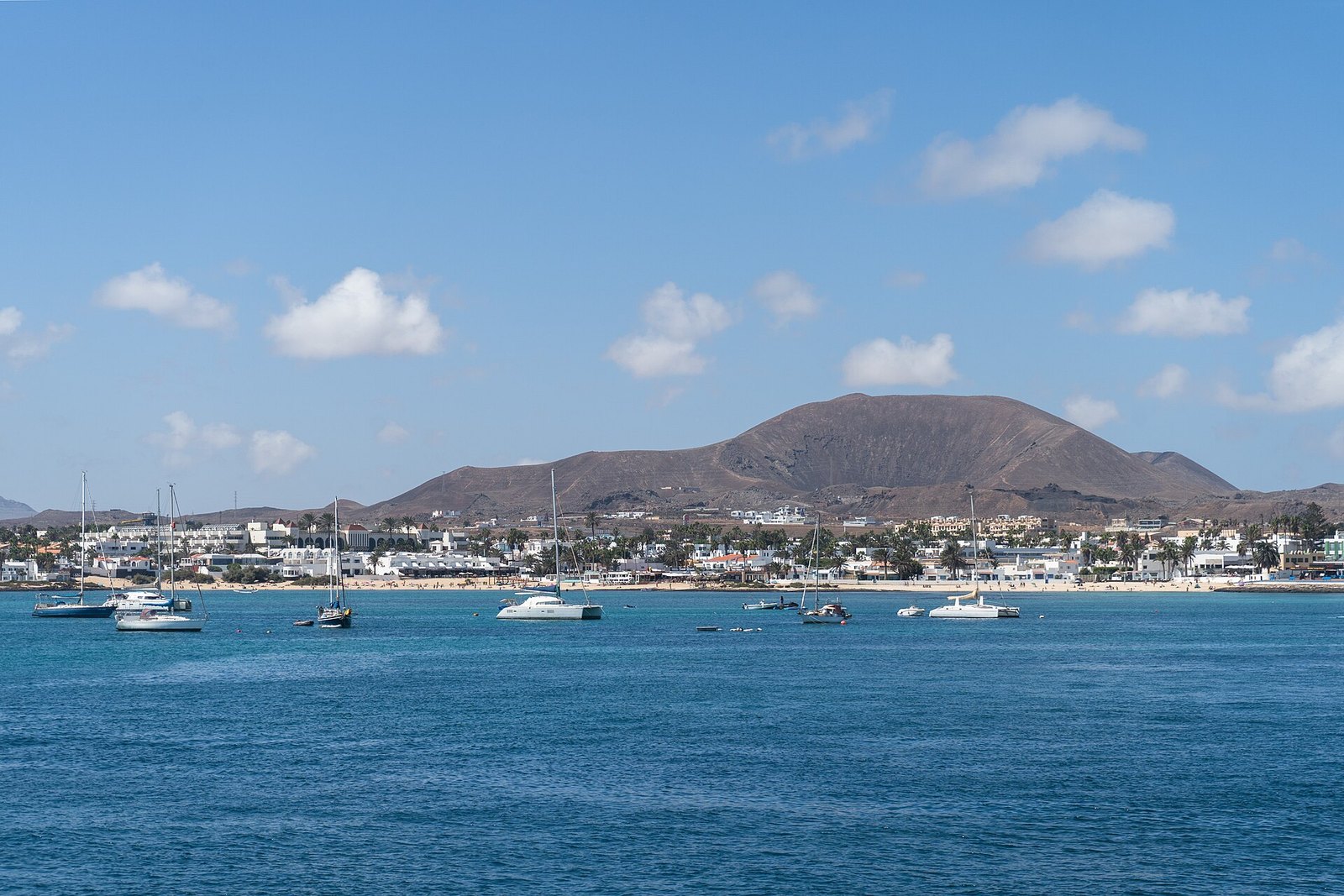
Corralejo is the main tourist centre in northern Fuerteventura and belongs to the municipality of La Oliva. It began as a modest fishing hamlet, became established in the 19th century and changed scale with the tourism development of the 1970s. Today it works as a highly practical base for travellers who want to sleep near the sea, move on foot along the waterfront and take boats to Lanzarote or Isla de Lobos. The key is to understand what this guide covers: Corralejo as town, harbour, urban seafront and accommodation area. The dune field and the Grandes Playas are better explained in Dunas de Corralejo, because there the important themes are the natural park, sand, wind and bathing on open beaches. For a list of activities, routes and stops, the companion piece is What to see in Corralejo. Each page then answers a different intention without competing with the others.
Harbour, ferries and the trip to Lobos
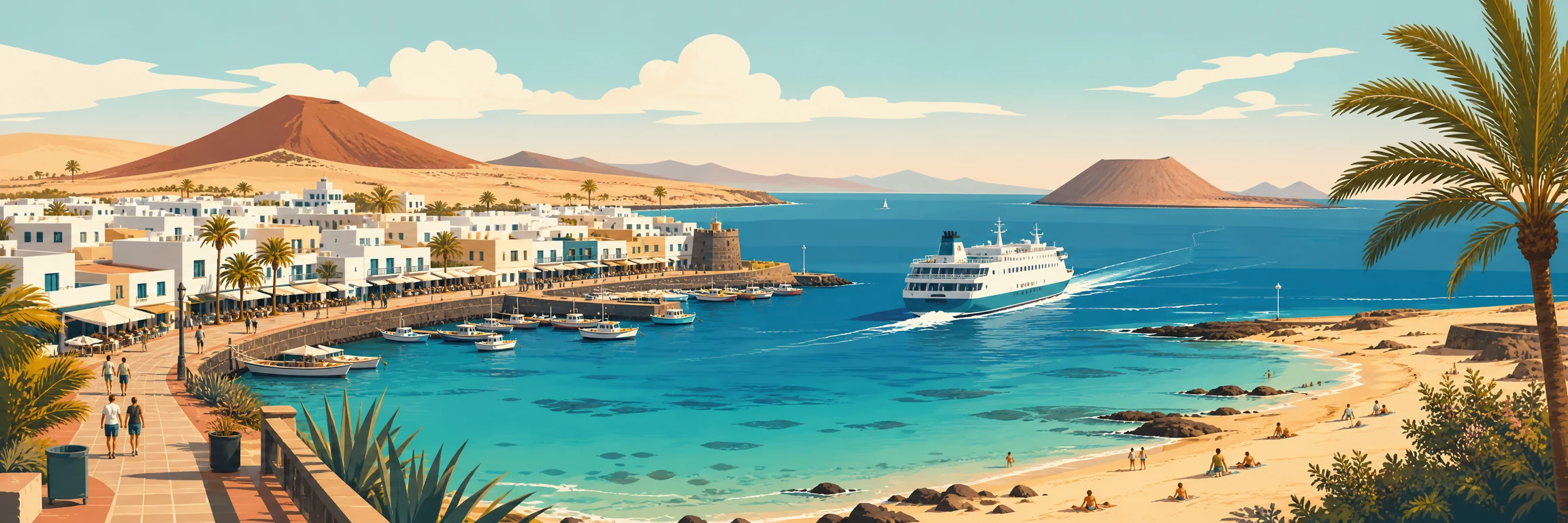
The harbour is one of the reasons Corralejo carries such weight in northern Fuerteventura. Ferries depart from here to Playa Blanca, in Lanzarote, operated by Fred Olsen Express, Naviera Armas and Lineas Maritimas Romero; the crossing takes around 25-35 minutes depending on company and vessel. Boats also leave for Isla de Lobos, a short crossing for a day trip, but with an important condition: visiting the islet requires prior free authorisation from the Cabildo de Fuerteventura because numbers are limited. It is not something to improvise in high season. Buy or reserve your ticket and check the authorisation before going to the quay. Timetables, prices and frequencies change by season and operator, so this guide does not present them as fixed facts. To organise the day, think of Corralejo as a departure and arrival port, not only as a beach area. That double connection explains much of its daily movement.
Urban beaches and old town
Corralejo has an advantage that is not always obvious from outside: it is not all open beach and dunes. In the old town itself there are small coves of golden sand and more sheltered water, such as La Goleta, Muelle Chico and Corralejo Viejo. These are town beaches, useful for a swim without turning it into a long excursion, especially when the trade wind hits the more exposed areas. La Goleta is associated with the well-known Waikiki beach bar, but the important point here is the urban, walkable character of the seafront. Restaurants, shops, services, leisure and nightlife are concentrated around the harbour and main avenue. That atmosphere sets Corralejo apart from quieter places in the north. If you are looking for sunset, natural lagoons or a more Atlantic west-coast feeling, the natural comparison is El Cotillo, which plays a different role on the same island. Corralejo is more about movement, the harbour and the promenade.
How to get there and get around
The easiest way to reach Corralejo is by car, following the route that links the north with Puerto del Rosario and the airport along the eastern coast. There are also Tiadhe buses connecting with the capital and other parts of the island, but current timetables should be checked before building a plan, as frequencies can vary. If you arrive from Lanzarote, the natural access is by ferry from Playa Blanca. Once in town, the old quarter, harbour and much of the seafront can be explored on foot. Parking near the harbour or the main commercial areas can be more difficult in high season or around ferry departure times. To explore the north without overlap, Corralejo combines well with Lajares, more inland and surfer-artisan in tone, and with Betancuria if you want to devote another day to the island’s historic village. If you depend on public transport, leave margin between connections and boats.
When to go and what to keep in mind
Spring and autumn are usually the most balanced times for Corralejo: good temperatures, pleasant sea conditions and less crowding than in high summer. Even so, Fuerteventura is a windy island, and the north-easterly trade wind is part of the experience. On windy days, the urban coves of the old town are often more comfortable than the open beaches around the dunes. If you go towards the Grandes Playas, remember that swimming depends on sea state, currents and exposure. Do not rely on prices, timetables or the number of ferry departures without checking them directly with each operator. To extend the route, use What to see in Fuerteventura as the island hub and keep the plans clearly separated: Corralejo for town and harbour; Dunas de Corralejo for natural landscape; What to see in Corralejo for activities. That separation improves the visit and avoids false expectations.
FAQ
Questions about Corralejo
Which island and municipality is Corralejo in?
Corralejo is in northern Fuerteventura, within the municipality of La Oliva. It is one of the island’s main centres and works as a tourist base, a port connection with Lanzarote and a departure point for Isla de Lobos.
Which ferries leave from Corralejo harbour?
Ferries from Corralejo run to Playa Blanca, in Lanzarote, with a crossing of about 25 to 35 minutes depending on the operator, and boats also go to Isla de Lobos. For Lobos, you need prior free authorisation from the Cabildo because visitor numbers are limited, as well as a boat ticket.
Does Corralejo have beaches inside the town?
Yes. In the old town there are small coves with golden sand and more sheltered water, including La Goleta, Muelle Chico and Corralejo Viejo. The Grandes Playas and the dune field lie in the natural area outside the town itself.
What is the best time to visit Corralejo?
Spring and autumn usually offer the most comfortable balance of temperature, sea conditions and visitor numbers. The trade wind is common through much of the year; when it blows strongly, the old town’s urban coves are often gentler than the open beaches.
Are Corralejo and the Dunas de Corralejo the same thing?
Not exactly. Corralejo is the town and coastal destination, with harbour, old quarter, urban beaches and services. The dunes and Grandes Playas form a separate space, covered in Dunas de Corralejo, with the logic of a natural park.
Make the most of your visit
Tickets, tours and activities
There are excursions, guided tours and activities in Fuerteventura to round off your visit to Corralejo.
See tours and activitiesKeep exploring
More to see in Fuerteventura
Tours and activities in Fuerteventura
Loading tours…