Canarias.app travel guide · Fuerteventura
La Oliva, Fuerteventura: Casa de los Coroneles and historic village centre
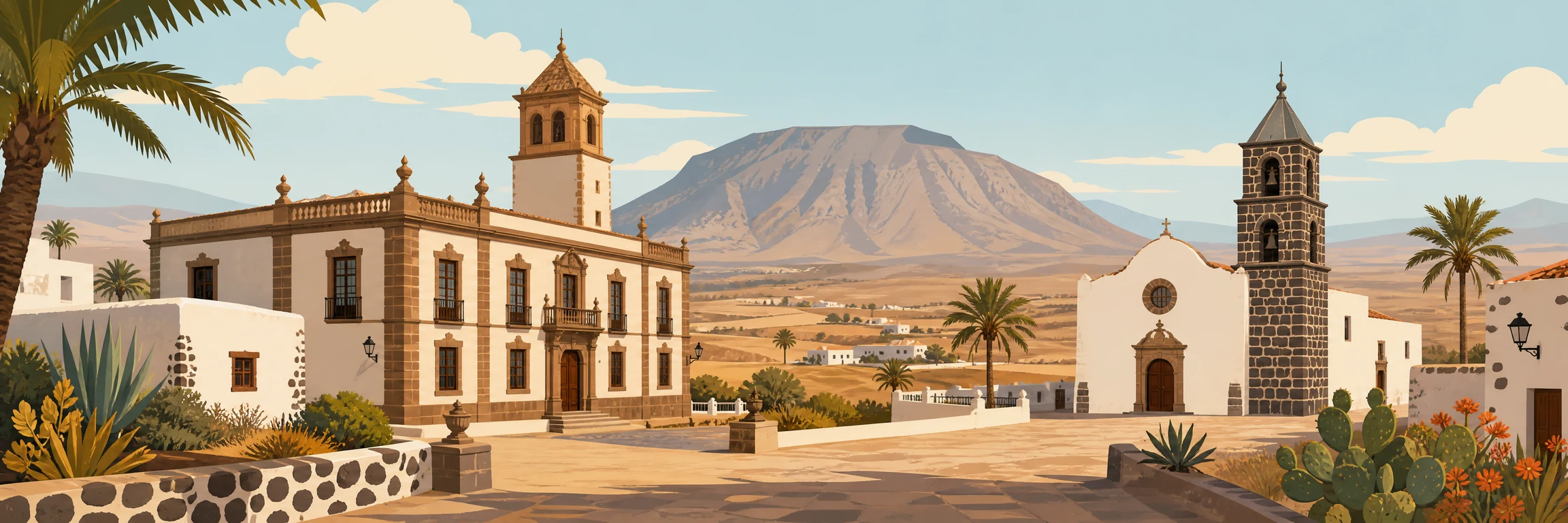
La Oliva is the historic village of northern inland Fuerteventura: Casa de los Coroneles, Iglesia de la Candelaria and the memory of island military power. It is a cultural visit, separate from the beach, dunes and surf of the north, and works very well as a short stop between coast and inland villages.
La Oliva and the history of the northern interior
La Oliva is the village that gives its name to Fuerteventura’s northern municipality and one of the island’s clearest cultural visits. It lies inland, at about 219 metres above sea level, and its appeal does not depend on beaches or coastal viewpoints. For centuries it played a central role in island power: after the creation of the Majorero militias in the early 18th century, the colonels who governed Fuerteventura moved their residence here from Betancuria. The village also served as island capital in the 19th century before that role passed to Puerto del Rosario. Today it preserves a compact group of civil, religious and artistic heritage. The right reading is simple: La Oliva is culture and history in the north; Corralejo, Dunas de Corralejo, El Cotillo and Lajares cover coast, open air and surf atmosphere.
Casa de los Coroneles
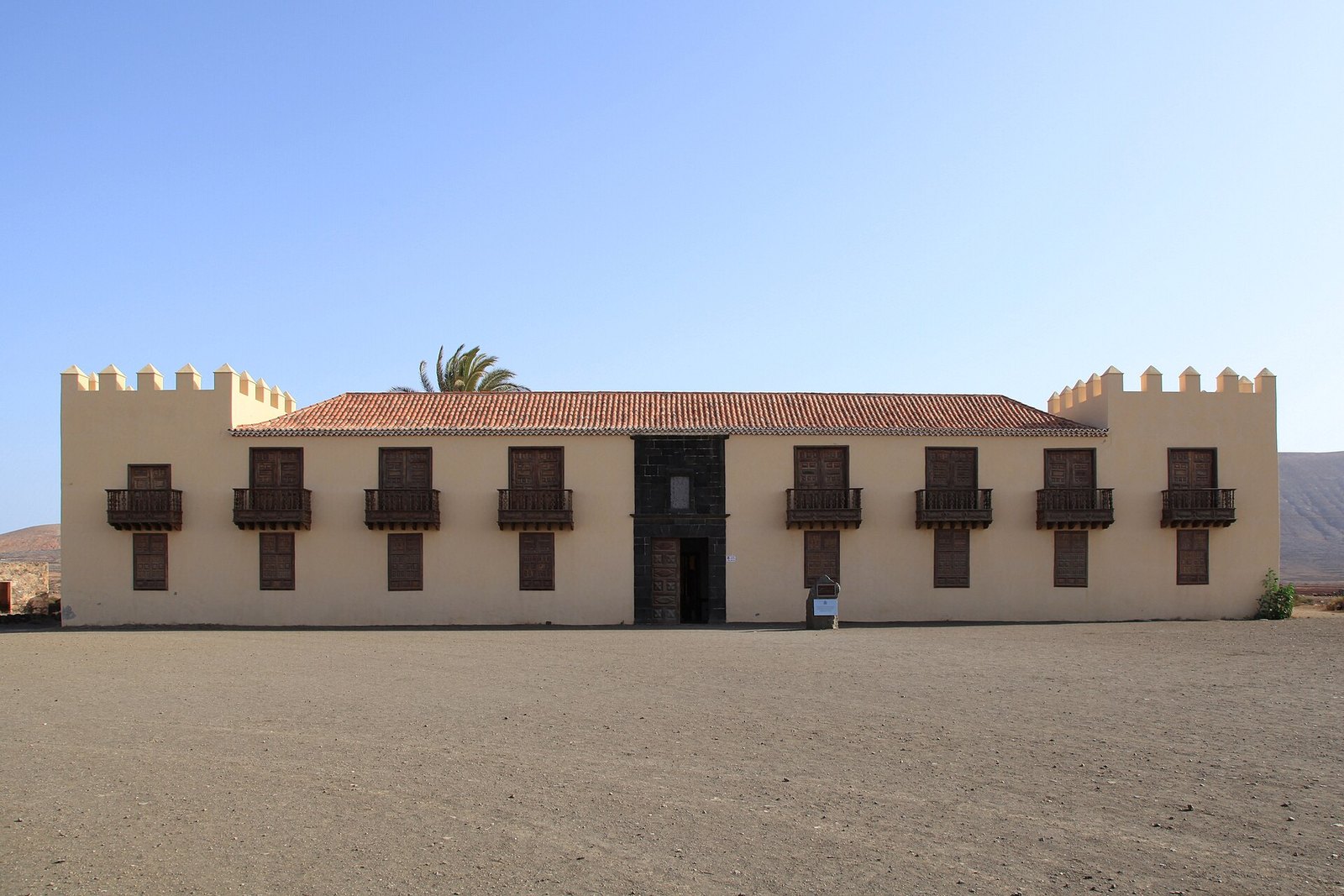
The Casa de los Coroneles is the emblem of La Oliva. It is a large manor house of traditional Canarian architecture, linked to the coronelato, the military power that governed Fuerteventura during a key period of its history. It is listed as a Bien de Interés Cultural and has been converted into a cultural space run by the Government of the Canary Islands, although it may appear closed for restoration works: check its status before travelling with the interior visit as your main objective. The scale of the building is striking because present-day La Oliva is quiet and inland; that contrast between today’s calm and past political weight is exactly what makes the place interesting. You do not need to turn the visit into a long history lesson: simply place the house within a short walk around the village, alongside the church, Casa de la Cilla and Casa Mané. If it is closed, the exterior and context still matter, but adjust expectations and do not organise the whole day around going inside.
Church, grain and Canarian art
The church of Nuestra Señora de la Candelaria completes the picture of La Oliva. Begun in the late 16th century, it blends Mudéjar and popular styles and stands out for its dark millstone bell gable, highly visible against the whitewashed ensemble. Inside, the main altarpiece is by Juan de Miranda, one of the great Baroque painters of the Canary Islands. A short distance away is the Casa de la Cilla, a former tithe granary from 1819 and, since 1997, a museum dedicated to the traditional agricultural cycle and the importance of grain in Fuerteventura. The third cultural anchor is the Centro de Arte Canario Casa Mané, housed in a 19th-century building with a native-flora garden, outdoor sculpture and contemporary Canarian art. Together, these places make La Oliva a brief, dense visit very different from beach-focused Fuerteventura. That triangle also means the experience does not depend on a single monument.
Ruta de los Coroneles and practical visit
The most natural way to visit La Oliva is to follow the so-called Ruta de los Coroneles, which brings together Casa de la Cilla, the church, Casa de los Coroneles, Casa Mané and Casa del Coronel in one walk. The village centre is easy to cover on foot and is best visited mid-morning, when several cultural spaces tend to concentrate their opening times, although days, hours, closures and prices change. Prices should not be published as fixed facts: check ticket desks or official websites before going. By car, La Oliva fits well into a northern inland route, with parking in the village and the option to continue towards Tindaya, Lajares or Corralejo. There is also a bus on the Puerto del Rosario-El Cotillo axis passing through La Oliva and other northern villages, but current Tiadhe timetables must be checked. Bring water and sun protection: the interior is dry and exposed. If it is windy, the walk is still straightforward, just less comfortable.
What to combine with La Oliva
The strongest comparison is with Betancuria. Betancuria represents the old historic capital of the centre-south, more monumental and landscape-led; La Oliva represents the military power of the colonels in the north and a network of civil, religious and artistic buildings. Another useful inland stop is Mirador Morro Velosa, which helps you read the Majorero relief if you are coming from or heading towards Betancuria. To change register, the same journey can continue to the north coast: El Cotillo for lagoons, lighthouse and sunset; Lajares for craft atmosphere and surf; Corralejo for harbour, leisure and excursions. The rule is simple: La Oliva brings the heritage; the north coast brings sea, dunes and wind. Keeping that division makes the route clearer.
FAQ
Questions about La Oliva, Fuerteventura
What is there to see in La Oliva, Fuerteventura?
The main sights are Casa de los Coroneles, the church of Nuestra Señora de la Candelaria, Casa de la Cilla-Museo del Grano and Centro de Arte Canario Casa Mané. Together they form a compact inland cultural visit.
What is Casa de los Coroneles?
It is a large manor house linked to the coronelato, the military power that governed Fuerteventura during a historic period. It is listed as a Bien de Interés Cultural and works as a cultural space, although it may be closed for restoration: check before going so you can plan accordingly.
Why does the church in La Oliva have a black tower?
The church of Nuestra Señora de la Candelaria is whitewashed, but its bell gable was built in dark millstone. That contrast creates a very recognisable image and explains why the church is one of the most photographed stops in the village.
Is La Oliva close to Tindaya mountain?
Yes. Tindaya mountain is close to La Oliva and is a protected place linked to the culture of the ancient majos, with podomorphic engravings. It is mentioned here only as context; this La Oliva guide focuses on urban heritage.
Is La Oliva a beach visit?
No. La Oliva is in the northern interior and its interest is historical and cultural. For beaches, dunes and coastal atmosphere, look to Corralejo, El Cotillo or the Dunas de Corralejo; for heritage, La Oliva pairs very well with Betancuria.
Make the most of your visit
Tickets, tours and activities
There are excursions, guided tours and activities in Fuerteventura to round off your visit to La Oliva.
See tours and activitiesKeep exploring
More to see in Fuerteventura
Tours and activities in Fuerteventura
Loading tours…