Canarias.app travel guide · Tenerife
Teide National Park: a guide to Las Cañadas
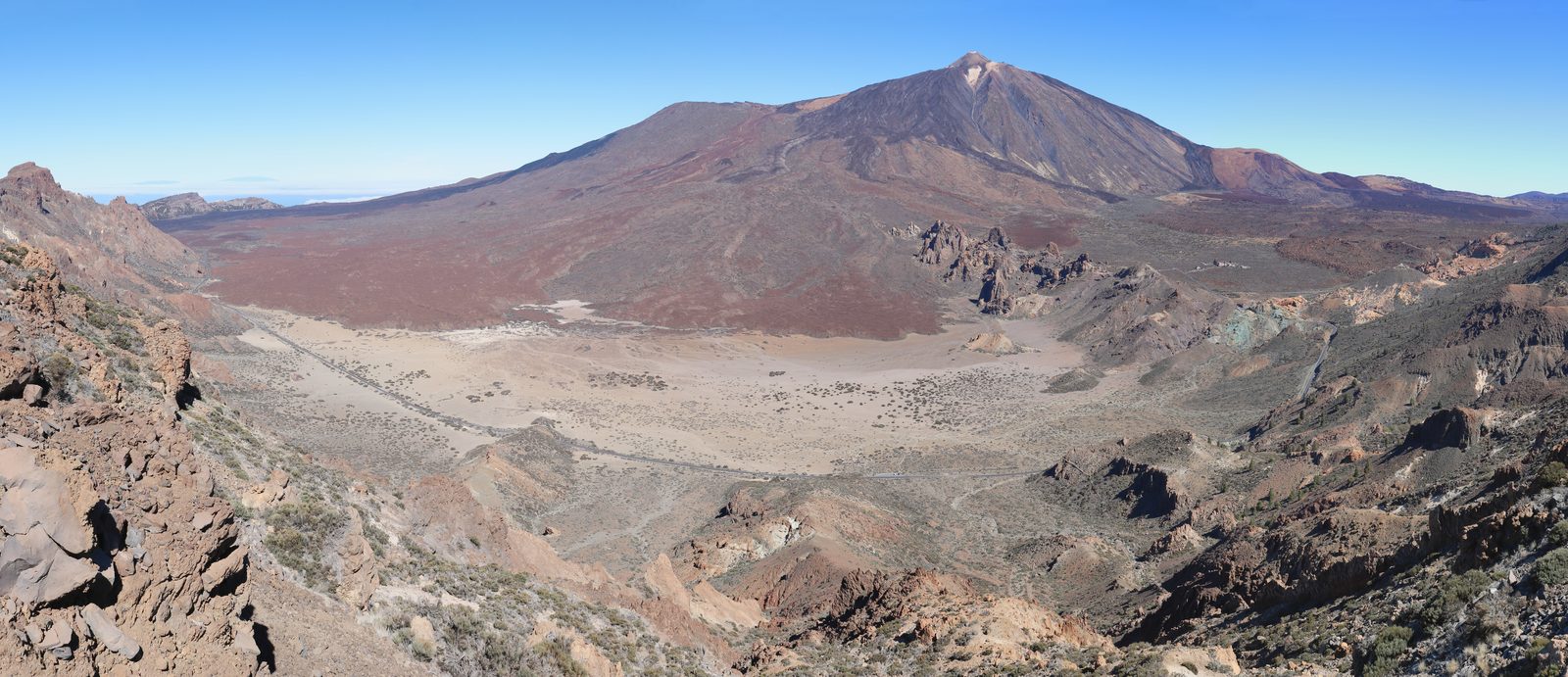
Teide National Park occupies the centre of Tenerife and protects the vast volcanic landscape of Las Cañadas, with Mount Teide, at 3,715 metres, as the highest peak in Spain. General access to the park is free, but reaching the crater requires a free permit and, if you use the Teide Cable Car, a separate ticket. The classic view is at the Roques de García, with Teide rising in the background.
What it is and why visit
Teide National Park is Tenerife's great high-altitude volcanic landscape and one of the most important natural areas in the Canary Islands. At its centre rises Mount Teide, 3,715 metres high, set within the Las Cañadas caldera and surrounded by lava fields, flows, mineral plains and eroded formations. It is a UNESCO World Heritage Site and completely changes the idea of a tropical island: here, altitude, harsh light, possible cold and visible geology define the experience. If you visit only one natural space in Tenerife, this should be on the list.
What to see in Las Cañadas
A basic visit takes in the viewpoints along the TF-21 and TF-24, Llano de Ucanca, the lava fields and the Roques de García, the park's most recognisable scene. The Teide Cable Car takes you up close to the summit area, but it does not replace the permit required to access the crater. If you want to reach the peak, you must reserve the free permit through official channels and check conditions before going up. It is also worth taking time simply to look at the landscape; the park is not just the summit.
How to get there
The park is reached by road from several parts of Tenerife, mainly via the TF-21 and TF-24, with access from the north, the metropolitan area, La Orotava, Vilaflor or the south of the island. Distances can be deceptive because the climb is significant and the roads are mountainous. On busy days, parking at viewpoints and key areas can fill up. Before setting off, check official notices, weather, road conditions and possible restrictions. Do not drive up with a low fuel tank or an overpacked schedule.
Altitude, climate and safety
Teide is not visited like a coastal promenade. The altitude is noticeable, the sun can be intense, the wind may be cold and temperatures can drop sharply even when it is warm on the coast. Take water, sun protection, sunglasses, warm clothing and comfortable footwear. Walk slowly if you are not used to altitude and avoid sudden exertion. In winter or after storms, there may be ice, snow, closures or changing conditions. The practical rule is simple: the day's official information matters more than the plan you had at home.
Night skies and nearby routes
The Teide area is one of the best places in the world for stargazing, provided the sky is clear, darkness is respected and you are properly prepared for the cold. If you stay after dark, take a head torch, serious warm clothing and do not walk off marked paths. For a broader Tenerife route, the park can be combined with the west of the island on separate days, linking with Masca or the Teno massif if you have time. Do not try to see everything in one afternoon: Teide deserves breathing room.
FAQ
Questions about Teide National Park
Do you have to pay to enter Teide National Park?
No. General access to Teide National Park is free. Specific activities may require booking, a permit or payment, such as the cable car, organised excursions or the permit to access the crater.
Do you need a permit to climb to the top of Teide?
Yes. To access the final section to the crater, you need a free permit with reservation and availability. It is separate from the cable car ticket and must be arranged through official channels.
What is the classic view of Teide?
The most recognisable scene is usually the Roques de García, especially Roque Cinchado, with Teide in the background and Llano de Ucanca around it.
What should you wear for Teide?
Warm clothing, comfortable shoes, sun protection, sunglasses and water. Altitude changes the perceived temperature significantly, and it can be cold or windy even when the coast feels summery.
Make the most of your visit
Tickets, tours and activities
There are excursions, guided tours and activities in Tenerife to round off your visit to Parque Nacional del Teide.
See tours and activitiesKeep exploring
More to see in Tenerife
Tours and activities in Tenerife
Loading tours…