
Canarias.app travel guide · Tenerife
Roque Cinchado and Roques de García: Guide
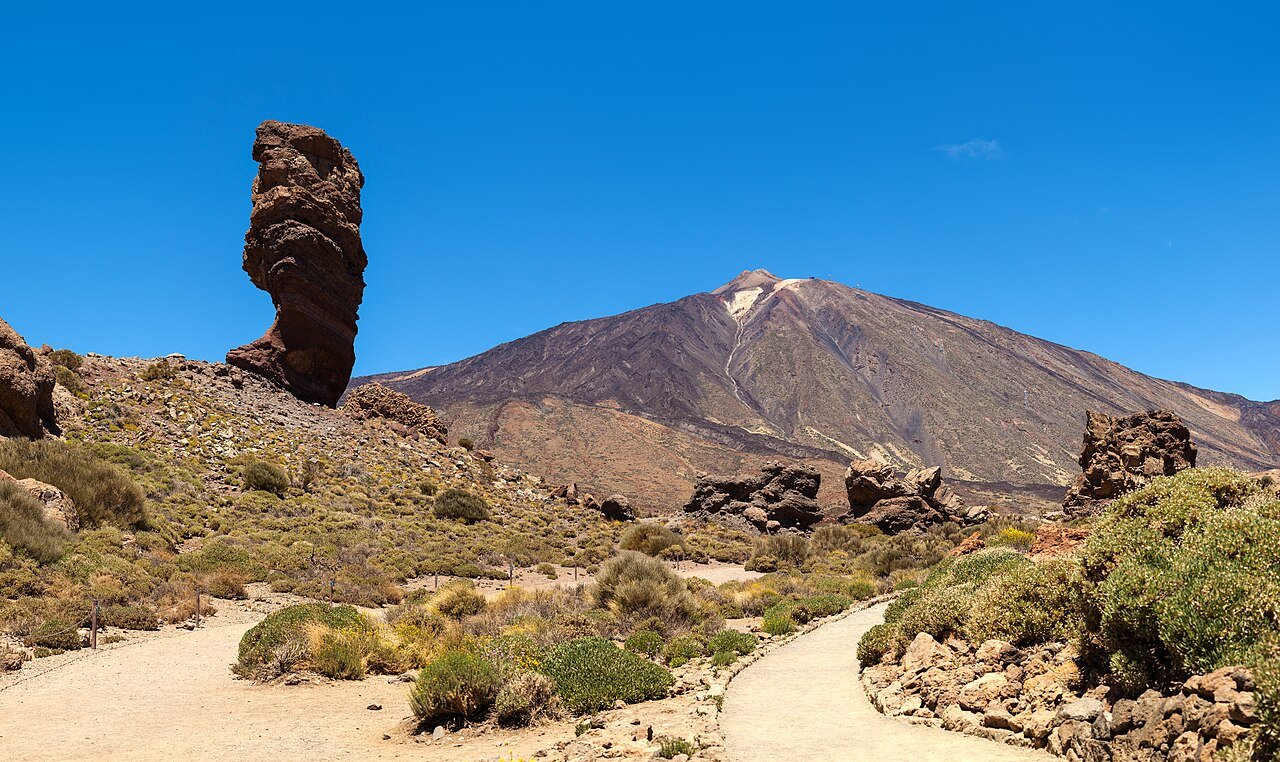
Roque Cinchado is the most recognisable image of the Roques de García, beside the Llano de Ucanca and beneath Mount Teide. It is known as the Árbol de Piedra, the Stone Tree, and is famous for appearing on the old 1,000-peseta banknote. You can visit it free from La Ruleta, but this is a National Park: stay on the paths and do not step off-trail.
What it is and why visit
The Roques de García are a line of volcanic formations inside Teide National Park, opposite the Parador de Las Cañadas and overlooking the Llano de Ucanca. Their most famous feature is Roque Cinchado, a narrow, photogenic column instantly recognised with Teide behind it. The scene is powerful because it condenses the park’s geology without requiring a long walk: strata, erosion, lava, caldera and high volcanic mountain in a single frame. It is an essential stop if you are going up to Teide for the first time, but also a very sensitive place because of visitor pressure. Its beauty does not justify leaving the paths, climbing onto rocks or damaging the ground for an angle. The best experience here is to look slowly, understand the scale of the landscape and respect the surroundings.
Trail, viewpoints and Roque Cinchado
The short visit is made from the La Ruleta viewpoint and the area around the car park: you get out, see Roque Cinchado, Teide, the Llano de Ucanca and part of the Roques de García without taking on a demanding route. If you want to walk further, the circular Roques trail goes around the formation in about 3.5 kilometres, with some easy sections and others more uneven. It is not a long route, but you are above 2,000 metres: sun, wind and lack of shade are noticeable. Roque Cinchado should be the opening highlight, not the only point of interest. It is worth continuing along the trail to see how the shapes change, including La Catedral, the lava profiles and the visual relationship with the Llano de Ucanca. The classic photo is better if you wait for the visitor flow to clear.
How to get there and park
Access is via the TF-21 road inside Teide National Park. The practical reference is the Parador de Las Cañadas del Teide and the La Ruleta viewpoint, beside the Roques de García car park. From the north, you climb via La Orotava; from the south, via Vilaflor or Chío-Boca Tauce depending on your starting point. The car park can fill in the middle of the day, at weekends and in good weather, so it is best to arrive early or late. Do not park outside permitted areas or on verges that narrow the road. By bus, connections to Teide are limited and should be checked with TITSA the day before. If the park activates restrictions because of weather or trail regulation, official information takes priority.
Local tips
Bring water, sun protection, a warm layer and footwear with a proper sole, even if you are only planning a short walk. In Las Cañadas you can have hard sun, cold wind and quick temperature changes on the same afternoon. At sunset, the Roques de García are magnificent, but do not leave the return too late if you do not know the mountain roads, and do not block the car park while chasing the perfect photo. At night, the sky can be spectacular, but do not walk the trails without a head torch, warm clothing and clear orientation. Basic rule: never leave the paths, never climb the formations and never take stones. The landscape looks robust, but the volcanic ground and high-mountain vegetation are easily damaged.
FAQ
Questions about Roque Cinchado and Roques de García
Where is Roque Cinchado?
Roque Cinchado is inside Teide National Park, within the Roques de García and beside the La Ruleta viewpoint, opposite the Parador de Las Cañadas. It is the most photographed formation in the group because of its silhouette with Teide in the background.
How long is the Roques de García trail?
The full circular route is around 3.5 kilometres. It can be done at a calm pace during a short visit, but it should not be underestimated: you are above 2,000 metres, with sun, wind, uneven ground and almost no shade. Bring water and suitable footwear.
Do you have to pay to see the Roques de García?
No. The viewpoint and the area around the Roques de García are free to visit. What can vary are access restrictions, parking, trail regulation or closures due to weather inside the National Park. Before going up, check official notices if there is an alert.
Can you visit Roques de García at sunset or at night?
Yes. Sunset is one of the best times because of the light on the roques and the Llano de Ucanca. At night, go only if you have warm clothing, a head torch and know how to move without leaving the paths. Do not walk over volcanic ground in the dark to improvise photos.
Make the most of your visit
Tickets, tours and activities
There are excursions, guided tours and activities in Tenerife to round off your visit to Roque Cinchado y Roques de García.
See tours and activitiesKeep exploring
More to see in Tenerife
Tours and activities in Tenerife
Loading tours…